


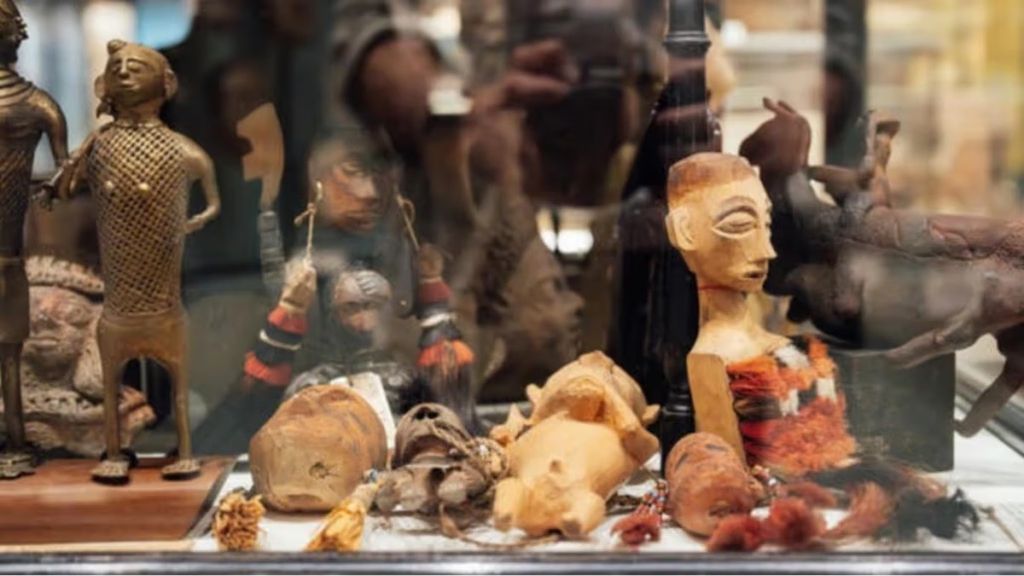
Thirty-nine Naga ancestral human remains, held at the University of Oxford’s Pitt Rivers Museum in the UK for more than a century, have arrived in Nagaland after a six-year repatriation effort. Meanwhile, President Droupadi Murmu is scheduled to visit Mizoram and attend the 27th Hornbill Festival in Nagaland during her Northeast tour from November 27 to December 2, 2026.
China Repeats Arunachal Pradesh Claim Amid India Border Talks
Naga Ancestral Remains Return and President Murmu’s Hornbill Visit
Nagaland is witnessing two significant developments involving its cultural heritage and national recognition. The return of 39 Naga ancestral human remains marks the culmination of years of efforts by Naga organisations and community representatives. At the same time, President Droupadi Murmu’s scheduled participation in the Hornbill Festival has brought national attention to the state’s annual cultural celebration.
The ancestral remains arrived in Dimapur on November 27. They had travelled from the Pitt Rivers Museum at the University of Oxford. Representatives of Naga tribal organisations and community leaders received them at the airport.
Meanwhile, Kohima will host a public homecoming programme on November 28. The community will also organise public viewing and prayers on November 29. Finally, the remains will receive their final burial rites at Naga Solidarity Park on November 30.
Separately, President Murmu’s official itinerary includes visits to Mizoram and Nagaland. She is scheduled to attend the opening ceremony of the 27th Hornbill Festival at Kisama on December 1.
39 Naga Ancestral Remains Return After More Than a Century
The return of the 39 ancestral human remains marks an important moment for Naga communities. The Pitt Rivers Museum in Oxford, United Kingdom, had held these remains for more than a century.
Historical records indicate that colonial administrators and anthropologists took many of them from the Naga homeland during British rule. Most of these collections date from approximately 1910 to 1940.
The repatriation process began in 2020. Since then, Naga representatives and the museum have held sustained discussions. In July 2026, the University of Oxford Council approved the return of 39 ancestral remains.
On November 9, 2026, both sides held a formal handover ceremony in Oxford. The university transferred custodianship to the Naga people through the Forum for Naga Reconciliation (FNR) and the Naga Tribe Hoho.
The remains then began their journey back to India. Their return marks a major milestone in the six-year repatriation process.
Naga Ancestral Remains Arrive in Dimapur
The flight carrying the ancestral remains first reached Indira Gandhi International Airport in New Delhi on November 25.
Officials from Nagaland House and representatives of the Forum for Naga Reconciliation managed the arrival and clearance procedures. After completing these formalities, the team transported the remains to Nagaland.
On November 27, the 39 ancestral remains reached Dimapur Airport in eight boxes. Representatives from eight Naga tribal communities, along with elders and community leaders, welcomed them.
The team then transported the remains towards Kohima in four ambulances. The journey prepared the way for the scheduled homecoming programme and burial rites.
According to reports, the remains belong to eight Naga tribal communities: Phom, Konyak, Yimkhiung, Khiamniungan, Sumi, Tangkhul, Pochury and Chang.
Their return gives these communities an opportunity to welcome their ancestors home. Moreover, the planned ceremonies will allow people to honour their memory together.
Kohima Hosts Homecoming and Burial Ceremonies
Kohima is hosting a series of public programmes to mark the return of the ancestral remains.
The public homecoming programme is scheduled for November 28 at 12 noon. Organisers will hold the event at the Nagaland Baptist Church Council (NBCC) Convention Centre.
The public can view the remains, lay wreaths and offer prayers at the same venue on November 29. These activities will begin at 9 am.
The community will conduct the final burial rites on November 30 at 2 pm. Naga Solidarity Park in Kohima will serve as the burial venue.
These programmes aim to provide the ancestors with a dignified resting place. In addition, the proposed shared memorial seeks to represent healing, peace and unity among Naga communities.
Forum for Naga Reconciliation Plays a Key Role
The Forum for Naga Reconciliation played a central role in coordinating the repatriation process. It worked with Naga tribal bodies, community representatives, elders, scholars and the museum’s research partners.
The process required extensive dialogue, historical research and community consultations. Participants also discussed the appropriate treatment and final resting place of the remains.
In 2020, the Pitt Rivers Museum removed human remains from public display. That decision helped create an opportunity for further discussions about repatriation.
However, the return means more than the physical transfer of the remains. For Naga communities, it represents an effort to restore dignity to ancestors who remained far from their homeland for generations.
President Droupadi Murmu to Attend Hornbill Festival 2026
Another major development for Nagaland is President Droupadi Murmu’s scheduled visit on December 1.
According to the official announcement from the President’s Secretariat, she will attend the inaugural ceremony of the 27th Hornbill Festival at Kisama, near Kohima.
The Hornbill Festival ranks among Nagaland’s most prominent annual cultural celebrations. It brings together different Naga communities and showcases their traditions, music, dances, food, handicrafts and indigenous practices.
President Murmu’s planned participation is expected to bring additional national attention to the festival. It will also highlight Nagaland’s rich cultural heritage.
Notably, the opening ceremony coincides with Nagaland Statehood Day, which the state observes every year on December 1.
Hornbill Festival Showcases Naga Culture
The Hornbill Festival gives the state’s diverse tribal communities a platform to present their cultural identities to visitors.
Every year, the celebration features traditional performances, indigenous games, local cuisine, handicrafts and exhibitions. As a result, artisans, performers and local businesses get opportunities to connect with visitors from across India and abroad.
The Naga Heritage Village at Kisama serves as the festival’s main venue. Its traditional settings and cultural displays help visitors explore different aspects of Naga life and heritage.
Furthermore, the festival supports tourism and creates economic opportunities for local communities. Hotels, restaurants, transport operators, artisans and other businesses often benefit from the arrival of visitors.
President Murmu’s planned attendance at the opening ceremony will therefore place the event in the national spotlight.
President Murmu’s Mizoram Visit Before Nagaland
President Murmu’s six-day tour covers Keralam, Mizoram and Nagaland from November 27 to December 2, 2026.
Her scheduled Mizoram engagements include a visit to the Ropuiliani Tribal Freedom Fighters’ Museum at Kelsih on November 29.
On November 30, she will attend the 21st convocation of Mizoram University in Aizawl. She is also scheduled to participate in the closing ceremony of the university’s Silver Jubilee celebrations.
These engagements highlight the President’s planned participation in programmes related to tribal history, education and cultural heritage.
After completing her Mizoram engagements, she will travel to Nagaland for the Hornbill Festival’s inaugural ceremony on December 1.
However, the official itinerary does not include the Naga ancestral remains homecoming or burial ceremonies as part of her programme. These remain separate events organised by Naga communities and their representatives.
Two Important Moments for Northeast India’s Cultural Heritage
The return of the ancestral remains and President Murmu’s scheduled Hornbill Festival visit highlight different aspects of Northeast India’s cultural identity.
The repatriation represents a community-led effort to bring ancestral human remains back to their homeland. It also allows Naga communities to provide them with a dignified resting place. More broadly, the development raises questions about colonial-era collections, Indigenous heritage and the responsibilities of museums.
Meanwhile, the Hornbill Festival celebrates living traditions through music, dance, crafts, food and community participation. It also offers Naga communities a platform to share their cultural heritage with a wider audience.
Together, these developments bring attention to Nagaland’s history, traditions and collective identity.
They also highlight the importance of preserving cultural heritage. At the same time, they create opportunities for younger generations to understand and celebrate their roots.
Conclusion
The return of 39 Naga ancestral human remains from the Pitt Rivers Museum marks the culmination of a six-year repatriation effort. It also represents an important moment for Naga communities. After reaching Dimapur on November 27, the remains are taking part in public programmes in Kohima. The community has scheduled the final burial rites for November 30.
Meanwhile, President Droupadi Murmu is scheduled to visit Mizoram and attend the opening ceremony of the 27th Hornbill Festival at Kisama on December 1.
Although these developments involve separate programmes, both bring national attention to Northeast India’s cultural heritage. They highlight the importance of preserving ancestral history, recognising Indigenous traditions and celebrating the region’s diverse communities.
Frequently Asked Questions (FAQs)
1. How many Naga ancestral remains have returned from the UK?
A total of 39 Naga ancestral human remains have returned from the Pitt Rivers Museum at the University of Oxford.
2. How long did the Naga ancestral remains stay in the UK?
The museum held the remains for more than a century. Historical records indicate that many were taken during British colonial rule, particularly between approximately 1910 and 1940.
3. When did the Naga ancestral remains arrive in Nagaland?
The 39 remains reached Dimapur Airport on November 27, 2026. They first arrived in New Delhi from the United Kingdom on November 25.
4. Where will the final burial rites take place?
The final burial rites are scheduled for November 30, 2026, at 2 pm. Naga Solidarity Park in Kohima will host the ceremony.
5. When will President Droupadi Murmu attend the Hornbill Festival?
President Murmu is scheduled to attend the inaugural ceremony of the 27th Hornbill Festival on December 1, 2026, at Kisama in Nagaland.
6. When will President Murmu visit Mizoram?
She is scheduled to visit Mizoram on November 29 and 30, 2026. Her itinerary includes the Ropuiliani Tribal Freedom Fighters’ Museum and Mizoram University.
7. Which organisation helped coordinate the repatriation of the Naga ancestral remains?
The Forum for Naga Reconciliation (FNR) played a key role. It worked with Naga tribal bodies and community representatives throughout the repatriation process.
8. Why is the return of the ancestral remains important to the Naga people?
The return allows Naga communities to welcome their ancestors home and restore cultural dignity. It also provides an opportunity to establish a shared resting place that represents healing and unity.