


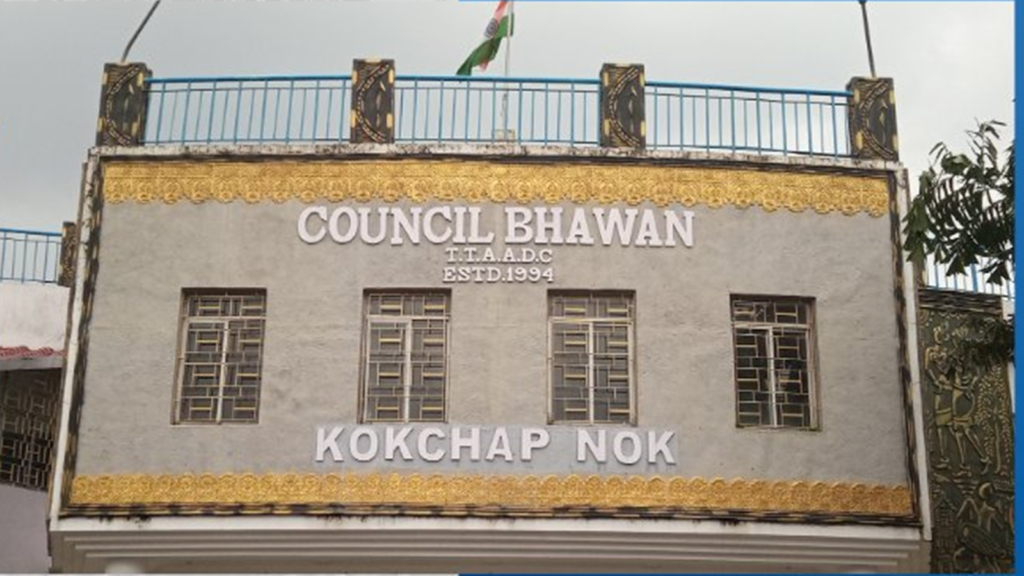
The Tripura TTAADC appointment records have come under fresh judicial scrutiny after the Tripura High Court directed the Tripura Tribal Areas Autonomous District Council to submit official documents by December 9, 2026. During the latest hearing, the Council’s lawyer informed the court that its Executive Council had decided to cancel the disputed appointments. However, the administration did not produce an official resolution to support that statement. Consequently, the court asked the TTAADC to provide documentary evidence of its decision. The next hearing will examine whether the Council formally approved the proposed cancellation and what action it intends to take.
Manik Saha Orders Probe Into Masked BJP Rally
High Court Demands Official Executive Council Resolution
A Division Bench comprising Chief Justice M.S. Ramachandra Rao and Justice S. Datta Purkayastha issued the direction during proceedings concerning alleged irregular appointments in the TTAADC.
The Council’s counsel told the Bench that the Executive Council had decided to cancel the disputed appointments. However, the administration failed to submit the resolution or another official document confirming that decision.
The judges therefore directed the Council to produce the relevant records by December 9. The court also scheduled the next hearing for the same date.
This direction seeks documentary clarity on an important issue. A statement made by a lawyer during a hearing does not replace the formal record of an Executive Council decision.
Disputed Recruitment Process Remains Under Judicial Review
The Tripura High Court is examining public interest litigations that challenge appointments to Group C and Group D posts within the TTAADC.
The petitioners allege that the Council appointed more than 100 people without following an open and transparent recruitment process. They claim the administration failed to issue proper public advertisements or invite applications from eligible candidates.
According to the petitions, the alleged process denied other job seekers an equal opportunity to compete for public posts.
Senior Advocate Purushottam Roy Barman, representing the petitioners, has challenged the Council’s explanation that it lacked its own recruitment or service rules for the concerned posts.
The petitioners argue that the absence of separate Council rules did not give the administration unrestricted authority to make appointments. They maintain that the relevant state government rules should apply where the Council has not framed its own provisions.
However, the allegations remain subject to judicial examination. The High Court has not delivered a final ruling declaring all the disputed appointments illegal.
Council Must Clarify Whether It Formally Approved Cancellation
The latest direction places the Executive Council’s reported decision at the centre of the proceedings.
The TTAADC must now establish whether its members formally approved the cancellation and whether the administration recorded that decision through the required procedure.
The Tripura TTAADC appointment records will help the court examine the Council’s position. They may also clarify when the Executive Council considered the issue and what steps it authorised.
Until the Council submits the documents, the legal status of the proposed cancellation remains unclear.
The December 9 hearing will therefore be important. The Bench can examine the resolution and consider the Council’s next steps after receiving the records.
Earlier Court Orders Increased Pressure on TTAADC
The current proceedings follow several earlier judicial interventions concerning the disputed recruitment process.
In August 2026, the High Court directed the TTAADC to stop salary payments to 15 appointees involved in the cases until further orders. The interim direction came after petitioners challenged the legality of the appointments.
The dispute later reached the Supreme Court. In October, the apex court declined to interfere with the High Court’s interim order and directed the Council to raise its arguments before the High Court.
The salary dispute and the appointment challenge remain connected to the wider question of whether the Council followed the applicable recruitment procedures.
These developments have increased pressure on the TTAADC to explain its decisions through official records and legal submissions.
Transparency and Equal Opportunity Remain Key Issues
The recruitment controversy has raised wider questions about public employment within the autonomous district council.
Transparent recruitment allows eligible candidates to compete for public posts under clearly defined rules. Public advertisements, application procedures and merit-based selection also help prevent allegations of favouritism.
The petitioners argue that the disputed appointments bypassed these safeguards. They have sought judicial intervention to ensure that future recruitment follows the applicable laws and constitutional principles.
For unemployed candidates in the tribal areas, the case has particular significance. A clear and lawful recruitment system can protect equal opportunity and strengthen public confidence in the Council’s administration.
However, the court must first examine the evidence and hear the parties before reaching any final conclusion.
December 9 Hearing Could Clarify Council’s Position
The next hearing will focus on the official documents requested by the Bench. The TTAADC must submit its Executive Council resolution and other relevant records by December 9.
The court will then be able to examine whether the Council actually adopted a formal cancellation decision. It may also consider the legal implications and further directions, depending on the documents and submissions.
The proceedings will not automatically establish that every disputed appointment stands cancelled. The court must assess the Council’s records and the legal position before determining the next course of action.
The case will remain important for the Council’s recruitment practices and administrative accountability.
Conclusion
The Tripura TTAADC appointment records have become central to the High Court’s examination of disputed recruitment decisions. The Bench has directed the Council to submit its Executive Council resolution by December 9 after its lawyer claimed that the administration had decided to cancel the appointments. Earlier court orders have already placed the recruitment process under scrutiny. The next hearing will help establish whether the reported cancellation received formal approval and what action the Council proposes to take.
FAQs
1. Why has the Tripura High Court sought TTAADC records?
The court wants official proof of the Council’s reported decision to cancel disputed appointments.
2. What documents must the TTAADC submit?
The Council must produce the relevant Executive Council resolution and supporting official records.
3. What is the deadline for submitting the documents?
The High Court has directed the TTAADC to submit the records by December 9, 2026.
4. What do the recruitment petitions allege?
The petitioners allege that the Council made more than 100 appointments without proper public advertisements and transparent selection procedures.
5. Has the High Court declared all the appointments illegal?
No. The allegations remain under judicial examination, and the court has not delivered a final ruling on their legality.
6. When will the court hear the matter again?
The next hearing is scheduled for December 9, 2026.