


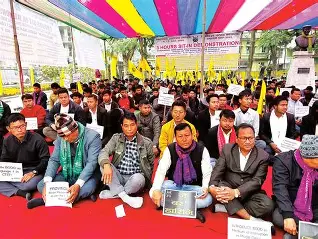
The All Bodo Students Union (ABSU) organised a large rally in Kokrajhar on Monday, demanding the full implementation of the 2020 Bodo Peace Accord. Thousands of people, including leaders from different Bodo organisations, gathered at Green Field Ground to voice their concerns over the slow progress in fulfilling the accord’s promises. The protest reflected growing frustration among the Bodo community over what they see as delays and negligence by the central and state governments.
Read More: Tripura Launches New Schemes for Women and Girls, Plans Women’s College
ABSU’s Rally Draws Thousands in Kokrajhar
The rally began early in the morning, with participants carrying placards and shouting slogans that called for justice and the honouring of the peace agreement. The event aimed to remind the authorities of their commitment to ensuring peace and development in the Bodoland Territorial Region (BTR).
ABSU president Dipen Boro addressed the crowd, highlighting the importance of the accord in bringing stability to the region. He said that the Bodo Peace Accord had given hope to thousands who had suffered for decades due to violence and conflict. “We signed this accord with the belief that it would bring lasting peace and ensure equal development. However, five years later, several clauses remain unfulfilled,” Boro stated.
He urged both the central and state governments to treat the matter with urgency. According to him, the accord was not only a political settlement but also a moral commitment to the Bodo people.
Key Demands Raised by the Protesters
The rally focused on several unaddressed issues, including the delay in granting Scheduled Tribe (Hills) status to Bodos living outside the BTR, the creation of the Bodo Kachari Welfare Council, and the setting up of a Bodo language and cultural institute. Protesters also demanded more employment opportunities for local youth under the promises made in the agreement.
The demonstrators accused the government of showing indifference toward the livelihood and rights of the Bodo people. They said that while peace had largely returned to the area, the benefits of the accord were yet to reach the ground level. “We are peaceful, but peace must also mean progress,” said a local student leader.
In addition, several speakers demanded a special package for the economic and educational upliftment of Bodo communities in remote villages. They pointed out that the lack of timely action could lead to growing resentment among the youth, undoing the gains achieved since the peace deal was signed.
Historical Background of the Bodo Peace Accord
The 2020 Bodo Peace Accord was signed between the Government of India, the Assam Government, and Bodo groups, including the ABSU and factions of the National Democratic Front of Bodoland (NDFB). The agreement aimed to end decades of insurgency and violence in Assam’s Bodoland areas. It promised more autonomy to the BTR, greater representation, and development schemes worth over Rs 1,500 crore.
At the time of signing, the accord was celebrated as a major milestone in Assam’s peace process. It brought former militants back into the mainstream and paved the way for elections to the Bodoland Territorial Council (BTC). However, many clauses regarding administrative reforms, land rights, and employment assurances are still pending.
Leaders Call for Dialogue and Unity
During the rally, ABSU leaders urged both Bodo and non-Bodo residents of the BTR to remain united in their call for justice. They stressed that the peace accord should benefit everyone in the region, not just a few political groups.
Former ABSU leader and current MLA Pramod Boro, who played a vital role in the signing of the accord, also expressed concern over the delays. He said that the peace accord was meant to be a living document, ensuring harmony, equality, and opportunity. “If implementation remains slow, the very purpose of the agreement will be defeated,” he warned.
The leaders also requested the government to resume review meetings with Bodo representatives. They emphasised that regular dialogue could help resolve differences and speed up the process.
Government’s Response and Public Sentiment
Officials from the Assam Government said that the administration remained committed to implementing the accord’s provisions. They mentioned that some progress had been made, including the strengthening of the BTC and several welfare projects. However, ABSU and other Bodo groups argue that the pace is too slow and that promises made in writing must now turn into visible results.
Locals attending the rally said they supported the ABSU’s peaceful approach. Many participants travelled from distant villages to be part of the event, viewing it as a reminder to the authorities about their responsibilities. “We want our children to have a future built on peace, not broken promises,” said a participant from Chirang district.
The Way Forward for Bodo Peace and Development
The rally in Kokrajhar underlined the importance of fulfilling commitments made in peace agreements. Experts believe that the government must take visible steps to restore public confidence. Initiatives like faster administrative reforms, employment drives, and infrastructural development could help achieve this goal.
At the same time, Bodo organisations have pledged to continue their democratic movement until the accord’s implementation is complete. They plan to send a memorandum to the Prime Minister and Home Minister, urging immediate intervention.
The 2020 accord symbolised hope for a better future in Assam’s Bodo areas. As five years have passed, the Bodo community expects action rather than assurances. The ABSU’s rally has once again drawn national attention to this issue, reminding both governments that peace can only last when promises are kept.
Read More: Assam Youth Take Protest for Zubeen Garg’s Justice to Sea