


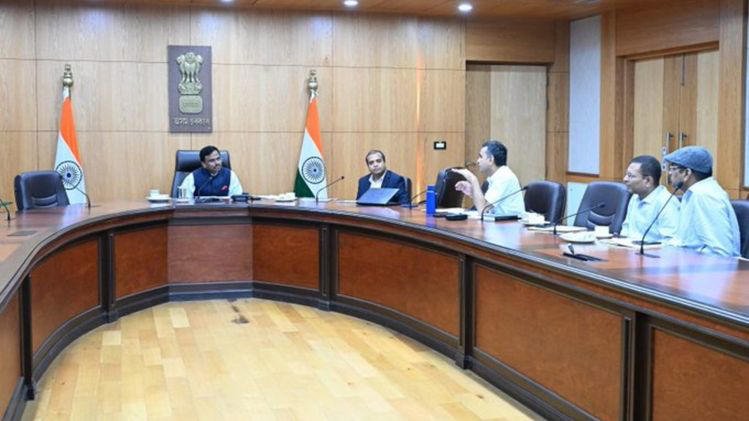
The Asian Development Bank (ADB) has reviewed the progress of the Assam Skills University (ASU) project and outlined a roadmap to expand the institution’s role in Assam’s skills, education and employment ecosystem.
An ADB Special Review Mission carried out the review from August 24 to September 3. The mission examined the progress achieved under the project and identified priorities for the university during the loan closure period and beyond.
The review concluded with a wrap-up meeting, where officials and stakeholders discussed the future direction of ASU. The roadmap focuses on strengthening industry partnerships, expanding flexible learning pathways and supporting institutions across Assam.
ADB has recommended positioning Assam Skills University as a “thematic capacity multiplier” within the state’s wider skills ecosystem. The university will support and strengthen existing institutions rather than replace them.
The proposed approach could help ASU work closely with Industrial Training Institutes (ITIs), polytechnics, colleges, vocational institutions, government skill programmes, micro, small and medium enterprises (MSMEs), and international technical and vocational education and training partners.
ADB Sees ASU as a Capacity Multiplier
A major recommendation from the ADB review focuses on the future role of Assam Skills University.
The review suggests that ASU should become a central platform within Assam’s skills ecosystem. However, the university should not attempt to replace the institutions that already provide technical and vocational education.
Instead, ASU can strengthen the existing network.
The university can support ITIs, polytechnics and colleges through collaborative programmes. It can also help vocational institutions upgrade their training systems.
Government skill programmes could benefit from closer links with higher-level education and industry requirements.
The ADB roadmap also highlights the importance of collaboration with MSMEs. Small and medium businesses play an important role in Assam’s economy. These enterprises often need workers with specialised and updated skills.
ASU could help address this demand through targeted training and industry-linked programmes.
The university can also share resources, expertise and good practices with other institutions in Assam and beyond.
Focus Shifts Beyond Short-Term Skill Certification
The ADB review has also highlighted the need to move beyond short-term skill certification.
Since 2023, around 21.15 lakh young people have received certification under the Pradhan Mantri Kaushal Vikas Yojana (PMKVY) and Deen Dayal Upadhyaya Grameen Kaushalya Yojana (DDUGKY). Around 45 per cent of those certified have secured employment.
The review noted that certification alone may not always provide a long-term pathway for professional growth.
ASU’s stackable programmes aim to address this challenge.
The university currently offers programmes across National Skills Qualifications Framework (NSQF) Levels 4 to 8. These programmes can create pathways from certificates and diplomas to higher qualifications and degrees.
Students can accumulate academic credits over time. Recognition of prior learning can also help learners receive credit for skills and knowledge they have already acquired.
This system can give students greater flexibility.
A learner may begin with a short-term qualification and later continue towards a diploma or degree. Such pathways can help working professionals and students upgrade their qualifications without starting their education from the beginning.
Industry Integration Emerges as a Key Priority
The review identified stronger industry integration as another major priority for Assam Skills University.
ASU has already developed partnerships with several organisations. The university currently has 82 industry Memorandums of Understanding.
It also runs six co-delivered degree programmes with organisations that include IBM, Larsen & Toubro (L&T) and the Centre for Development of Advanced Computing (C-DAC).
These partnerships aim to bring industry requirements closer to the classroom.
The university has also developed specialised facilities in areas such as computer numerical control (CNC), electric vehicles and metrology.
These laboratories can help students gain practical experience in sectors that increasingly require technical expertise.
The ADB review also highlighted the importance of credit-bearing apprenticeships.
Such programmes can allow students to gain workplace experience while continuing their formal education.
Industry exposure can help students understand real workplace requirements. It can also improve their chances of securing employment after completing their courses.
ASU students have completed 239 internships within six months. Students from the university have also won four medals at the India Skills competition, according to the review.
ASU to Extend Support Beyond Its Campus
The roadmap does not limit Assam Skills University’s role to students enrolled on its campus.
ADB has outlined a wider role for the institution across Assam’s education and skills ecosystem.
ASU could support learners from other institutions through internships and collaborative group projects.
The university can also contribute to faculty and trainer development.
Teachers and trainers play a crucial role in improving the quality of technical and vocational education. Training programmes for educators could therefore help strengthen the wider skills ecosystem.
The review also identified opportunities for finishing-school initiatives.
These programmes can help students prepare for the transition from education to employment. They may focus on workplace skills, communication and other areas that employers value.
ASU could also develop collaborative programmes with ITIs, polytechnics and higher education institutions.
Such partnerships can improve mobility between different levels of education and training.
The approach supports the idea that skills development should connect with both higher education and employment opportunities.
MSME Productivity and Innovation in Focus
The review also identified MSME productivity and innovation as important areas for ASU’s future work.
Micro, small and medium enterprises form an important part of the economy. Many businesses need access to skilled workers, modern technology and technical support.
ASU could help MSMEs improve productivity through specialised upskilling programmes.
The university could also provide productivity-support services, testing facilities and applied research.
These initiatives could help businesses improve processes and explore new technologies.
The roadmap therefore connects skills education with innovation and economic development.
ASU’s laboratories and research facilities could support industries that need technical testing and specialised expertise.
The review also highlighted an applied research initiative in food technology involving Tezpur University and the Ghani Khan Choudhury Institute of Engineering and Technology (GKCIET).
The Department of Biotechnology has supported the proposed initiative, which has a recommended budget of Rs 52.52 lakh over three years.
The project will use ASU’s Food Analytics and Food Microbiology laboratories for product characterisation, quality assessment and nutritional validation.
University Expands Stack-Based and Internationally Aligned Programmes
Assam Skills University currently offers 36 stack-based programmes across nine sectors.
Of these, 24 programmes have international alignment.
The range of programmes reflects the university’s focus on creating skills pathways that respond to changing industry requirements.
The university has also applied to become an NCVET Awarding Body.
If approved, this status could expand ASU’s opportunities in certification and affiliation for short-term skill programmes.
Such recognition could strengthen the university’s role in the wider vocational education system.
It could also help ASU work with more training providers and institutions.
The roadmap emphasises the importance of creating a flexible and connected education system.
Students increasingly need opportunities to upgrade their skills during different stages of their careers.
Stackable programmes can help address this need by allowing learners to progress gradually towards higher qualifications.
Assam Government to Support Convergence and Expansion
The Assam government will continue to work with ASU, ADB and other stakeholders during the next phase of the project.
The government plans to facilitate departmental support and greater convergence across different sectors.
Officials will also work on aligning job profiles and eligibility criteria with changing skill requirements.
As industries adopt new technologies, job roles continue to evolve.
Training programmes must therefore remain relevant to the labour market.
The government and ASU may also make course corrections and amendments when necessary.
This flexible approach can help the university respond to changes in industry demand and employment trends.
The ADB-backed Assam Skill University Project remains active. The project aims to strengthen technical and vocational education while improving employment prospects for young people and adults, including women and disadvantaged groups.
Roadmap Projects Major Growth by 2035
The roadmap sets ambitious targets for expanding ASU’s reach.
The overall projected impact could cover 5,047 learners by 2027.
The number could increase to 30,606 learners by 2030.
By 2035, the projected impact could reach 78,033 learners.
The expansion, however, will follow a gradual approach.
The immediate priority will focus on building effective delivery systems and strong partnerships.
ASU will also work to develop models that demonstrate measurable results.
Once these systems become stronger, the university can expand its reach more effectively.
The roadmap aims to ensure that growth does not come at the cost of quality.
Strong partnerships with industry and educational institutions will remain central to the expansion strategy.
ASU Set to Strengthen Assam’s Skills and Employment Ecosystem
The ADB review has provided Assam Skills University with a roadmap for its next phase of growth.
The university is expected to play a wider role in connecting skills, education, industry, innovation and employment.
Rather than functioning as an isolated institution, ASU aims to become a platform that supports the wider network of educational and vocational institutions.
Its industry partnerships, stackable programmes and applied research initiatives could help strengthen the connection between education and employment.
The planned expansion could also create more opportunities for young people to gain practical skills and progress towards higher qualifications.
As the project moves towards its next phase, Assam Skills University will continue to work with the state government, ADB, industries and educational institutions.
The focus will remain on building a strong delivery system before expanding the university’s reach.
With a roadmap extending to 2035, ASU is expected to play an increasingly important role in shaping Assam’s future skills and employment ecosystem.