


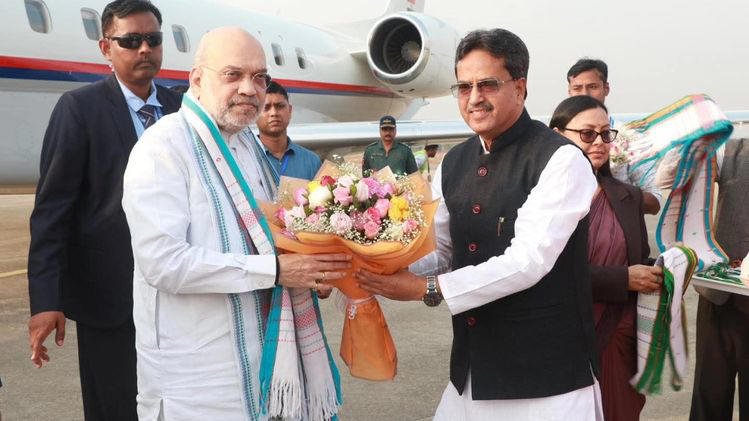
The Kokborok script debate has gained fresh political attention after Union Home Minister Amit Shah urged Tripura to consider adopting the Devanagari script for the Kokborok language. His remarks came at a time when several organisations continue to demand official recognition for the Roman script, which many speakers already use in education and cultural communication. As discussions intensify, the Kokborok script debate has once again emerged as a sensitive issue tied to identity, education, and regional politics.
During an interaction with leaders and representatives in Tripura, Shah emphasised the importance of linguistic development and standardisation. He suggested that adopting Devanagari could help strengthen academic resources and improve integration with other Indian languages. However, supporters of the Roman script argue that their demand reflects existing usage patterns and cultural preferences. Therefore, the Kokborok script debate now stands at the centre of conversations about language policy in the state.
Read More: Tripura district council poll rolls out on March 13
Kokborok script debate reflects cultural and political concerns
The Kokborok script debate has long shaped political discourse in Tripura. Kokborok, spoken widely among indigenous communities, has historically used multiple scripts, including Bengali, Roman, and Devanagari. As a result, disagreements over which script should receive official backing have continued for decades.
Amit Shah’s recent remarks added a new dimension to the ongoing conversation. He stated that adopting Devanagari could create uniformity in textbooks and educational materials. Moreover, he argued that a common script may help expand research and literary production. Supporters of this view believe that Devanagari offers a structured system that aligns with national language frameworks.
However, many cultural groups maintain that the Roman script already plays a strong role in contemporary Kokborok literature and digital communication. They say that young speakers find Roman easier to use on modern platforms. Consequently, the Kokborok script debate involves not only linguistic choices but also generational perspectives.
Political reactions intensify across Tripura
Political leaders across parties responded cautiously to Shah’s statement, recognising the sensitivity of the Kokborok script debate. Some leaders welcomed discussions on language development but urged authorities to consult community organisations before making any decision. They stressed that script selection must reflect the voices of Kokborok speakers rather than political preferences.
Meanwhile, organisations advocating for the Roman script reiterated their demand for official recognition. They argued that many educational institutions and cultural publications already rely on Roman, which makes it more practical for students and writers. In contrast, proponents of Devanagari said the script could help unify linguistic practices and encourage wider academic engagement.
Observers note that language issues often influence regional politics in Tripura. Therefore, Shah’s remarks may shape future debates about cultural identity and governance. Despite differing views, many leaders have called for dialogue and consensus building to prevent the Kokborok script debate from deepening divisions.
Educational and cultural implications of script choice
Experts believe that the outcome of the Kokborok script debate could significantly affect education in Tripura. A standardised script would allow authorities to develop consistent textbooks, teaching methods, and digital resources. At the same time, educators caution that any transition must consider existing learning practices to avoid confusion among students.
Cultural activists also emphasise the importance of preserving heritage through language. They argue that script selection should support creative expression and community participation. For instance, writers and musicians often choose scripts based on audience reach and artistic style. Therefore, the Kokborok script debate extends beyond administration into cultural life.
Additionally, digital communication has changed how languages evolve. Social media platforms and messaging apps often encourage the use of Roman script because of ease of typing. As technology continues to influence language use, policymakers face the challenge of balancing tradition with modern convenience.
Calls for dialogue as Kokborok script debate continues
Following Shah’s remarks, several community leaders urged the government to hold consultations with scholars, cultural groups, and youth representatives. They believe that inclusive discussions can help find a solution that respects linguistic diversity. While some groups support Devanagari for official purposes, others advocate for a dual-script approach that recognises existing practices.
Civil society organisations have also emphasised the need to avoid politicising language issues. They argue that the Kokborok script debate should focus on cultural preservation and educational development rather than electoral considerations. Moreover, many voices have called for research based on linguistic expertise to guide future decisions.
As the conversation evolves, observers expect the state government to carefully evaluate different perspectives. Any move toward adopting a particular script will likely require broad consensus to ensure acceptance among Kokborok speakers.
Future outlook for Kokborok language policy in Tripura
The Kokborok script debate highlights the broader challenge of balancing linguistic heritage with modern realities. Amit Shah’s suggestion to adopt Devanagari has sparked renewed discussions, yet the strong demand for Roman script recognition shows that opinions remain divided. Political leaders now face the task of navigating these views while promoting unity.
Experts believe that a thoughtful approach, supported by community participation, could turn the Kokborok script debate into an opportunity for cultural revival. Investments in language research, digital resources, and educational initiatives may help strengthen Kokborok regardless of script choice.
As Tripura moves forward, the future of Kokborok language policy will depend on dialogue, respect, and collaboration. Whether the state ultimately adopts Devanagari, recognises Roman, or explores a balanced approach, the ongoing Kokborok script debate reflects the deep connection between language, identity, and governance in the region.