


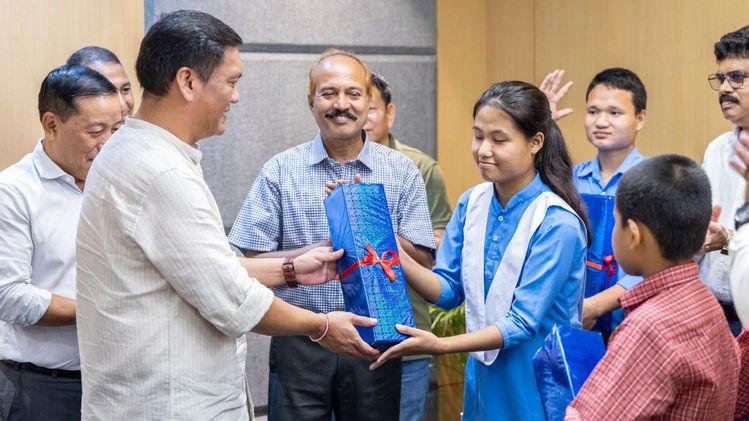
Chief Minister Pema Khandu of Arunachal Pradesh recently distributed AI-powered reading devices to differently-abled students. The initiative marks a turning point in the state’s efforts to integrate assistive technologies in classrooms. By directly addressing learning challenges, the government has opened new doors for those who often face academic hurdles due to visual or reading disabilities.
The event, held in Itanagar, saw the enthusiastic participation of students, parents, and educators. The Chief Minister personally handed over the AI reading tools for students, reinforcing the state’s commitment to equitable access in education.
Read More: Manipur Police Crackdown: Key Arrests In Statewide Raids
Smart Devices to Bridge Learning Gaps
The distributed reading devices are equipped with artificial intelligence, enabling them to read printed text aloud. These tools cater specifically to visually impaired students or those with severe reading difficulties. Designed to be lightweight and portable, they offer real-time reading support without the need for an internet connection.
According to education department officials, these AI reading tools for students are capable of translating printed text into speech in multiple Indian languages. This multilingual capacity ensures that students from various linguistic backgrounds receive adequate support.
Furthermore, the devices come with voice commands, allowing students to control them independently. This feature not only empowers them but also reduces dependency on others for reading materials.
Strong Push for Tech-Based Inclusion
Chief Minister Khandu emphasized that the state cannot leave behind any student in the march toward progress. “Our focus must remain on those who are most at risk of exclusion,” he said during the distribution ceremony. “With AI reading tools for students, we are making classrooms more accessible and learning more meaningful.”
The initiative was carried out under the Department of Education in collaboration with a Bengaluru-based tech startup specializing in AI for assistive education. The state had earlier identified over 250 students across government schools who would benefit immediately from the devices.
Officials stated that teachers have already received training to help students adapt quickly to the new technology. Feedback from pilot programs held earlier this year showed a notable improvement in student participation and reading comprehension.
Community Welcomes the Move
Reactions from parents and educators have been overwhelmingly positive. Several parents expressed gratitude, noting that their children can now study independently without relying on someone to read aloud.
Diki Tashi, a schoolteacher in Tawang, shared, “One of my students, who used to struggle with textbooks, now completes assignments on time. This tool has transformed her learning experience.”
The reading devices are expected to be rolled out in all government-aided special schools by the end of this year. District-level education officers have been instructed to identify more students who may qualify for the next phase of distribution.
Future Plans and Extended Support
While the current rollout focuses on reading support, the Chief Minister hinted at plans to expand AI-based interventions in education. The state is exploring tools for speech therapy, writing assistance, and sign language recognition. Such developments could further support students with diverse learning needs.
In addition, the government has committed to annual maintenance and software upgrades of the distributed devices. This ensures long-term sustainability and relevance in a rapidly evolving tech landscape.
Moreover, partnerships with private organizations and CSR wings of tech companies are under discussion. These collaborations could bring more sophisticated tools to the classroom, including tablets preloaded with learning content tailored to special education needs.
A Model for Inclusive Education
Arunachal’s use of AI reading tools for students could become a model for other Indian states looking to implement inclusive educational policies. With technology increasingly playing a vital role in schooling, initiatives like this ensure no child is left behind.
In a region where remote locations and resource constraints challenge access to quality education, smart solutions like these make a visible difference. The state government’s continued investment in assistive technologies reflects its vision of education for all, regardless of physical or cognitive barriers.
Final Thoughts
By providing AI-powered reading devices, Arunachal Pradesh has taken a pioneering step toward educational equity. These tools not only enhance learning outcomes but also boost students’ self-confidence and independence.
As India continues to embrace digital education, Arunachal’s initiative stands out. It proves that innovation, when used purposefully, can reshape futures. Through these efforts, the state is not just distributing gadgets—it is restoring hope, dignity, and opportunity.
Read More: Assam hill districts protests over Article 244(A): Powerful backlash erupted