


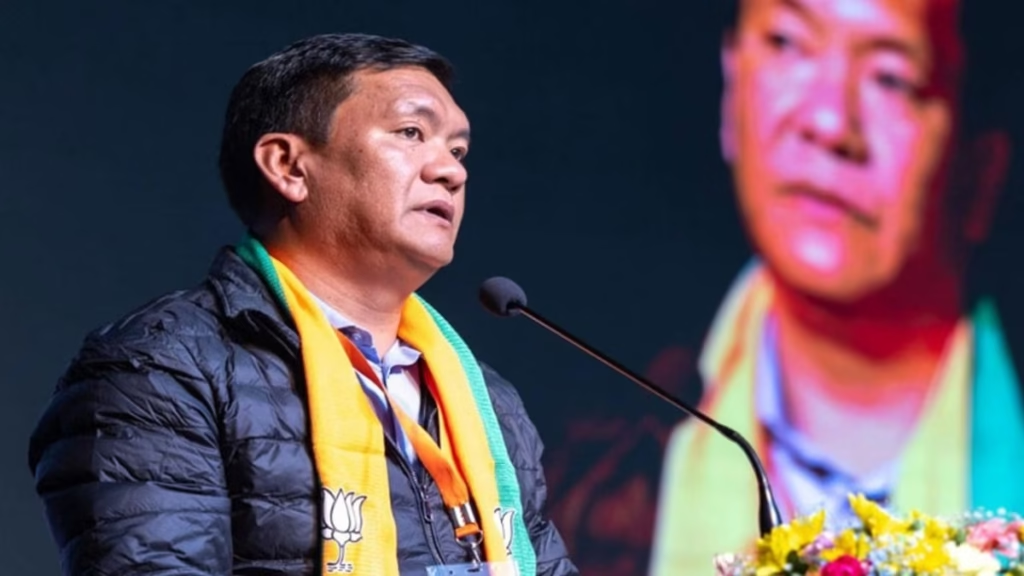
Arunachal Government Bans Foreign government-funded travel for ministers and state officials after Chief Minister Pema Khandu announced a strict austerity directive covering one full fiscal year. According to officials, the state administration imposed a complete embargo on international tours financed through public funds as part of broader expenditure control measures in Arunachal Pradesh.
Meanwhile, the announcement has intensified discussion regarding fiscal discipline, government spending, and administrative priorities within the state. Consequently, political observers, economists, and governance experts are closely evaluating the broader implications of the austerity decision.
Jamuria Mining Blast Kills Coal Worker
TMC Leader Sujit Bose Taken Into Custody
Arunachal Pradesh Announces Travel Embargo
According to government officials, the administration of Arunachal Pradesh formally prohibited ministers and senior officials from undertaking foreign trips financed by the state government.
Additionally, authorities confirmed that the restriction will remain active throughout the upcoming fiscal year. Consequently, departments and administrative entities must avoid international official tours funded through public expenditure during the restriction period.
Meanwhile, officials described the move as part of a larger strategy focused on expenditure reduction and financial discipline.
Furthermore, governance analysts noted that travel-related austerity measures often emerge when governments attempt to optimize public spending.
Chief Minister Emphasizes Fiscal Responsibility
The Arunachal Government Bans Foreign directive reflects Chief Minister Pema Khandu’s focus on financial prudence and administrative efficiency.
According to administrative sources, the government aims to redirect resources toward essential developmental and welfare-oriented sectors instead of non-essential expenditure.
Additionally, officials stated that restricting government-funded foreign tours could significantly reduce administrative costs over the fiscal cycle. Consequently, departments may face stricter financial monitoring and expenditure review mechanisms.
Meanwhile, economists described the move as a visible signal of fiscal responsibility within the state administration.
At the same time, governance experts emphasized that effective austerity measures require balanced implementation to avoid affecting critical administrative functions.
Public And Political Reactions Emerge
According to observers, the travel embargo has triggered mixed reactions among political groups, civil society organizations, and residents across Arunachal Pradesh.
Additionally, supporters of the decision welcomed the policy and argued that governments should prioritize public welfare spending over expensive official travel. Consequently, discussions regarding government expenditure and administrative accountability intensified after the announcement.
Meanwhile, some critics questioned whether broader structural reforms and additional expenditure reductions would follow the measure.
Furthermore, public policy analysts observed that symbolic austerity actions often shape public perception regarding governance credibility and leadership priorities.
Departments Expected To Adjust Administrative Plans
The Arunachal Government Bans Foreign policy may significantly influence administrative scheduling and official engagement strategies during the fiscal year.
According to officials, departments will need to prioritize virtual coordination, domestic meetings, and alternative administrative arrangements instead of international travel programs.
Additionally, authorities may review future participation in overseas conferences, training programs, and official delegations. Consequently, administrative planning processes could witness operational adjustments across several departments.
Meanwhile, technology and governance experts highlighted the increasing use of digital communication systems for official coordination and policy discussions.
At the same time, analysts noted that governments worldwide increasingly adopt cost-saving measures involving official travel and administrative logistics.
Fiscal Measures Gain Wider Attention
According to economists, several state governments across India have recently focused on expenditure control measures amid changing fiscal and economic conditions.
Additionally, austerity initiatives involving travel restrictions, procurement control, and fuel management continue gaining importance within public administration frameworks. Consequently, policies targeting non-essential government expenditure have become more common in fiscal planning discussions.
Meanwhile, financial experts emphasized that transparent implementation remains critical for maintaining public confidence in austerity measures.
Furthermore, governance specialists observed that visible spending cuts often strengthen public expectations regarding accountability and efficient resource utilization.
Focus Remains On Future Administrative Reforms
The Arunachal Government Bans Foreign decision has increased speculation regarding additional austerity and administrative reform measures in the state.
According to political observers, the government may continue introducing expenditure-control initiatives aimed at strengthening fiscal stability and operational efficiency.
Additionally, media organizations and governance experts continue monitoring the long-term impact of the foreign travel embargo on administrative functioning. Consequently, public attention remains focused on whether similar restrictions could extend to other sectors of government operations.
Meanwhile, analysts stressed that maintaining administrative effectiveness and development momentum remains essential during fiscal adjustment periods.
Conclusion
Arunachal Government Bans Foreign government-funded tours after Chief Minister Pema Khandu imposed a one-year restriction on international travel for ministers and state officials in Arunachal Pradesh. Meanwhile, the austerity measure has intensified debate regarding fiscal discipline, administrative expenditure, and governance priorities within the state.
Furthermore, the policy reflects broader efforts to strengthen financial accountability and reduce non-essential spending across government departments. As the travel embargo takes effect, political observers, economists, and residents are expected to closely monitor its administrative and financial impact in the coming months.
FAQs
What restriction did the Arunachal government announce?
The government banned foreign government-funded tours for ministers and officials.
Who introduced the austerity measure?
Chief Minister Pema Khandu announced the policy.
How long will the travel embargo remain active?
The restriction will continue for one full fiscal year.
Why did the government impose the ban?
Officials stated that the move aims to reduce expenditure and strengthen fiscal discipline.
How may departments adjust operations?
Departments may rely more on domestic coordination and digital communication systems.
Why is the Arunachal Government Bans Foreign development significant?
The Arunachal Government Bans Foreign policy highlights growing focus on austerity and financial management within state administrations.