


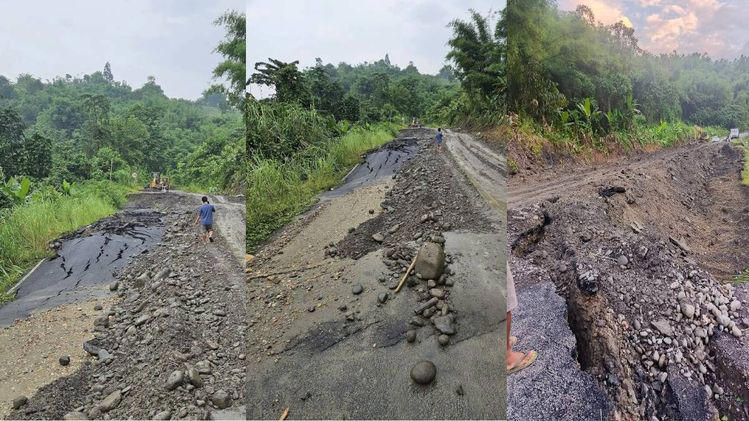
Heavy rainfall has triggered a major collapse on the Manmao–Changlang highway in Arunachal Pradesh, disrupting connectivity and creating difficulties for residents, commuters, and transport operators. Continuous downpours weakened the road foundation and caused a crucial section of the highway to give way.
The damaged stretch serves as an important transportation corridor in Changlang district. Its collapse has disrupted the movement of people, vehicles, and essential supplies. The incident has once again highlighted the challenges of maintaining road infrastructure in mountainous regions that experience intense monsoon rainfall.
Officials have launched emergency measures to assess the damage and restore connectivity at the earliest.
Vital Road Link Faces Major Disruption
The Manmao–Changlang highway connects several villages and towns in the district. Residents depend on the route for daily travel, trade, healthcare, education, and government services. The collapse has interrupted normal traffic movement and forced commuters to search for alternative routes.
For many remote communities, the highway serves as a lifeline. Any disruption affects access to markets, hospitals, schools, and administrative offices. Local residents reported long delays and transportation difficulties after the road collapsed.
Several vehicles remained stranded near the damaged section. Authorities advised travelers to avoid the affected stretch until engineers complete safety inspections and restoration work.
Continuous Rainfall Weakens Road Structure
Officials attributed the collapse to days of persistent rainfall across the region. Heavy rain saturated the soil and increased pressure on road embankments and surrounding slopes. As water accumulated beneath the surface, it weakened the highway’s structural stability.
Experts explained that prolonged rainfall often erodes the layers supporting roads in hilly terrain. Water can seep into cracks and gradually wash away the foundation. This process often leads to subsidence, landslides, and road failures.
The latest incident reflects a recurring challenge in Arunachal Pradesh. Every monsoon season brings heavy rain, landslides, and transportation disruptions across several districts.
Weather agencies continue to monitor conditions as forecasts predict additional rainfall in the coming days.
Authorities Conduct Damage Assessment
Soon after receiving reports of the collapse, officials from the district administration and public works departments reached the site. Disaster management teams also joined the assessment process.
Engineers are examining the damaged section to determine the extent of the collapse and identify suitable restoration measures. They are evaluating slope stability, drainage conditions, and road foundation strength before beginning reconstruction work.
Authorities have deployed personnel to regulate traffic and prevent accidents near the site. Workers installed warning signs and barriers around the damaged stretch to keep travelers away from unsafe areas.
Officials assured residents that the administration would prioritize restoration efforts and work to reopen the route as quickly as possible.
Local Communities Feel the Impact
The highway collapse has affected thousands of residents who rely on the road for transportation and daily activities. People in nearby areas have expressed concern about delays in essential services and the movement of goods.
Transport disruptions can create shortages of food supplies, fuel, medicines, and construction materials. These challenges become more severe in remote areas where road networks remain limited.
Business owners and traders have also reported difficulties. Many depend on uninterrupted transportation to move goods between markets and neighboring regions. The road collapse has slowed commercial activities and increased transportation costs.
Residents have urged authorities to restore the highway quickly while ensuring the safety of workers and commuters.
Mountainous Terrain Creates Infrastructure Challenges
Arunachal Pradesh’s geography presents significant challenges for road construction and maintenance. Many highways pass through steep mountains, fragile slopes, and geologically sensitive areas.
Heavy rainfall increases these challenges by destabilizing soil and rock formations. Engineers must regularly monitor vulnerable stretches and carry out preventive maintenance to reduce risks.
Experts believe climate variability may further increase the frequency of extreme rainfall events. As weather patterns become more unpredictable, infrastructure projects must adapt to changing environmental conditions.
The Manmao–Changlang highway collapse demonstrates the importance of strengthening transportation networks in vulnerable regions.
Restoration Work Expected Soon
Authorities plan to begin restoration work as soon as weather conditions improve. Heavy machinery and technical teams will clear debris, stabilize slopes, and repair the damaged highway section.
Engineers may introduce stronger drainage systems, reinforced foundations, and slope protection measures to prevent future failures. These improvements can increase the road’s resilience against heavy rainfall and erosion.
Officials are also exploring temporary transportation alternatives for affected communities. Such arrangements could help residents access essential services while repair work continues.
The timeline for restoration will depend on weather conditions and the severity of the damage.
Strengthening Disaster Preparedness
The incident has reinforced the need for effective disaster preparedness in regions vulnerable to natural hazards. Arunachal Pradesh faces recurring monsoon-related challenges, including floods, landslides, and road collapses.
Government agencies have strengthened coordination mechanisms to improve emergency response. Authorities are also investing in early warning systems and disaster management strategies to reduce risks.
Officials urged residents to stay informed about weather alerts and avoid unnecessary travel during periods of intense rainfall. Public awareness remains a crucial component of disaster risk reduction.
Quick response measures and strong coordination can significantly reduce the impact of such incidents on local communities.
Building More Resilient Infrastructure
Experts believe future infrastructure projects must prioritize resilience and sustainability. Engineers increasingly recommend climate-adaptive designs that can withstand extreme weather events.
Improved drainage systems, advanced slope stabilization techniques, and stronger road foundations can help reduce the risk of highway failures. Such investments can also lower maintenance costs and improve long-term reliability.
The government continues to expand road connectivity across Arunachal Pradesh. At the same time, authorities are focusing on improving the durability of transportation infrastructure in challenging terrain.
The Manmao–Changlang highway collapse is likely to strengthen discussions about resilient infrastructure planning across the state.
Looking Ahead
The collapse of the Manmao–Changlang highway has disrupted transportation and affected communities across the region. Heavy rainfall exposed the vulnerability of critical infrastructure and highlighted the challenges of maintaining roads in mountainous terrain.
Authorities have already begun damage assessments and are preparing restoration measures. Their immediate priorities include ensuring public safety, restoring connectivity, and minimizing disruptions to essential services.
The incident also offers important lessons for future infrastructure development. Stronger engineering practices, better drainage systems, and proactive maintenance can help reduce the impact of extreme weather events.
As repair efforts move forward, government agencies, engineers, and local communities will work together to restore normalcy. Their efforts will not only reconnect affected areas but also contribute to building a more resilient transportation network for Arunachal Pradesh.