


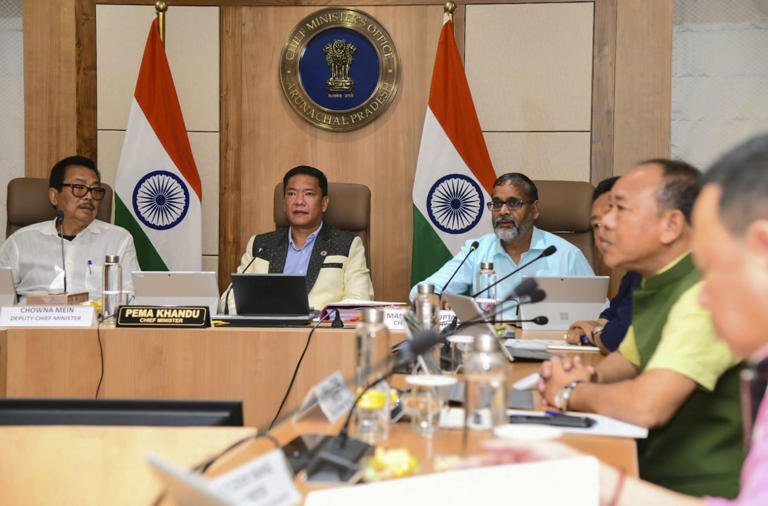
The Arunachal Pradesh government will create a separate department for the Inner Line Permit (ILP) system to strengthen tribal rights protection and improve monitoring across the state, Chief Minister Pema Khandu announced on Wednesday.
The Chief Minister said the new department would focus only on ILP-related matters. It would handle permit regulation, digital monitoring, implementation, and protection of indigenous interests. He added that the initiative reflects the government’s strong commitment to protecting the identity, culture, and land rights of the people of Arunachal Pradesh.
Speaking at an official programme, Khandu said the ILP system remains one of the strongest safeguards for tribal communities in the state. He explained that growing population movement and rising economic activities have increased pressure on the present administrative system.
According to him, the government now wants a stronger mechanism to manage the permit system efficiently. He said the state administration would ensure stricter enforcement of ILP rules while maintaining transparency and public convenience.
Read More: Maharashtra Clears Adani’s ₹70,000-Cr Coal Gasification Project
Separate Department to Improve Coordination
Khandu said multiple departments currently handle ILP-related work. This arrangement often creates delays and confusion during implementation. Therefore, the government plans to establish a dedicated department to improve coordination and monitoring.
He said the proposed department would simplify the permit process and strengthen enforcement across the state. Officials would also maintain better communication with district administrations, police units, and border checkpoints.
The Chief Minister said the government would introduce advanced digital systems for permit tracking and verification. Authorities would use technology to prevent misuse of permits and detect illegal entry more quickly.
He added that the new department would maintain a centralised database of permit holders. This system would help officials monitor movement and verify documents more efficiently.
Khandu clarified that the move does not target outsiders. Instead, the government wants to protect the constitutional rights of indigenous communities living in Arunachal Pradesh.
Tribal Identity and Culture Remain Key Focus
The Chief Minister said protecting tribal identity remains one of the government’s highest priorities. He noted that Arunachal Pradesh has rich cultural diversity and unique traditions that need strong protection.
According to Khandu, the ILP system helps preserve demographic balance in the state. It also protects local customs, languages, and traditional practices from outside pressure.
He warned that unchecked migration could create stress on land, natural resources, and employment opportunities for local communities. Therefore, the government wants stronger safeguards to protect the interests of indigenous people.
Khandu also said development and tribal protection must move together. He stressed that economic growth should never weaken the cultural heritage of the state.
The Chief Minister urged citizens to cooperate with authorities in implementing ILP regulations. He also encouraged community organisations to continue supporting awareness campaigns regarding tribal rights and permit rules.
Government Plans Technology-Driven ILP Reforms
The Arunachal Pradesh government has increased its focus on digital governance in recent years. Khandu said technology would play a major role in strengthening the ILP system under the proposed department.
The government plans to expand online permit services and introduce faster digital verification systems. These changes would make the process easier for visitors while improving security monitoring.
Officials said real-time tracking systems could help authorities identify violations more effectively. Digital data management would also reduce paperwork and improve administrative efficiency.
Khandu said the government would train officials and police personnel to operate the upgraded system smoothly. He added that proper coordination between departments remains essential for effective implementation.
The Chief Minister expressed confidence that technology-driven governance would improve public services and strengthen security measures across the state.
ILP System Holds Historic and Constitutional Importance
The Inner Line Permit system operates under the Bengal Eastern Frontier Regulation of 1873. Several northeastern states, including Arunachal Pradesh, follow this regulation. Indian citizens from outside these states need ILP documents for temporary visits.
The British administration originally introduced the system to protect tribal areas from external interference. Over time, the ILP framework became an important safeguard for indigenous rights and local traditions.
Khandu said the Arunachal Pradesh government would continue consulting community groups and civil society organisations on ILP-related matters. He stated that public participation remains important for stronger governance.
He also praised tribal organisations for spreading awareness about the importance of demographic protection and cultural preservation. According to him, these groups have played a major role in protecting the interests of local communities.
The Chief Minister added that the government respects the sentiments of indigenous people regarding land rights and identity protection.
Government Supports Development Within Safeguards
While discussing tribal protection, Khandu said the government also supports economic development and investment. He explained that Arunachal Pradesh welcomes tourism, education, and infrastructure projects within the framework of constitutional safeguards.
The Chief Minister said the government wants balanced and sustainable growth across the state. He stressed that preserving cultural identity and achieving economic progress should happen together.
Officials indicated that the government would soon begin administrative planning for the new ILP department. Authorities are expected to prepare guidelines regarding staffing, operations, and digital infrastructure in the coming months.
Several tribal groups and local organisations welcomed the announcement. Many of them had demanded stricter enforcement of ILP regulations for years.
Community leaders believe the new department could improve monitoring and strengthen protection mechanisms for indigenous communities.
Khandu concluded by saying the proposed department would improve governance, strengthen security systems, and reinforce constitutional protections for tribal people in Arunachal Pradesh. He added that the government remains fully committed to protecting the unique identity and traditions of the state while ensuring steady development and progress.
Read More: President Murmu Calls for Citizen-Friendly Policing in Sikkim