


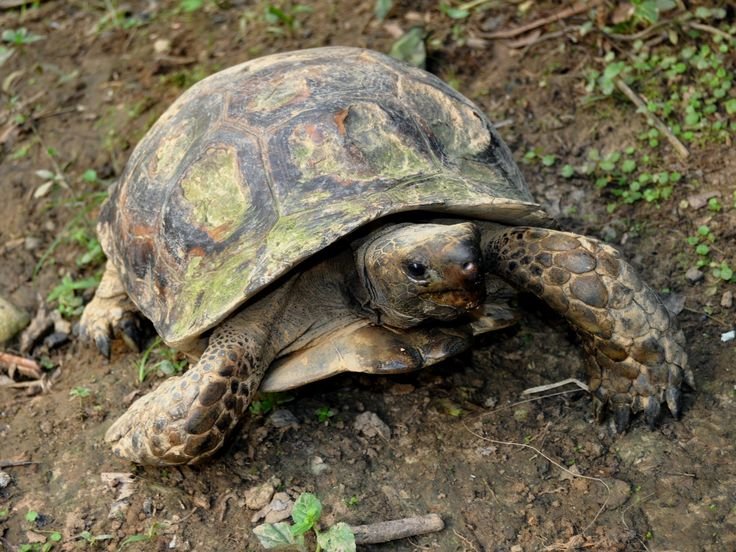
In a landmark achievement for wildlife conservation, Manipur Zoo has successfully completed the first-ever artificial Asian Giant Tortoise incubation in India. This milestone resulted in the hatching of 28 critically endangered tortoise hatchlings, marking hope for the species’ survival.
This conservation breakthrough demonstrates that targeted efforts, when backed by science and dedication, can reverse the decline of one of the world’s most endangered reptiles.
A Major Milestone for Tortoise Conservation in India
The Asian Giant Tortoise, known for its large size and shy nature, has faced decades of population decline due to habitat loss, illegal wildlife trade, and hunting. Native to parts of Northeast India and Southeast Asia, its survival in the wild has become increasingly precarious.
That’s what makes this development so significant. For the first time in India, conservationists have successfully nurtured hatchlings through artificial incubation, replicating the temperature and humidity conditions found in the wild. This process gives the eggs a much higher chance of survival, away from natural threats like predation and environmental instability.
“This success proves that ex-situ conservation, when done right, can play a pivotal role in saving endangered species,” said an official from the Manipur Forest Department.
Inside the Artificial Incubation Process
Controlled Conditions, Natural Results
The eggs, carefully collected from within the zoo’s protected enclosure, were placed inside a custom-designed temperature- and humidity-controlled incubator. Zoo officials monitored the environment 24/7, ensuring that optimal conditions mimicked the forest floor where these tortoises would naturally nest.
After weeks of patient monitoring, the first cracks appeared—and soon, 28 baby tortoises crawled into existence. Their arrival was met with celebration across India’s conservation community.
This technique not only increased the hatch rate, but also minimized threats such as fungal infections, parasitic attacks, and trampling.
Why Manipur Zoo’s Success Matters
A Regional Win with Global Impact
Manipur Zoo has become the first facility in India to achieve this success for the Asian Giant Tortoise, making it a reference point for future conservation efforts across the Northeast region and the rest of India.
This also reinforces the importance of local institutions in supporting India’s broader biodiversity goals under the National Biodiversity Action Plan and the Wildlife Protection Act, 1972.
Several northeastern states—Assam, Nagaland, Arunachal Pradesh—are home to dwindling populations of the Asian Giant Tortoise. With Manipur setting this benchmark, other conservation bodies can replicate the technique to stabilize and grow tortoise populations in those states as well.
For more on wildlife protection policies, visit the Ministry of Environment, Forest and Climate Change.
Conservation at a Crossroads
The IUCN Red List classifies the Asian Giant Tortoise as Critically Endangered, with wild populations declining rapidly. Their long lifespan, slow reproductive rate, and high vulnerability make them especially prone to extinction in fragmented habitats.
Through initiatives like this one, India joins a small group of countries that are actively experimenting with assisted reproduction and artificial incubation to restore threatened reptile populations.
“If we act now, using science and empathy, we can reverse the extinction curve,” noted a conservationist with the Wildlife Institute of India.
What’s Next for the Hatchlings?
Manipur Zoo plans to keep the hatchlings under strict observation for the next few months. Their health, feeding habits, and shell development will be tracked carefully to ensure high survival rates.
Once the juveniles reach a suitable size, officials may release some into semi-wild, monitored habitats or expand the program to other northeastern states. This will enhance genetic diversity and reduce risks of inbreeding, a key factor in long-term species survival.
The zoo is also considering partnerships with regional research institutes to scale up the program and develop standard operating protocols for other endangered reptiles.
Protecting What Remains
This achievement is a powerful reminder that every species matters. If India can save its slowest walkers through fast-paced science, it can do much more for its rapidly vanishing biodiversity.
We, as citizens, can contribute by:
- Supporting local wildlife conservation efforts
- Refusing to buy exotic pets or wildlife products
- Educating others about endangered species
READ MORE: National Teachers’ Awards 2025: 7 Northeast Educators Honored