


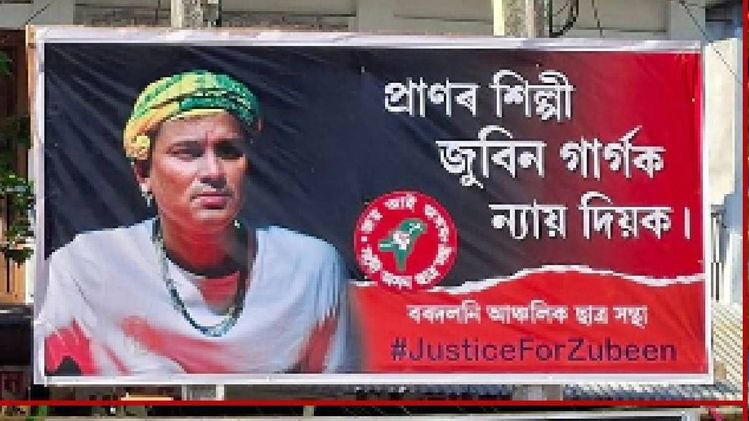
The All Assam Students’ Union (AASU) has begun a statewide campaign demanding justice for Zubeen Garg, aiming to keep public focus on the mysterious death of the beloved singer and ensure a fair, transparent investigation. Through posters, hoardings, and public appeals, AASU is turning the singer’s passing into a rallying point for justice across Assam.
Read More: Assam BTC Swearing-In Delayed Amid Puja Festivities
AASU Takes the Lead: What the Campaign Involves
AASU has put up posters and hoardings in many towns and cities across Assam under the banner “Justice for Zubeen.” These displays show Zubeen Garg’s face and messages from fans calling for accountability. Cities such as Guwahati, Dergaon, Morigaon, Golaghat, Silapathar, Dhemaji, Kokrajhar, Bokajan, Bijni, and Nagaon are among those where the campaign is very visible.
The campaign is not only symbolic. AASU leaders are appealing to citizens, artists, cultural organizations, and the media to join in the demand for a transparent probe. The intention is to keep pressure on authorities so that the case does not fade away, but receives full scrutiny. By launching this statewide campaign demanding justice for Zubeen Garg, AASU aims to transform grief into a collective demand for truth and accountability.
Why This Campaign Has Resonated
Zubeen Garg was more than a singer; he was a cultural icon. His songs connected with people from all walks of life. In Assam, he is often called the voice of the state. His sudden death under circumstances that many find mysterious has caused shock, sadness, and questions.
Because Zubeen’s influence was so strong, his passing stirred deep emotions. AASU’s campaign has struck a chord because many feel that someone so important deserves justice and answers, not just for fans but for Assam’s cultural dignity.
Many people believe that the investigation must be open, fair, and free of external pressure. The campaign is calling for authorities to publish their findings, not hide them. It calls for disciplinary and legal action if negligence or foul play is found. The demand is for truth, not rumors or silence.
AASU is involving ordinary citizens, students, artists, and locals to stay alert and vocal. The campaign sends a message that justice is not just for a few, but for a community. It encourages public participation, so the investigative bodies know that the people are watching.
What Is Happening in the Investigation
A Special Investigation Team (SIT) and the CID are handling the probe. Several individuals connected to Zubeen’s last movements have been summoned for questioning. These include artists, his manager, and others who may have had a role in organizing events around his trip.
Authorities have registered multiple FIRs, conducted raids, and carried out forensic analyses of documents, financial records, and travel logs. The trip that Zubeen made to Singapore, where he died, is also under detailed scrutiny.
AASU’s campaign is intended to ensure that all these steps are disclosed to the public, and that no angle is missed. The students’ body has also warned that if the SIT’s results are unsatisfactory, the case should be escalated to a higher agency such as the CBI.
Challenges Facing the Campaign
Political pressure and interference remain a risk in such sensitive cases. The campaign must guard against attempts to stall or skew the investigation. Another challenge is sustaining momentum. Public attention often fades with time, so AASU will need to keep the issue alive through events, reminders, and community outreach.
There is also the need to ensure that campaign activities remain peaceful and lawful. In places where protests or strong public opinion may upset local powers, safety is a concern. Finally, balancing emotion with evidence is vital. The grief around Zubeen’s death is intense, but the campaign must rely on facts and proof to ensure justice.
Significance of This Movement
By demanding justice for Zubeen Garg, AASU is reminding the state that no case should be buried. This may set a precedent where public figures or citizens who die under unclear circumstances will have their cases handled with full transparency.
As a students’ body, AASU is showing that youth, students, and civil society can demand fairness. This activism in memory of Zubeen can inspire more engagement in public issues and more insistence on institutional integrity.
For many fans and admirers, closure in this tragic situation depends not just on acceptance, but on knowing what really happened. The campaign offers a way for society to heal, by facing the facts rather than leaving doubts lingering.
What Comes Next
AASU may organize candlelight vigils, public gatherings, or cultural events remembering Zubeen while renewing calls for inquiry. They may petition the state and central governments to intervene or supervise the case. Legal activists, journalists, and human rights groups may also join hands to monitor the investigation. If the SIT’s report is seen as insufficient, pressure may build to hand over the case to the CBI or a Supreme Court–monitored panel.
Assam’s statewide campaign demanding justice for Zubeen Garg marks a turning point in how society handles the tragic loss of a cultural figure. AASU’s effort stands for more than protest. It stands for dignity, truth, and accountability.
In the days ahead, the strength of this campaign will lie in its ability to combine emotion with rational demand, to keep up pressure, and to engage the public in asking tough questions. If the movement succeeds, it may restore confidence that even in tragedy, Assam’s people will not settle for obscure answers. They will insist on justice.
Read More: Meghalaya ex-militants revisit 2014 peace pact, key commitments pending