


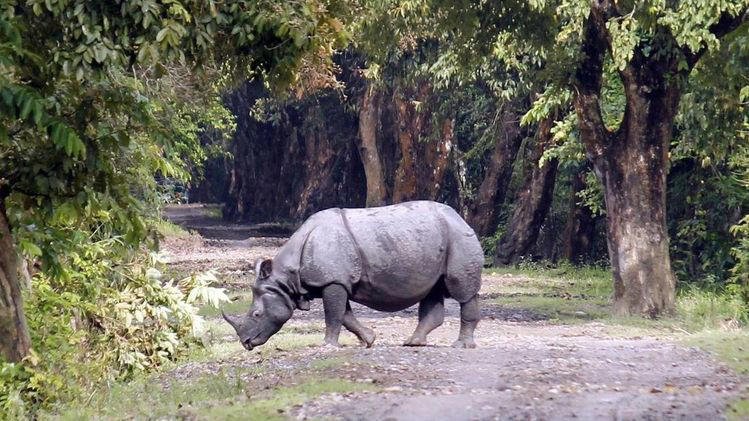
Assam has expanded its protected forest network by 403.62 square kilometres, Chief Minister Himanta Biswa Sarma said, describing the move as the biggest green expansion in India. The announcement highlights the state government’s renewed focus on forest conservation, wildlife protection and ecological security.
The expansion marks an important step for a state known for its rich biodiversity. Assam is home to several national parks, wildlife sanctuaries, tiger reserves and elephant reserves. Its forests also support a wide range of species and provide important habitats across the Brahmaputra and Barak valley regions.
Read More: Assam Government Initiates Talks to Resolve Long-Standing Boundary Disputes
According to the Assam government’s Environment, Forest and Climate Change Department, the state’s protected area network covers thousands of square kilometres. It includes national parks, wildlife sanctuaries, tiger reserves, elephant reserves and biosphere reserves.
Assam Expands Protected Forest Network
The addition of 403.62 square kilometres represents a major increase in the area receiving stronger legal and administrative protection. Such expansion can help conserve forests while also protecting wildlife habitats from activities that could damage sensitive ecosystems.
Chief Minister Himanta Biswa Sarma highlighted the scale of the expansion while discussing Assam’s environmental efforts. He presented the move as a major achievement in the state’s conservation drive.
The decision also comes as Assam faces growing pressure on its natural resources. Population growth, infrastructure development and changes in land use can affect forest areas. Therefore, expanding protected areas can help the government maintain ecological balance while protecting important habitats.
Moreover, the move can strengthen Assam’s existing conservation network. The state already has several internationally recognised natural areas, including Kaziranga and Manas. Both sites play an important role in protecting endangered wildlife and supporting biodiversity.
Assam Has a Rich Forest and Wildlife Heritage
Assam has one of India’s most important biodiversity landscapes. Its forests range from tropical wet evergreen forests to tropical moist and dry deciduous forests. The state also has subtropical pine forests in some areas.
The Assam government records 18 forest types across five major forest groups. The state’s recorded forest area covers about 26,832 square kilometres. It accounts for more than 34 per cent of Assam’s geographical area.
The protected area network adds another layer of conservation. The government’s current information lists national parks and wildlife sanctuaries covering thousands of square kilometres. These areas protect species such as the one-horned rhinoceros, tiger, elephant, wild buffalo and several species of deer.
Therefore, the latest expansion can further strengthen the protection available to Assam’s forests and wildlife.
Conservation Gains Importance Amid Development
Assam has witnessed rapid infrastructure and economic development in recent years. The state has invested in roads, railways, industries and other infrastructure projects. At the same time, authorities have faced the challenge of protecting environmentally sensitive areas.
The government has increasingly tried to balance development with conservation. One example is the Kaziranga Elevated Corridor project. The project includes a 35-kilometre elevated wildlife corridor designed to allow animals to move safely through the region.
Such initiatives show the growing emphasis on reducing the impact of infrastructure on wildlife. The expansion of protected forest areas can support the same objective.
However, conservation requires more than declaring new protected areas. Authorities must also manage these forests effectively. They need to prevent illegal activities, protect wildlife corridors and work with communities living near forest boundaries.
Benefits for Wildlife Protection
The expansion could provide several benefits for Assam’s wildlife. Larger protected areas can give animals more space to feed, breed and move between habitats.
This is particularly important for species that require large territories. Elephants and tigers, for example, often move across wide landscapes. Fragmentation of their habitats can increase the chances of human-wildlife conflict.
A stronger forest network can also protect smaller species and plant life. Forest ecosystems support birds, reptiles, insects and countless plant species. Protecting these habitats therefore helps preserve biodiversity as a whole.
Furthermore, larger conservation areas can strengthen wildlife corridors. Such corridors allow animals to move between separate forest blocks. They can reduce isolation between populations and support healthier ecosystems.
Importance for Assam’s Climate Goals
Forest conservation also has an important role in addressing climate change. Forests absorb carbon dioxide and help regulate local temperatures. They also support water systems and reduce soil erosion.
For Assam, these functions are particularly important. The state experiences heavy rainfall and recurring floods. Healthy forests can help regulate water flow and reduce soil degradation in vulnerable areas.
Therefore, protecting more forest land can support both biodiversity and climate resilience. The new expansion could contribute to Assam’s broader environmental goals while strengthening its natural defences.
The government can also use protected forests to promote environmental education and scientific research. Better research can help officials understand changes in wildlife populations and forest health.
Community Participation Remains Important
Conservation efforts also need the participation of local communities. Many people live near forests and depend on natural resources for parts of their livelihoods.
The government therefore needs to ensure that conservation policies consider local concerns. Community participation can help authorities prevent illegal activities and improve forest management.
The Assam Project on Forest and Biodiversity Conservation also focuses on participatory forest management and alternative livelihoods for forest-dependent communities. Its stated goal includes improving biodiversity management while building climate resilience and supporting local livelihoods.
This approach can become increasingly important as Assam expands its protected forest network.
Assam Strengthens Existing Conservation System
The latest expansion adds to a conservation system that already includes several major protected areas. Assam’s network covers national parks, wildlife sanctuaries, tiger reserves and elephant reserves.
Kaziranga remains one of the state’s most famous conservation success stories. The park is a World Heritage Site and a major habitat for the greater one-horned rhinoceros. It also supports tigers, elephants, wild buffaloes and several other species.
Manas National Park is another major conservation landscape. It is also a biosphere reserve and forms an important ecological belt along the Himalayan foothills.
The addition of new protected forest areas can help connect and strengthen such conservation efforts.
Government Faces Challenge of Effective Protection
The announcement marks an important conservation milestone. However, the next challenge will be effective implementation.
The government will need to ensure that newly protected areas receive adequate monitoring and management. Forest officials will also have to address illegal logging, encroachment, poaching and habitat degradation where such threats exist.
At the same time, authorities must work with communities and local administrations. A cooperative approach can make conservation measures more effective and reduce conflicts over land and resources.
The success of the expansion will ultimately depend on how well the newly protected areas are managed over the long term.
Assam Positions Itself as Conservation Leader
With the addition of 403.62 square kilometres to its protected forest network, Assam has announced a significant expansion of its conservation efforts. Chief Minister Himanta Biswa Sarma has described the move as the biggest green expansion in India.
The decision strengthens the state’s existing network of protected forests and wildlife habitats. It also supports Assam’s broader efforts to balance economic development with environmental protection.
For a state with such exceptional biodiversity, forest conservation remains a long-term priority. Protecting larger landscapes can help secure wildlife habitats, strengthen ecological resilience and support local communities.
As Assam moves forward, effective management of the expanded network will be crucial. If the government combines stronger protection with scientific management and community participation, the latest expansion could become an important milestone in the state’s environmental journey.
Read More: Kharge Mocks Amit Shah, Calls BJP-RSS ‘Anti-India’ in Goa Speech