


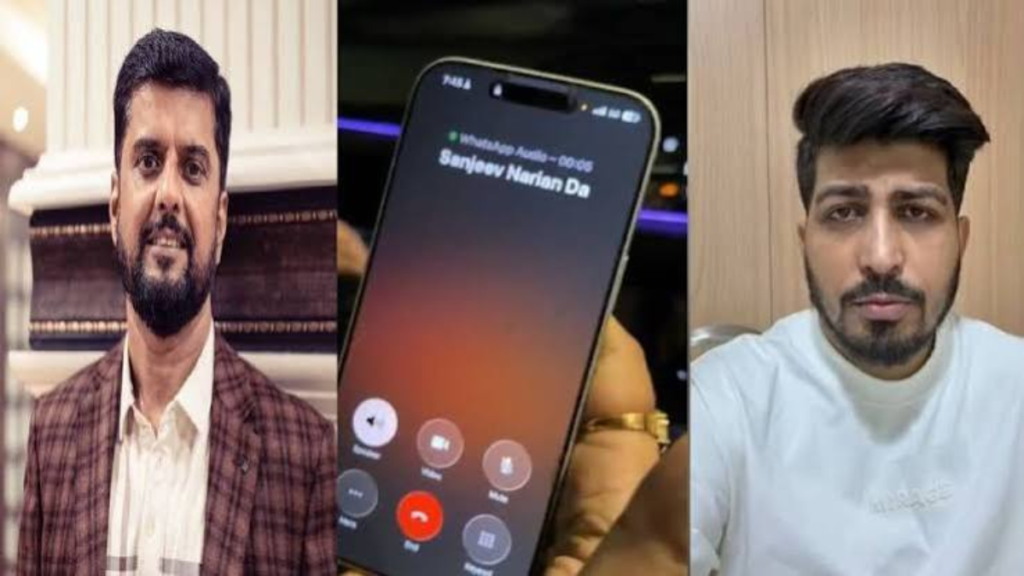
The Assam audio controversy has intensified after a leaked conversation involving Prag News owner Sanjive Narain and businessman Nayan Ghosh triggered allegations of a possible attempt to suppress unfavourable news coverage. Ghosh alleges that Narain demanded money to stop the television channel from broadcasting a report against him.
Narain has denied the allegation, maintaining that their conversation concerned a Mercedes-Benz car transaction. The recording has raised questions about media accountability, the basis of the channel’s earlier allegations against Ghosh and the need for an independent examination of the competing claims.
Assam Audio Controversy Puts Media Owner Under Scrutiny
The Assam audio controversy centres on a recording that reportedly captures a conversation between Narain and Ghosh. The dispute emerged after Prag News aired a report alleging Ghosh’s involvement in drug trafficking, a charge he has denied.
According to reports published on October 14, 2026, Ghosh accused Narain of seeking money in exchange for withholding the second part of the report. Narain, however, rejected this interpretation and said he knew Ghosh as a customer of his Mercedes-Benz dealership in Guwahati.
Narain also said he learned about the allegations against Ghosh only after the channel broadcast its report. Although he acknowledged the conversation, he disputed the suggestion that it involved a demand for money to suppress news coverage.
The competing accounts have made the recording a central part of the dispute. However, the available information does not establish that either party’s interpretation is correct.
Leaked Recording Raises Questions About Money Demand
The leaked conversation has drawn attention to the meaning of certain remarks attributed to the speakers. In the recording, Narain is purportedly heard referring to a second part of the report and saying he had persuaded his editors to delay its broadcast.
He allegedly refers to Ghosh sending the bastu, an Assamese word that can mean a thing or an object. Narain reportedly asks him to send it quickly.
Ghosh responds that he will speak to the person handling his money and arrange for that person to contact Narain. However, the exchange does not explicitly identify the object or payment being discussed.
Narain maintains that the conversation concerned a vehicle transaction. Ghosh, meanwhile, claims the reference was to money sought to prevent further adverse reporting.
The recording’s authenticity, completeness and full context have not been independently established. Therefore, the conversation alone cannot conclusively prove a blackmail attempt or establish the purpose of the proposed payment.
Assam Audio Controversy Spurs Calls for Accountability
The Assam audio controversy has also raised questions about the original news report against Ghosh. The businessman has denied involvement in drug trafficking and described the allegations aired by Prag News as false and fabricated.
Ghosh has also said he previously approached the courts over the channel’s reporting and obtained a restraint order. However, this claim has not been independently verified.
Meanwhile, the controversy has renewed attention on the responsibility of news organisations to support serious allegations with credible evidence. Reports concerning suspected criminal activity can serve the public interest, but journalists and media owners must also maintain clear editorial standards.
If the allegations against Ghosh have a sound evidentiary basis, the relevant authorities can examine that evidence. Conversely, if anyone deliberately used unverified accusations to obtain money, that conduct would warrant scrutiny under applicable law.
These remain separate questions. Neither the drug-trafficking allegations nor the alleged demand for money should be treated as proven without supporting evidence.
Assam Police Response Remains an Important Question
The dispute has brought the role of law enforcement into focus. According to India Today NE, the Guwahati Police Commissioner declined to comment when approached about the controversy.
The report also raised questions about whether the allegations of drug trafficking had been investigated and whether the leaked conversation warranted further examination. However, the available reporting does not establish that police have registered a case or launched a formal investigation into the alleged blackmail attempt.
An examination of the recording could help clarify the identities of the speakers, the context of their exchange and the meaning of the disputed remarks. Investigators would also need to assess any supporting documents or other evidence before reaching conclusions.
Moreover, Ghosh’s allegations and Narain’s response require fair consideration. Any legal assessment should rely on verified material rather than public speculation or the circulation of an unverified audio clip.
Independent Verification Could Help Establish the Facts
The Assam audio controversy has developed into a wider debate about the relationship between media power, editorial independence and accountability. The dispute highlights why allegations involving news coverage and financial demands require careful scrutiny.
Narain has indicated that he intends to pursue legal action over the leak and its publication, arguing that the recording has harmed his reputation. Ghosh, for his part, continues to reject the accusations against him and maintains that money was sought to prevent further reporting.
Ultimately, independent verification remains essential to resolving the dispute. Establishing the recording’s authenticity, examining its full context and checking the evidence behind the original news report could help separate substantiated facts from allegations.
Until those questions are answered, the controversy remains an unresolved dispute between the two parties. Its outcome could have wider implications for public confidence in news reporting and the standards expected of media organisations in Assam.
KIIT University and iLogitron Technologies Sign MoU to Advance AI in Bhubaneswar