


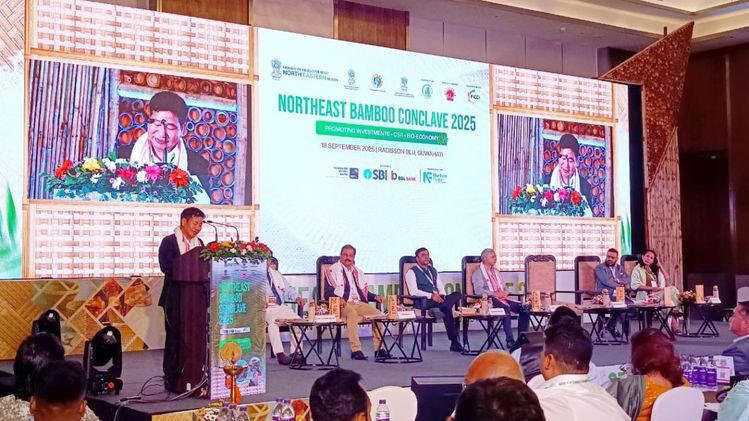
The Assam bamboo conclave 2025 has placed the state at the center of India’s conversation on sustainability. The event, held in Guwahati, drew entrepreneurs, researchers, artisans, and policymakers who explored bamboo’s potential as a driver of the green economy. With a focus on rural livelihoods and innovation, the conclave showed how bamboo can create jobs while protecting the environment.
Read More: Doimukh CHC Gets New Healthcare Units in Arunachal
Assam Bamboo Conclave 2025: A Step Toward Sustainability
The Assam bamboo conclave 2025 emphasized bamboo’s role in building an eco-friendly economy. Assam is rich in bamboo resources, which gives the state an advantage in shaping sustainable industries. The conclave became a platform for discussions on policy support, business opportunities, and community participation.
Speakers highlighted that bamboo is more than just a traditional material. It can be used in housing, handicrafts, furniture, packaging, and even renewable energy. Unlike plastic or timber, bamboo products are biodegradable and renewable. Because of this, they help reduce waste and carbon emissions.
Another focus was climate action. Bamboo absorbs large amounts of carbon dioxide, improves soil fertility, and prevents erosion. Therefore, increasing bamboo cultivation can benefit both the economy and the environment.
Opportunities for Jobs and Rural Growth
Job creation remained one of the strongest themes during the conclave. Thousands of families in Assam already depend on bamboo-based crafts for their income. However, most of them struggle with limited market access and low profits.
The conclave presented ways to change this. Experts explained how value-added products such as engineered furniture, flooring, and packaging can raise income levels. These industries require training and technology, but they also create long-term employment.
Entrepreneurs shared stories of how they turned bamboo into profitable businesses. Their journeys inspired participants, especially young people looking for sustainable careers. For many artisans, the conclave became proof that bamboo can be more than a traditional craft—it can be a modern industry.
Moreover, the discussions stressed the need for skill development. With better training, artisans can move beyond small-scale work and reach larger markets. Linking local producers with buyers at the national and international level is also crucial. Such steps can transform rural livelihoods and reduce migration to cities.
Government Initiatives Supporting Bamboo Economy
The state government used the Assam bamboo conclave 2025 to announce several supportive measures. These include subsidies for bamboo processing units, financial aid for entrepreneurs, and training programs for artisans. Officials explained that Assam wants to become a hub for bamboo-based industries.
Collaboration with research institutions has also been prioritized. By working with scientists and innovators, the government aims to develop new bamboo products that meet international standards. This focus will help Assam tap into export markets and build a global reputation.
Additionally, policies are being designed to encourage farmers to cultivate bamboo commercially. This approach not only supports the environment but also adds a new income stream for rural households. The conclave highlighted that these initiatives are essential for building long-term economic resilience.
Bamboo and the Green Economy in Assam
The Assam bamboo conclave 2025 highlighted bamboo’s direct link to the green economy. Bamboo is versatile, sustainable, and increasingly in demand. It can replace plastic in packaging, provide raw materials for eco-housing, and serve as a renewable source of energy.
Participants pointed out that bamboo biomass can be converted into clean fuel for rural households. Such innovations reduce dependence on fossil fuels and lower greenhouse gas emissions. At the same time, eco-friendly bamboo products can help industries move toward sustainability goals.
By adopting bamboo-based solutions, Assam is not only creating jobs but also aligning itself with global efforts to fight climate change. Transitioning to a bamboo-centered economy ensures that development and environmental protection progress together.
Future of Assam’s Bamboo Sector
The conclave concluded with optimism about the future of the bamboo sector. Policymakers, investors, and community leaders all agreed that Assam has the potential to become a leader in bamboo-based industries. The success of the event demonstrated that the sector is ready for rapid expansion.
Future plans include expanding training programs, attracting more private investment, and creating dedicated bamboo industrial zones. Officials also stressed the importance of connecting artisans with e-commerce platforms. This will ensure that products made in Assam reach customers across India and abroad.
Experts further suggested diversifying into high-tech applications. Beyond furniture and crafts, bamboo can be used for composites, fabrics, and even construction panels. These new products will expand the market and open opportunities for global trade.
The Assam bamboo conclave 2025 highlighted how bamboo can power a green economy while creating jobs for thousands. The event served as a bridge between tradition and innovation, showing that bamboo is not just part of Assam’s cultural identity but also its economic future.
With government support, private investment, and community participation, bamboo can become a pillar of Assam’s sustainable development. The conclave proved that when industries focus on eco-friendly resources, they can generate income, preserve heritage, and protect the planet.
Assam now stands at a turning point. If the strategies discussed at the conclave are implemented, the bamboo sector will not only strengthen rural livelihoods but also position Assam as a leader in global sustainability. The conclave’s message was clear: a greener economy is possible, and bamboo will be at its heart.
Read More: Nagaland Citizen Exposes Rs 7.27-Crore Road Scam, Probe Demanded