


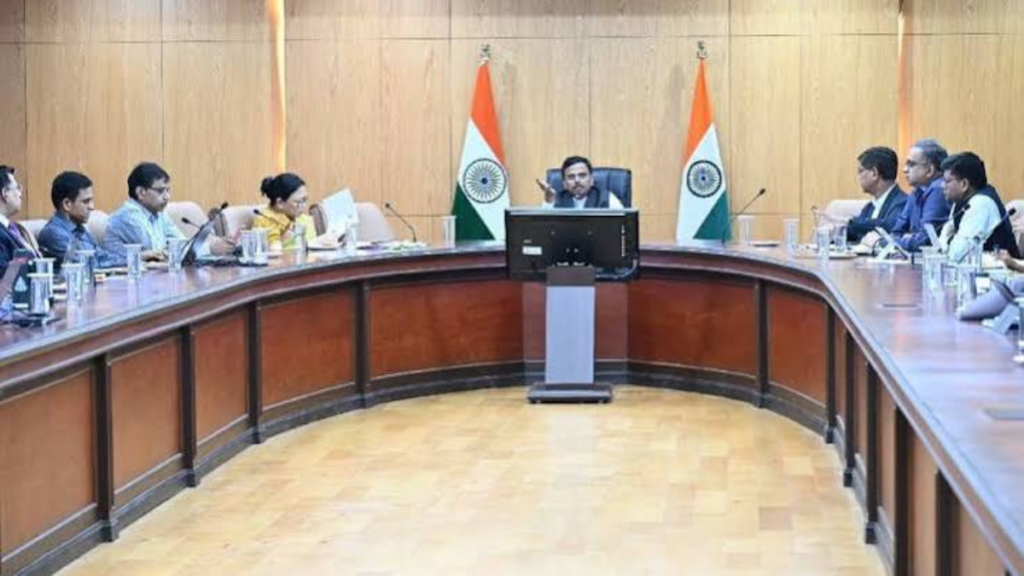
Assam business reforms have received a fresh push, with the state government setting December 31, 2026, as the deadline for completing pending measures. Chief Secretary Ravi Kota reviewed the progress of regulatory changes and other governance initiatives during a monthly review meeting on Sunday, November 8.
The meeting also examined financial management, development priorities, administrative reforms and the functioning of autonomous councils. The review followed up on decisions taken during the latest District Commissioners’ conference, with the government stressing timely implementation and greater accountability across departments.
Assam business reforms get December 31 deadline
A major focus of the meeting was the progress of deregulation and business-related reforms. Kota reviewed the implementation of Deregulation 2.0, the State Business Reforms (State BR) and District Business Reforms (District BR).
The government has emphasised simplifying regulations and reducing unnecessary compliance requirements. These measures aim to make it easier for businesses to operate while improving the efficiency of government processes.
Moreover, departments have been asked to complete all pending business reforms by December 31, 2026. The deadline is intended to ensure that outstanding measures move beyond administrative review and reach the implementation stage.
The focus on regulatory simplification also reflects Assam’s broader efforts to improve its business environment. Easier procedures and clearer administrative requirements can help businesses navigate government approvals and other compliance processes.
However, meeting the deadline will require coordination among departments and consistent monitoring at both state and district levels.
Financial management and accountability under review
The review meeting also examined several issues linked to financial management and the effective use of public resources.
These included the Viksit Assam proposal, implementation of the Green Cess and submission of annual accounts by societies and public sector undertakings. The annual accounts are also required for the computation of the state’s Gross State Value Added (GSVA).
Additionally, officials reviewed progress under the SNA-SPARSH system, which forms part of the government’s financial management framework.
Kota stressed timely compliance, fiscal accountability and efficient utilisation of public funds. These areas remain important for ensuring that government spending supports development priorities and produces measurable results.
Furthermore, the review highlighted the need for departments and public institutions to complete financial reporting requirements without unnecessary delays.
The government is seeking stronger financial discipline alongside its wider programme of administrative and business reforms.
Development priorities and sectoral councils examined
Alongside Assam business reforms, the meeting reviewed several development programmes and policy priorities. These included the Aspirational Districts Programme and Aspirational Blocks Programme, Sustainable Development Goal (SDG) indicators and recommendations from the North Eastern Council’s High-Level Task Force.
The government also examined follow-up actions arising from the Chief Secretaries’ Conferences. Officials emphasised focused interventions and outcome-based monitoring to assess whether development programmes are delivering their intended results.
Meanwhile, the operational framework for 16 State-Level Sectoral Councils came under review. These councils are expected to strengthen grassroots feedback and encourage greater participation from different stakeholders.
The initiative also aims to improve accountability in public service delivery. By bringing local concerns into the decision-making process, the councils can help departments identify gaps and respond more effectively.
The emphasis on these mechanisms reflects the government’s attempt to connect policy decisions with actual implementation at the local level.
Administrative reforms and e-Office implementation
Administrative reforms formed another important part of the review. The meeting examined the delegation of powers to Co-District Commissioners, implementation of Sewa Setu and the progress of e-Office across government departments.
Officials also reviewed Project Sadbhavana, which focuses on addressing pending public grievances and improving administrative service delivery.
According to the Chief Secretary, the meeting noted a seven per cent reduction in e-Office pendency. However, 3,04,288 files remained pending at the time of the review.
The government reiterated its target of bringing all government offices under the e-Office system by January 1, 2027. The digital platform is intended to reduce paperwork, improve file tracking and make official processes more efficient.
Additionally, preparations for Mission Sadbhavana 3.0 were discussed. The review placed emphasis on reducing delays and ensuring that citizens receive timely responses from government offices.
These measures form an important part of Assam’s wider governance improvement efforts. Their success will depend on effective implementation across departments and offices.
Autonomous councils and stronger coordination
The meeting also reviewed the functioning of Sixth Schedule Autonomous Councils, particularly the implementation of centrally sponsored schemes.
Discussions focused on scheme-specific memorandums of understanding (MoUs) between the autonomous councils and concerned line departments. These agreements are expected to clarify responsibilities and improve coordination during project implementation.
Kota emphasised the need for clear institutional accountability, effective fund utilisation and regular monitoring.
Departments were also directed to designate nodal officers and conduct monthly reviews. These steps are intended to ensure that responsibilities remain clear and implementation challenges receive timely attention.
The discussions highlighted the importance of coordination between autonomous councils and state departments in delivering development programmes.
Government seeks measurable results from reforms
The Chief Secretary stressed that decisions taken during review meetings must translate into visible improvements in administrative efficiency and public service delivery.
He called on all departments to maintain coordination, establish clear accountability and ensure time-bound follow-up on pending decisions.
Overall, the December 31 deadline places renewed emphasis on completing Assam business reforms within the prescribed timeframe. The parallel review of financial management, digital administration and development programmes also highlights the government’s broader governance priorities.
The coming weeks will be important in determining how effectively departments address pending tasks and turn policy commitments into measurable outcomes for businesses and citizens across Assam.