


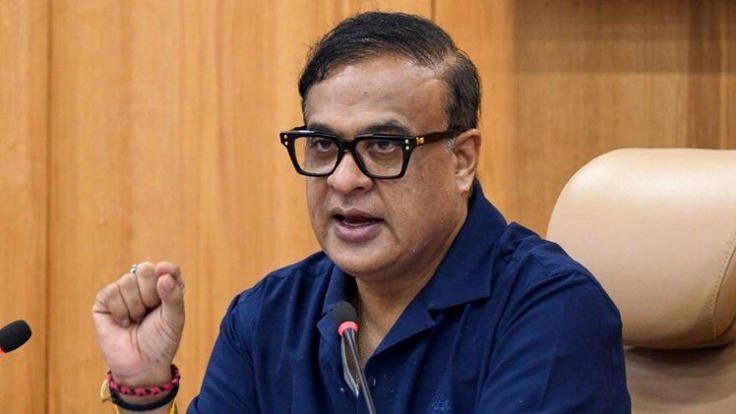
Assam Chief Minister Himanta Biswa Sarma has defended the Election Commission of India amid a political row over the Special Intensive Revision (SIR) of electoral rolls. Sarma said the poll panel has its own constitutional structure to deal with internal matters.
He made the remarks on September 23 while speaking to reporters in Deoghar, Jharkhand. Sarma was in the state to attend the inauguration of a multi-speciality private hospital.
His comments came after reports of differences among the three Election Commissioners. The reports raised questions about decisions linked to electoral-roll management and the ongoing SIR exercise. The Election Commission, however, rejected the suggestion that the panel was divided.
Sarma Defends Election Commission’s Structure
Sarma said the Election Commission is a constitutional authority. He said its existing structure can address any issues that arise within the institution.
The Chief Minister urged political parties and others not to comment on internal matters of the poll panel. He said the commission has established mechanisms to deal with such situations.
His remarks came amid growing political debate over the functioning of the Election Commission. The debate has focused on reports of disagreements among its members over electoral-roll decisions.
Sarma also criticised the Opposition for protesting against the poll panel. He said the Opposition was wrong to target the Election Commission and accused it of attempting to obstruct the commission’s work.
Reports of Differences Among Election Commissioners
The controversy followed a report by The Indian Express about objections reportedly raised by Election Commissioners Sukhbir Singh Sandhu and Vivek Joshi.
According to the report, the two commissioners raised objections at least 14 times over a period of about 10 months. The reported objections concerned decisions and orders related to electoral-roll management.
The issues reportedly included voter registration, deletion and restoration of names, changes to Form 6 and the management of electoral-roll data.
The report also linked some of the objections to the SIR process. It said the two commissioners had questioned decisions that they believed had been taken without their knowledge.
These reports triggered fresh political criticism of the Election Commission.
Election Commission Rejects ‘Division’ Claim
The Election Commission has disputed the suggestion that the three-member panel is divided.
The poll body said differences in views can occur within a multi-member constitutional institution. It described such discussions as part of its internal checks and balances.
The commission also said that decisions related to the SIR had been taken unanimously with the approval of all three commissioners.
The clarification came as political parties debated the reported objections. The Election Commission maintained that internal discussions should not be interpreted as evidence of a breakdown in its functioning.
SIR Remains at the Centre of the Debate
The Special Intensive Revision of electoral rolls has become a major political issue. The exercise involves reviewing voter lists and checking electoral records.
Supporters of the revision have described such exercises as part of the process of maintaining accurate electoral rolls. Critics have raised concerns about the possible deletion of eligible voters and the procedures used to verify voter information.
The latest controversy has added another layer to the debate. Questions about internal objections within the Election Commission have drawn attention to how decisions concerning electoral rolls are made.
The commission has maintained that its procedures and institutional safeguards remain in place.
Assam Opposition Also Raises Questions
The controversy has also reached Assam, where opposition parties have raised questions about the recent Assembly election and the electoral process.
The Assam Jatiya Parishad questioned the validity of the Assembly election results after reports emerged about differences within the Election Commission over SIR-related decisions.
The party alleged that the election result reflected problems with the electoral process. These are allegations made by the opposition party and have not been established as facts.
The development has widened the political discussion around electoral rolls and the role of the Election Commission.
Sarma Says Commission Can Handle Issues
Sarma maintained that the Election Commission has sufficient institutional mechanisms to address disagreements.
He said political parties should allow the constitutional body to perform its functions. His comments came in response to questions about whether the reported differences among commissioners could affect the commission’s work.
The Chief Minister also accused the Opposition of attempting to suppress the commission’s work. That statement represents Sarma’s political assessment of the Opposition’s actions.
The Opposition, meanwhile, has continued to raise concerns about the poll body’s functioning.
Political Debate Intensifies
The SIR controversy comes at a time when the Election Commission faces scrutiny from several opposition parties.
Opposition leaders have questioned the transparency of electoral-roll revisions. Some have also called for greater scrutiny of the commission’s decisions.
The Election Commission has rejected claims that its internal processes have affected the functioning of the institution. It has emphasised that differences of opinion can form part of normal institutional checks and balances.
The competing positions have made the SIR exercise a prominent political issue.
Constitutional Role of the Election Commission
The Election Commission is an independent constitutional authority responsible for supervising elections in India. Its responsibilities include preparing and maintaining electoral rolls and conducting elections.
The current controversy has brought attention to the decision-making process within the multi-member commission.
Sarma’s comments focus on the constitutional status of the institution. The reported objections, meanwhile, have prompted questions about internal consultation and decision-making.
The Election Commission’s own clarification says the reported differences should not be interpreted as a split in the institution.
SIR Row Continues
The political debate over the Special Intensive Revision is likely to continue as parties examine the electoral-roll process.
Sarma has publicly backed the Election Commission’s institutional framework. He has rejected the Opposition’s criticism and said the commission can handle its internal matters.
The Election Commission has also defended its decision-making process. It says decisions related to the SIR received the approval of all three commissioners.
Meanwhile, reports of repeated objections by two commissioners have kept the issue in the public debate. The controversy therefore centres on two competing accounts: reports of internal disagreements and the commission’s assertion that its decisions remain unanimous.
As the SIR process continues, scrutiny of electoral-roll management and the Election Commission’s functioning is expected to remain a key issue in the political discussion.