


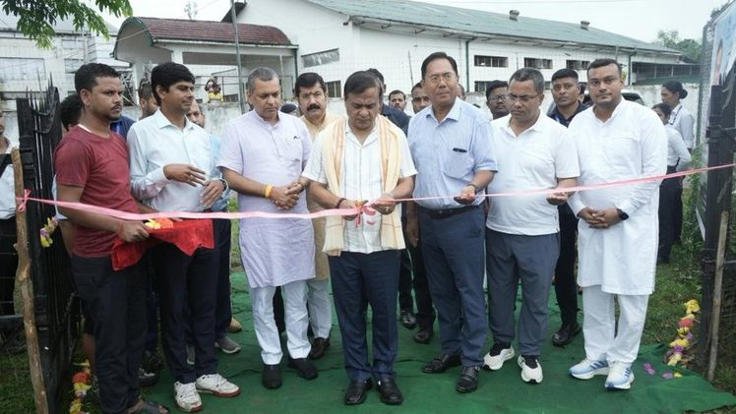
Assam Chief Minister Himanta Biswa Sarma inaugurated a 595 kilowatt-peak (kWp) solar power plant at Koomber Tea Estate, marking another step towards renewable energy adoption in the state’s tea industry.
The project aims to promote clean energy, reduce dependence on conventional electricity and support sustainable operations at the tea estate.
The inauguration highlights Assam’s growing focus on renewable energy and its application across important economic sectors.
Tea remains one of Assam’s major industries. The sector supports thousands of workers and contributes significantly to the state’s economy.
By introducing solar power into tea estate operations, the initiative seeks to demonstrate how clean energy can support industrial activity while reducing environmental impact.
595 kWp Solar Plant to Support Sustainable Tea Production
The newly inaugurated solar facility has a generation capacity of 595 kWp.
Solar power plants convert sunlight into electricity through photovoltaic panels. They provide an alternative to electricity generated from conventional fossil fuel sources.
The installation at Koomber Tea Estate can help meet part of the estate’s electricity requirements through renewable energy.
Tea processing involves several energy-intensive activities, including withering, rolling, drying and packaging.
Solar power can support these operations and help tea producers manage their energy requirements.
The project also reflects the potential for renewable energy adoption across Assam’s tea gardens.
Assam Government Focuses on Renewable Energy Expansion
The inauguration aligns with Assam’s broader efforts to encourage renewable energy and sustainable development.
The state has been exploring solar power opportunities across public infrastructure, industries and other sectors.
Solar energy offers several advantages, including lower operational emissions and reduced dependence on conventional power sources.
The technology can also support long-term energy planning for businesses and institutions.
For tea estates, renewable energy adoption can form part of a wider strategy to improve operational efficiency and environmental performance.
The Koomber project highlights how traditional industries can incorporate modern energy solutions into their operations.
Tea Industry Plays Important Role in Assam’s Economy
Assam is one of India’s leading tea-producing states. Its tea industry has a long history and remains a major source of employment.
Tea estates support workers involved in cultivation, harvesting, processing and transportation.
The industry also contributes to local businesses and regional economic activity.
However, tea production requires reliable electricity throughout different stages of processing.
Energy costs and supply requirements remain important considerations for estate management.
Renewable energy projects could help tea producers diversify their energy sources and improve long-term sustainability.
The solar installation at Koomber Tea Estate reflects this growing interest in cleaner industrial operations.
Solar Energy Offers Environmental and Economic Benefits
Solar power can help reduce greenhouse gas emissions when it replaces electricity generated from fossil fuels.
It also provides an opportunity for businesses to diversify their energy supply.
For industrial facilities, solar installations can support electricity requirements during daylight hours.
The actual benefits depend on factors such as generation capacity, sunlight availability, energy consumption and grid connectivity.
At Koomber Tea Estate, the 595 kWp installation represents a move towards integrating renewable energy into tea production.
Such projects can also encourage other businesses to examine the feasibility of solar power.
Assam’s Push Towards Green Industrial Development
The inauguration reflects the growing connection between renewable energy and industrial development in Assam.
As businesses face increasing pressure to improve energy efficiency, solar power offers an alternative for meeting part of their electricity needs.
The tea sector, with its extensive processing infrastructure, presents opportunities for wider renewable energy adoption.
Solar installations can also contribute to the state’s broader environmental objectives.
The Koomber Tea Estate project demonstrates how clean energy can complement traditional economic activities.
Solar Initiative Marks Step Towards Sustainable Future
The inauguration of the 595 kWp solar power plant at Koomber Tea Estate marks a development in Assam’s renewable energy journey.
The project brings clean energy technology into one of the state’s most recognised industries.
Its long-term impact will depend on electricity generation, operational efficiency and the extent to which the estate integrates solar power into its daily activities.
The initiative highlights the potential of renewable energy to support industrial growth while addressing environmental concerns.
As Assam continues to explore sustainable development opportunities, solar power could play an increasingly important role in modernising its tea industry.