


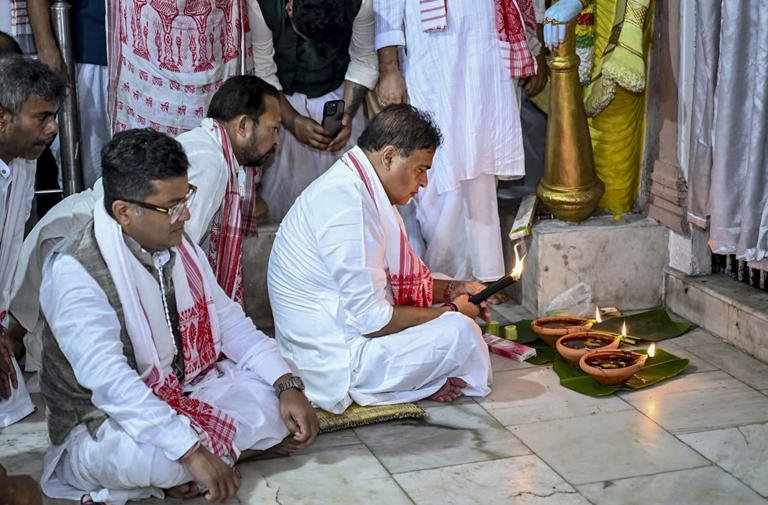
Assam Chief Minister Himanta Biswa Sarma has reviewed the progress of the rapid flood damage assessment survey in four badly affected districts. He directed officials to complete the second phase of the exercise by October 10, 2026.
The review covered Sivasagar, Charaideo, Jorhat and Golaghat districts. The government has already completed the first phase of the survey in these areas. Officials are now carrying out the second phase to verify losses and prepare the final list of eligible beneficiaries.
Sarma held the review meeting in Jorhat on September 15. District commissioners, co-district commissioners and revenue circle officers from the four districts attended the meeting.
October 10 Deadline for Second Phase
The Chief Minister asked district administrations to complete the second phase before October 10. The government wants officials to finish verification quickly so that affected families can receive rehabilitation assistance without unnecessary delays.
During the meeting, Sarma stressed the need for accuracy, transparency and accountability. He asked officials to base the assessment on verifiable evidence rather than rough estimates or incomplete information.
The government plans to use the survey results to identify genuine beneficiaries. Officials will then prepare the final list for rehabilitation and financial assistance.
The deadline also gives district administrations a clear timeline for completing pending verification work.
Four Flood-Hit Districts Under Review
The latest review focuses on Sivasagar, Charaideo, Jorhat and Golaghat. Recent floods caused extensive damage in these districts.
Floodwaters affected homes, roads, schools and other public infrastructure. Many families also suffered losses to household property and livelihoods.
The government launched the rapid assessment survey to create a detailed record of these losses. Survey teams have visited affected areas and collected information from households.
The first phase covered the initial assessment of damage. The second phase now aims to check the information and correct any errors before officials finalise the beneficiary lists.
Fresh Surveys Where Necessary
Sarma directed officials to conduct fresh surveys or re-verification wherever they find gaps in the existing data.
The Chief Minister said no genuine flood-affected family should remain outside the assistance programme. At the same time, he asked officials to prevent ineligible or unverified names from entering the beneficiary lists.
This approach aims to make the distribution of government assistance more accurate.
Re-verification can also help authorities correct mistakes from the first phase. Families who believe survey teams missed their losses may receive another opportunity for assessment where officials consider it necessary.
Government Focuses on Financial Assistance
The meeting also reviewed the status of financial assistance for flood-affected families.
Sarma asked departments to speed up the Direct Benefit Transfer (DBT) process. The system transfers approved financial assistance directly into beneficiaries’ bank accounts.
However, technical issues can sometimes delay payments. Problems with Aadhaar-linked bank accounts may prevent some beneficiaries from receiving funds on time.
The Chief Minister therefore directed officials to coordinate closely with banks. He asked them to resolve technical problems quickly and prevent delays in relief payments.
Nearly 97,000 Families Received Earlier Assistance
The state has already provided financial support to a large number of flood-affected families.
In August, the government transferred Rs 15,000 each to nearly 97,000 families affected by the floods. The assistance formed part of the government’s immediate relief measures.
At that stage, damage recorded on the assessment portal stood at around Rs 480 crore for houses and other properties. However, authorities expected the amount to change as officials continued the survey and verification process.
The second phase can provide a clearer picture of the final losses. It will also help the government decide the scale of further rehabilitation support.
Survey Uses Digital Records and Photographs
The Assam government began preparing for the detailed survey in August.
Officials announced that survey teams would photograph every affected house and upload the information to a dedicated digital portal or application. The system aims to create verifiable records of flood damage.
District-level training for survey teams also took place before the assessment started. The first phase began on August 9 and continued through the end of the month.
Digital documentation can help officials cross-check claims during the second phase. It can also improve transparency when the government prepares the final beneficiary lists.
Rehabilitation Goes Beyond Immediate Relief
The state government has indicated that its response will extend beyond immediate financial assistance.
Authorities have started restoration work at damaged schools, roads, health facilities and naamghars in flood-affected areas. Health and veterinary teams have also conducted camps in affected communities.
The government has also considered longer-term rehabilitation measures for badly affected areas of Sivasagar and Charaideo.
Sarma previously said the state discussed the possibility of providing houses under the Pradhan Mantri Awas Yojana to eligible families in these districts. Such assistance could help families whose homes suffered serious damage during the floods.
Flood Damage Remains a Major Challenge
Floods regularly affect Assam during the monsoon season. They can damage houses, agricultural land, roads, embankments and public facilities.
Earlier this year, an inter-ministerial central team also reviewed flood damage across Assam. Officials assessed losses to infrastructure, property and livelihoods.
The central team suggested long-term measures such as restoring wetlands and improving river channels. It also recommended using the State Disaster Mitigation Fund for suitable flood mitigation projects.
Such measures focus on reducing future risks alongside providing relief after floods occur.
Final Beneficiary List to Follow Survey
The second phase of the Assam flood damage survey will play a key role in determining who receives further government assistance.
Sarma has asked district officials to finish the exercise by October 10 and prepare the final list of eligible beneficiaries. The administration will also continue working with banks to resolve payment problems.
The government now faces the task of balancing speed with careful verification. Quick surveys can help families receive support sooner, while accurate records can reduce errors in the distribution process.
With the October 10 deadline approaching, district administrations in Sivasagar, Charaideo, Jorhat and Golaghat will focus on completing re-verification and resolving pending cases. The final assessment will guide the next stage of Assam’s flood relief and rehabilitation efforts.