


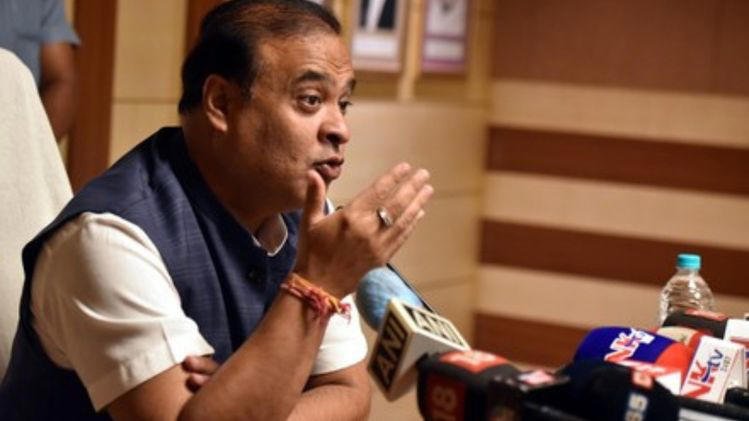
Assam Chief Minister Himanta Biswa Sarma has raised serious concerns over the security of India’s Chicken’s Neck or Siliguri Corridor, warning that radical groups from Bangladesh are attempting to influence local populations in this vital region. According to Sarma, these elements are using graffiti, propaganda, and covert interactions to weaken public loyalty and destabilize national security during times of crisis.
What Is the Chicken’s Neck (Siliguri Corridor) and Why It Matters
The Chicken’s Neck, officially known as the Siliguri Corridor, is a 22-kilometer stretch in North Bengal that connects mainland India with the entire Northeast. Bordered by Nepal, Bhutan, and Bangladesh, this narrow land strip is India’s most strategic corridor.
Any disruption here could isolate the northeastern states, halting military logistics, trade, and civilian movement. Security experts say a threat to the Chicken’s Neck is essentially a threat to India’s sovereignty, national security, and economic stability.
Sarma’s Statement: Radical Messaging as Psychological Warfare
Speaking to the media, CM Himanta Biswa Sarma warned that cross-border radical groups are using slogans, graffiti, and digital content to influence local identity and loyalty in sensitive areas.
“When loyalty is tested during a crisis, it is identity that decides action. These radicals are attempting to rewrite that identity,” Sarma said.
He emphasized that while these actions are not always violent, their long-term ideological impact poses an equally dangerous challenge.
How the Chicken’s Neck Security Threat Is Emerging
Infiltration in Border Communities
Security agencies report that radical influence is targeting youth in economically weaker border villages. Incidents of suspicious gatherings, coded graffiti, and distribution of propaganda materials have been increasing in recent months.
Both Assam and West Bengal police have stepped up investigations, while the Assam Police Special Branch has issued alerts across districts close to the corridor.
Strategic Vulnerability of the Corridor
A compromised Chicken’s Neck corridor could:
- Delay military deployment during emergencies.
- Block essential goods and services to Northeast India.
- Disrupt India’s Act East Policy, which strengthens connectivity with Southeast Asia.
Government Response to the Chicken’s Neck Security Threat
The Union Home Ministry, along with the IB and BSF, is working on enhanced surveillance measures. Plans include drone monitoring, AI-based analytics, and community intelligence programs.
Meanwhile, the Assam government is launching awareness campaigns in border districts to counter radical propaganda and strengthen community identity.
Citizens’ Role in Ensuring Security
Authorities stress that public participation is key to safeguarding the corridor. Citizens are urged to:
- Report suspicious symbols, graffiti, or gatherings.
- Avoid sharing unverified or inflammatory social media content.
- Join government-led awareness initiatives.
“Security isn’t just a government responsibility. Citizens are the first line of defense,” said Assam DGP G. P. Singh.
Conclusion: Need for Strategic Vigilance
The Chicken’s Neck, or Siliguri Corridor, is not just a geographic stretch but India’s lifeline to the Northeast. CM Himanta Biswa Sarma’s warning highlights the urgent need for community vigilance, advanced surveillance, and interstate coordination to neutralize radical influence.
With growing regional and international significance, keeping the corridor secure is essential for India’s national unity, defense, and future stability.