


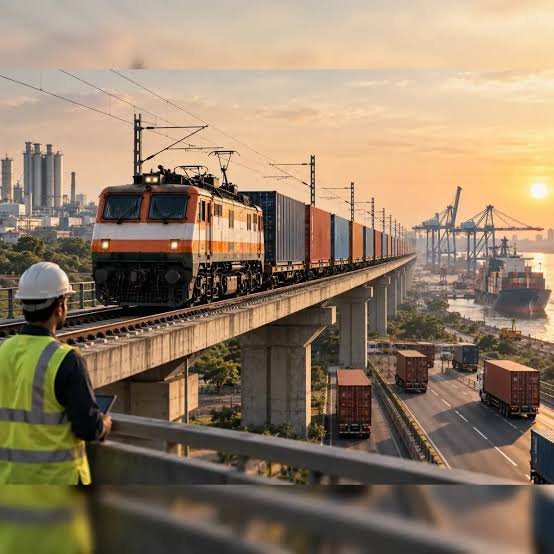
Assam commercial trade traffic is gaining fresh momentum as improvements in road, rail and inland waterway connectivity create new opportunities for businesses across the state. Recent developments, including the revival of international cargo movement from Dibrugarh and upgrades to key logistics facilities, are strengthening Assam’s role as a commercial gateway to Northeast India. These changes could help industries reach wider markets, improve cargo movement and support regional economic growth. However, sustained progress will depend on reliable transport services, efficient logistics and continued infrastructure development.
Northeast Organic Spice Exports Gain Opportunities in European Markets
Assam Commercial Trade Traffic Gains Momentum Through River Transport
Assam’s river network is attracting renewed attention as businesses and policymakers explore the Brahmaputra’s potential for commercial cargo movement. For decades, road and rail transport have carried much of the region’s freight. However, inland waterways could provide an additional option for moving industrial products and other goods across longer distances.
A major development came in October 2026, when a cargo vessel carrying methanol from Bogibeel in Dibrugarh began an international voyage towards Bangladesh. The shipment, produced by Assam Petro-Chemicals Limited, marked an important step in efforts to revive international river trade from Upper Assam. The route uses National Waterway-2 along the Brahmaputra and the India-Bangladesh Protocol Route.
This development matters because it demonstrates how river transport could connect Assam’s industrial centres with markets beyond India. Dibrugarh and surrounding areas have a long association with river-based commerce. Renewed cargo operations could therefore create fresh opportunities for industrial producers, transport operators and logistics businesses.
Moreover, waterways may offer an alternative for selected bulk cargo shipments. Depending on the type of goods, vessel capacity and operating conditions, river transport could help businesses diversify their freight arrangements. However, companies will need dependable schedules, suitable terminals and efficient cargo-handling systems before waterways can become a regular choice for a wider range of products.
The initial shipment should not be treated as proof that all commercial activity has already increased across Assam. Instead, it represents a practical test of the state’s emerging river-based trade connections. Future cargo movements, operating costs and demand from exporters will help determine how quickly this opportunity develops.
Assam Commercial Trade Traffic Benefits From Better Logistics Connectivity
Transport infrastructure plays an important role in connecting production centres with warehouses, wholesale markets and distribution networks. Assam’s position in Northeast India makes these connections particularly significant. Goods often need to travel across several districts before reaching major markets or crossing international borders.
The state has an extensive road and rail network, alongside inland waterways and border-trade facilities. According to the Assam government’s mobility and logistics information, National Highways, railway lines and waterways connect different parts of the state with domestic and neighbouring markets. These transport options provide a foundation for more integrated freight movement.
In Guwahati, the development of infrastructure around Pandu Port is another important part of this effort. An elevated road corridor connecting the port with National Highway 27 has strengthened the physical connection between river transport and the highway network. Such links can help address the last-mile challenge, which often determines whether a port can serve businesses efficiently.
Similarly, the inland waterways terminal at Jogighopa connects with a multimodal logistics park. This arrangement is designed to bring different transport and logistics functions closer together. As these facilities develop, businesses may gain better options for transferring cargo between river vessels, roads and railways.
Rail infrastructure is also receiving attention around Guwahati. Capacity-enhancement projects and cargo-terminal development aim to improve freight handling and movement. For example, the Gati Shakti Cargo Terminal at Baihata and rail connectivity associated with Jogighopa’s logistics park support the wider objective of creating more coordinated transport networks.
Nevertheless, infrastructure alone cannot guarantee faster or cheaper deliveries. Businesses also need efficient loading facilities, dependable schedules, storage space and transparent freight charges. Consequently, the commercial impact of these projects will depend on how effectively transport operators coordinate their services and respond to demand.
Road Upgrades Could Strengthen Assam Commercial Trade Traffic
Road connectivity remains essential for moving goods between factories, agricultural areas, local markets and larger distribution centres. Even when companies use trains or vessels for the main journey, trucks often carry products to and from terminals. Therefore, highway improvements can influence the efficiency of the entire supply chain.
In August 2026, the Union government approved a four-lane, access-controlled Guwahati–Tezpur corridor on National Highway 15. The proposed 135.87-kilometre project carries an estimated capital cost of ₹8,970.20 crore. It aims to improve connections between economic centres, logistics facilities and important destinations across Assam and neighbouring Arunachal Pradesh.
The project includes major bridges, minor bridges, flyovers, underpasses and service roads. It also proposes five major bypasses covering 58.7 kilometres to divert through traffic away from busy towns, including Baihata Chariali, Sipajhar, Kharupetia, Dekiajuli and Tezpur.
These planned improvements could help freight vehicles avoid some congested town sections. As a result, transport operators may benefit from more predictable journeys once the relevant infrastructure becomes operational. Better road conditions can also support the movement of tea, agricultural produce, manufactured goods and supplies for retail businesses.
However, the corridor’s approval does not mean that the entire route is already ready for commercial use. Construction, project execution and the opening of individual sections will determine when businesses can benefit from the proposed improvements.
Beyond this corridor, Assam’s broader road-development programme seeks to improve connections across districts. Such investment can help smaller commercial centres reach larger markets and distribution points. It may also improve access to storage facilities and transport terminals, particularly for businesses operating outside major cities.
Even so, companies will continue to face practical challenges. Fuel costs, seasonal weather, congestion, loading delays and the condition of connecting roads can all affect delivery times. Therefore, businesses will need to assess the actual performance of upgraded routes rather than assume that every infrastructure project will immediately reduce transport expenses.
Assam Commercial Trade Traffic Creates Opportunities for Local Businesses
Improved transport links can benefit a wide range of industries, although the scale of those benefits will vary. Tea producers, agricultural suppliers, manufacturers, wholesalers and retailers all depend on the ability to move products safely and at competitive costs.
Assam’s tea industry illustrates why logistics matter. Tea travels from gardens and processing factories to warehouses, auctions, distributors and buyers. Efficient road and rail links can support this movement, while improved access to ports may offer additional options for certain shipments. Faster and more predictable transport can also help businesses coordinate inventories and delivery schedules.
Agricultural producers could benefit from stronger connections between rural production areas and urban markets. Better access to transport terminals may help traders collect products from multiple locations and distribute them more efficiently. However, perishable goods require suitable storage and handling facilities, so road improvements alone cannot solve every supply-chain problem.
Industrial businesses may also find value in the renewed interest in river cargo. The Bogibeel shipment demonstrates that companies can explore international waterways for suitable products. If operators establish dependable services and attract further cargo, the route could support additional commercial activity around terminals and associated logistics facilities.
Furthermore, transport improvements can create demand for supporting services. Warehousing, packaging, freight coordination, vehicle maintenance and cargo handling may all benefit when goods move through commercial centres more regularly. Local enterprises could participate in these activities, provided they have access to suitable facilities, skills and financing.
Nevertheless, increased connectivity does not automatically guarantee higher incomes or new jobs for every community. The outcome will depend on actual cargo volumes, operating costs, market demand and the ability of local businesses to participate in emerging supply chains.
For this reason, policymakers and industry operators should monitor measurable indicators such as cargo handled, freight costs, delivery times and the number of businesses using new facilities. These indicators can show whether infrastructure investment is translating into tangible commercial benefits.
Conclusion
Assam commercial trade traffic is entering a promising phase as the state strengthens road, rail and inland waterway connections. The October 2026 international cargo voyage from Dibrugarh highlights the Brahmaputra’s potential to support cross-border commerce, while logistics facilities and transport upgrades are creating additional options for freight movement.
At the same time, major highway projects and rail-capacity improvements remain important to the state’s wider economic strategy. These initiatives could help commercial centres connect with producers, distributors and markets more efficiently. However, businesses will experience the full benefits only as planned infrastructure becomes operational and transport services develop around actual demand.
Going forward, Assam’s ability to turn connectivity improvements into sustained trade growth will depend on coordination between government agencies, logistics operators and private businesses. Reliable cargo schedules, efficient terminals, suitable storage and competitive freight rates will remain essential. If these elements develop together, Assam could strengthen its position as a major trade and logistics gateway for Northeast India.
FAQs
1. Why is Assam commercial trade traffic attracting attention?
Assam is developing transport connections across roads, railways and inland waterways. These improvements could help businesses move goods more efficiently and reach wider markets.
2. What was significant about the Dibrugarh cargo voyage in October 2026?
A vessel carrying methanol produced by Assam Petro-Chemicals Limited began an international journey from Bogibeel towards Bangladesh. The movement marked an important step in reviving international river cargo trade from Upper Assam.
3. How can inland waterways support Assam’s economy?
Inland waterways can provide an additional freight option for suitable goods. They may connect industrial producers with domestic and international markets while supporting logistics and cargo-handling businesses.
4. Which road project could improve connectivity between Guwahati and Tezpur?
The approved 135.87-kilometre, four-lane Guwahati–Tezpur corridor on National Highway 15 aims to improve connectivity and reduce through-traffic congestion in several towns. The project must progress through implementation before businesses can benefit from the completed route.
5. Will transport upgrades automatically increase business profits?
No. Better connectivity can create opportunities, but profits also depend on freight costs, market demand, storage facilities, reliable services and efficient supply-chain management.