


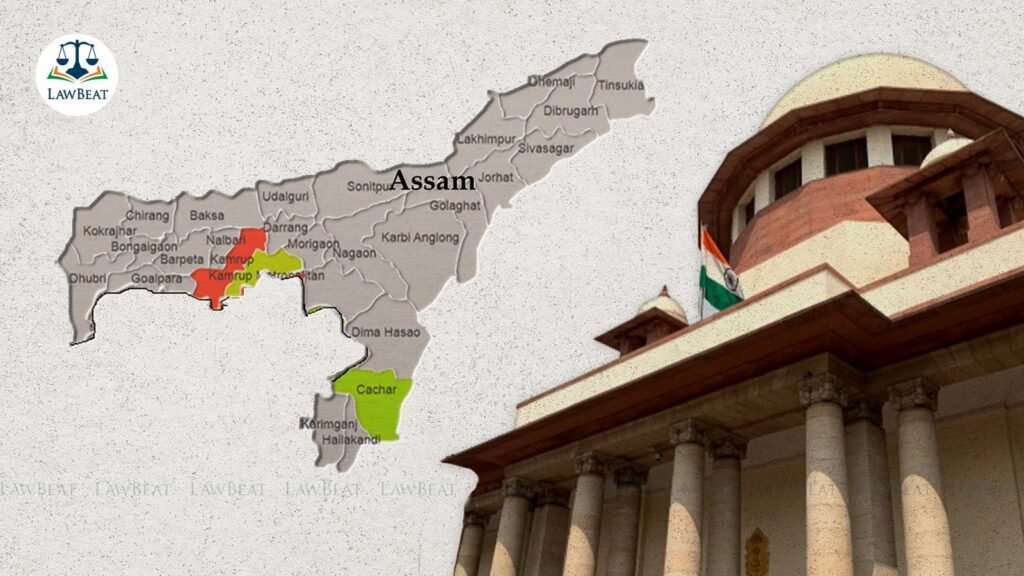
The Assam Delimitation Supreme Court Review has gained fresh attention after the Supreme Court reportedly agreed to hear a follow-up petition concerning constituency boundaries in Assam. The development could bring renewed judicial scrutiny to questions surrounding the state’s electoral delimitation process.
Meghalaya Power Cuts: Flooded Substations Cause Rolling 12-Hour Blackouts Across West Garo Hills
The Assam Delimitation Supreme Court Review comes amid continued political and legal discussion over the configuration of Assembly and parliamentary constituencies. Moreover, delimitation directly affects electoral representation by determining how constituencies divide voters across the state.
The latest judicial development keeps the issue within the legal spotlight. Therefore, the proceedings could provide an opportunity for the petitioners to present their concerns before the court.
The case also has wider political significance because constituency boundaries influence future electoral contests. Additionally, any judicial observations could contribute to the continuing public debate over Assam’s electoral map.
Assam Delimitation Supreme Court Review Reopens Legal Discussion
The Assam Delimitation Supreme Court Review centres on a follow-up petition challenging or questioning aspects of constituency boundaries in the state.
Moreover, delimitation involves reorganising electoral constituencies based on established legal and constitutional processes. Consequently, changes can affect the geographic composition of constituencies and the distribution of voters.
The Supreme Court’s decision to hear the petition does not itself establish that the petitioners have succeeded on the merits. Instead, the hearing provides an opportunity for the court to examine the issues raised before reaching any further conclusion.
Therefore, the next stages of the proceedings could prove important for understanding the legal arguments surrounding the constituency boundaries.
Assam Delimitation Supreme Court Review Could Affect Electoral Debate
The Assam Delimitation Supreme Court Review has implications for the broader debate over electoral representation in the state.
Additionally, constituency boundaries influence which communities fall within particular electoral segments. As a result, delimitation can attract strong interest from political parties, community organisations, and voters.
The petition could raise questions concerning the methodology or implementation of the delimitation process. Meanwhile, respondents and relevant authorities may present their positions as the case progresses.
However, the final impact will depend on the court’s findings and any directions it may issue. Therefore, it remains important to distinguish between the filing of a petition and a final judicial determination.
Assam Delimitation Supreme Court Review Keeps Boundaries Under Scrutiny
The Assam Delimitation Supreme Court Review ensures that questions surrounding Assam’s constituency boundaries remain subject to judicial examination.
Moreover, judicial proceedings can provide a formal mechanism for parties to challenge decisions or seek clarification on legal issues. Consequently, the case could contribute to greater clarity surrounding the disputed aspects of the delimitation process.
Political reactions may also continue as the matter moves forward. Furthermore, parties and civil society groups are likely to monitor the proceedings because changes to constituency boundaries can influence future elections.
The court’s eventual observations will determine whether the follow-up petition results in any change, clarification, or further legal action concerning the boundaries.
Conclusion
The Assam Delimitation Supreme Court Review has gained renewed significance after the Supreme Court reportedly agreed to hear a follow-up petition concerning constituency boundaries in Assam.
Furthermore, the proceedings could provide a judicial forum for examining the concerns raised by the petitioners while keeping the state’s electoral delimitation process under scrutiny.
Overall, the Assam Delimitation Supreme Court Review represents another important stage in the legal debate surrounding Assam’s constituency boundaries, with the court’s future proceedings expected to determine the next steps.
FAQs
1. What is the Assam Delimitation Supreme Court Review?
The Assam Delimitation Supreme Court Review refers to the Supreme Court’s consideration of a follow-up petition concerning constituency boundaries in Assam.
2. What does delimitation mean?
Delimitation refers to the process of determining or revising the boundaries of electoral constituencies.
3. Does agreeing to hear a petition mean the petition has succeeded?
No. A decision to hear a petition allows the court to examine the issues raised. It does not automatically mean that the court has accepted the petitioners’ arguments.
4. Why do constituency boundaries matter?
They determine which voters and geographic areas fall within particular electoral constituencies and therefore influence electoral representation.
5. What happens next in the case?
The Supreme Court will consider the arguments and responses presented during the proceedings before deciding what further directions or conclusions, if any, are appropriate.