


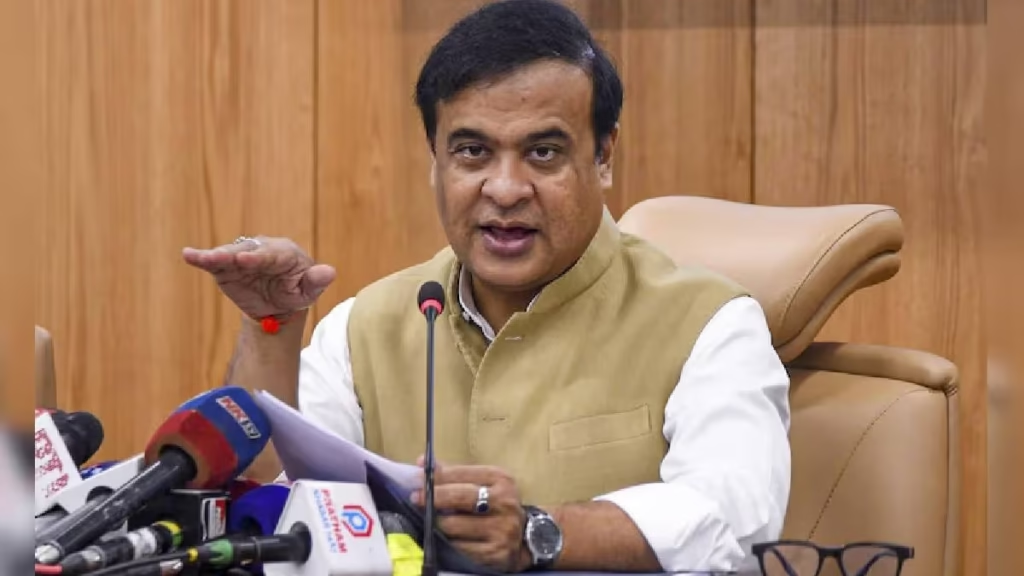
Guwahati, November 2025 — The process of electoral roll revision has gained momentum across Assam as officials intensify field verification and data updates ahead of the upcoming elections. Residents in several districts reported receiving fresh notifications from booth-level officers, who are conducting door-to-door checks to ensure every eligible citizen is included and outdated entries are corrected. Authorities say the revision aims to create a more transparent, accurate, and inclusive voter database for the state.
Why Assam Supports the Special Revision
First, the Assam electoral roll revision addresses long-standing issues such as duplicate entries, outdated records, and possible ineligible names. Sarma emphasized that the exercise will ensure clean and accurate voter lists.
Second, the EC’s order reflects Assam’s unique legal and citizenship context. The state operates under Section 6A of the Citizenship Act, a provision born out of the 1985 Assam Accord. That makes its electoral process different from many states.
Third, this revision sits between the EC’s annual “special summary revision” and the more rigorous “Special Intensive Revision (SIR)” used in many other states. By doing this, the EC accommodates Assam’s sensitive citizenship and demographic realities, as noted by officials.
What the Special Revision Will Involve
Process and Timeline
According to EC guidelines, the special revision will begin soon with preliminary schedules and field preparations. Starting 22 November 2025, Booth-Level Officers (BLOs) will perform house-to-house verification, running through 20 December 2025.
Following verification, the EC will publish an integrated draft electoral roll on 27 December 2025, giving citizens time to file claims or objections until 22 January 2026.The final voter list is expected by around 10 February 2026.
Transparency and Cooperation
Sarma pledged that Assam will extend full support to the EC for a transparent process. He also underlined the importance of SVEEP, calling on local bodies to run voter education campaigns.
Meanwhile, the Chief Electoral Officer (CEO) of Assam, Anurag Goel, has already instructed district officials and election staff to be ready. He has asked election registration officers and BLOs to prepare for verification and to avoid extra administrative assignments during the process.
Challenges and Political Stakes
Even though Assam supports this move, challenges remain. The state was excluded from the pan-India SIR exercise earlier, precisely because of its separate legal and citizenship processes.
That exclusion raised political questions. Some critics argued that leaving Assam out of the national SIR could affect voter roll credibility. Yet, EC officials defended the decision, citing Assam’s special citizenship checks under the Supreme Court’s eye.
On the ground, election officials face major logistical burdens: they must verify voters in riverine char areas, where duplicate or erroneous entries are more common. Accurate documentation — like IDs, birth certificates, and proof of residence — will be critical.
What This Means for the 2026 Elections
This Assam electoral roll revision could significantly reshape voter demographics just before the state’s 2026 polls. By removing invalid names and adding newly eligible citizens, the EC and Assam government aim to ensure fairer, more legitimate elections.
Moreover, the revision could boost youth participation, especially since anyone turning 18 on or before 1 January 2026 should appear on the updated list.
For Sarma’s government, a clean voter list is also a political asset. It strengthens its case for transparency and may help address criticisms related to citizenship verification and voter legitimacy.
READ MORE: RSS Chief Bhagwat Assam Visit Begins
- For Assam citizens: Check your voter registration status soon. Once the draft voter list publishes, review it carefully. If you spot errors or omissions, file your claims or objections before 22 January 2026.
- For civic groups & NGOs: Monitor the SVEEP outreach, help spread awareness about the revision timeline, and support voters in rural or hard-to-reach areas.
- For media and observers: Report on verification drives and spotlight discrepancies. Encourage debate on how electoral integrity meets legal citizenship norms.