


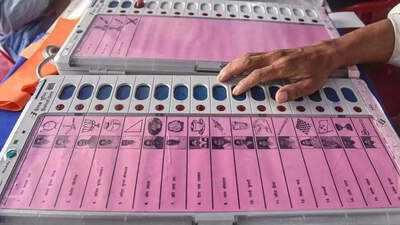
The upcoming Assembly elections in Assam have brought renewed attention to Assam diaspora voting challenges, as thousands of migrant voters struggle to participate in the democratic process. A significant number of eligible voters from the state live and work outside Assam, raising concerns about accessibility and inclusivity.
These voters contribute to the state’s economy through remittances. However, they often face difficulties when it comes to casting their votes. As a result, their participation in elections remains limited.
The issue has sparked debate among policymakers, election officials, and civil society groups. Many believe that addressing these challenges is essential for strengthening democracy.
Read More: Tipra Motha failed tribals, BJP eyes council takeover: Manik Saha
Large migrant population affects voter turnout
Assam has a sizeable population of migrant workers who travel to other states in search of employment. This trend directly affects voter turnout during elections.
Many migrant voters cannot return home due to work commitments and financial constraints. Therefore, they miss the opportunity to vote. In addition, long travel distances make participation difficult.
The Assam diaspora voting challenges highlight a gap in the current electoral system. While voters residing within the state can access polling stations easily, those living outside face significant barriers.
Moreover, the absence of alternative voting mechanisms limits their options. As a result, a large section of the electorate remains underrepresented.
Lack of remote voting options
One of the key issues in Assam diaspora voting challenges is the lack of remote voting facilities. Currently, most voters must be physically present at their designated polling stations.
This requirement creates difficulties for migrant workers. They must take time off work, arrange travel, and bear additional expenses to vote. Consequently, many choose not to participate.
Although discussions about remote voting have taken place, implementation remains limited. Authorities continue to explore options such as postal ballots and digital voting systems.
However, challenges related to security and verification must be addressed before such systems can be widely adopted.
Economic and social barriers
Economic factors play a major role in Assam diaspora voting challenges. Many migrant workers earn daily wages and cannot afford to lose income by traveling back home.
In addition, transportation costs can be high. For workers living in distant states, returning to Assam involves significant expense and time.
Social factors also contribute to the issue. Some migrants face uncertainty regarding leave approval from employers. Therefore, they hesitate to plan travel during election periods.
Moreover, a lack of awareness about voting rights and procedures can further discourage participation. These combined factors create obstacles for diaspora voters.
Calls for electoral reforms
The Assam diaspora voting challenges have prompted calls for electoral reforms. Experts and activists argue that the system must evolve to accommodate changing demographics.
They suggest introducing absentee voting mechanisms. For instance, postal ballots could allow migrant workers to vote without traveling.
In addition, digital solutions are being explored. Secure online voting systems could provide a convenient option for diaspora voters. However, such systems require robust safeguards to prevent misuse.
Policymakers are also considering pilot projects. These initiatives could test new voting methods and assess their effectiveness.
Role of Election Commission and authorities
The Election Commission of India plays a crucial role in addressing Assam diaspora voting challenges. It has initiated discussions on improving voter accessibility.
Authorities are working to update voter lists and improve awareness campaigns. They aim to ensure that all eligible voters understand their rights and options.
In addition, the Commission has explored technological solutions. It is studying models used in other countries to facilitate remote voting.
However, implementation requires careful planning. Authorities must balance accessibility with security and transparency.
Impact on democratic participation
The Assam diaspora voting challenges have broader implications for democracy. When a significant number of voters cannot participate, representation becomes uneven.
This affects the legitimacy of electoral outcomes. Therefore, ensuring inclusive participation is essential for a healthy democratic system.
Moreover, migrant voters bring diverse perspectives. Their participation can influence policy decisions and governance priorities.
Addressing these challenges will help strengthen democratic institutions. It will also ensure that all voices are heard.
Public opinion and future outlook
Public opinion on Assam diaspora voting challenges is evolving. Many citizens support reforms that make voting more accessible.
At the same time, concerns about security and reliability remain. People want assurance that new systems will maintain the integrity of elections.
Experts believe that gradual implementation may be the best approach. Pilot programs can help identify potential issues and refine solutions.
Looking ahead, technological advancements may play a key role. Innovations in digital infrastructure could enable secure remote voting.
Conclusion
The Assam diaspora voting challenges highlight the need for a more inclusive electoral system. As migration patterns change, the voting process must adapt to ensure participation for all citizens.
By exploring reforms such as absentee and digital voting, authorities can address these issues. However, careful planning and implementation are essential.
In conclusion, the upcoming elections in Assam serve as a reminder of the importance of accessibility in democracy. Ensuring that every eligible voter can participate will strengthen the system and uphold democratic values.
Read More: Meghalaya CM launches Mission 1000 Days to fight malnutrition