


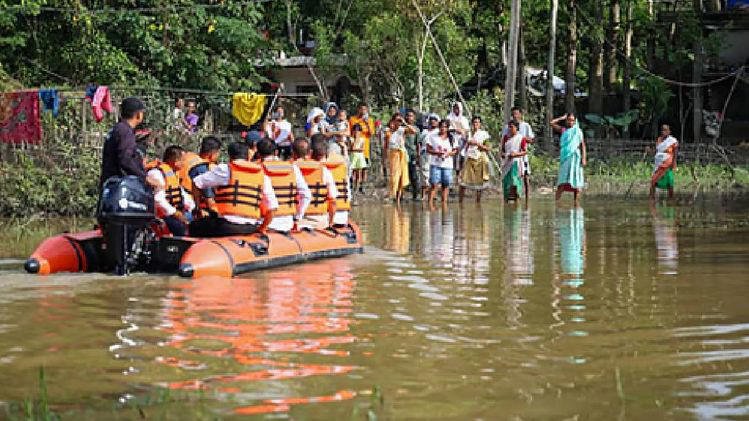
The Assam government has extended interim flood relief to 31,951 more families affected by the state’s ongoing flood situation. The government has released ₹47.93 crore to families across four districts as part of its continuing relief efforts.
The latest assistance covers Sivasagar, Charaideo, Jorhat and Golaghat. Each affected family will receive ₹15,000 through Direct Benefit Transfer (DBT). The latest release takes Assam’s total flood relief assistance to ₹146.26 crore.
The latest move comes as Assam continues to deal with the effects of severe flooding. Floodwaters have affected homes, farmland, roads and other infrastructure in several parts of the state. The government has continued its relief measures while officials assess the damage and identify families that need assistance.
Read More: Tripura: Sushanta Chowdhury Accuses Opposition of Politicising NEET Paper Leak Issue
Assam Releases ₹47.93 Crore in Relief
The latest disbursement provides direct financial support to 31,951 flood-affected families. The government will transfer the assistance directly into beneficiaries’ bank accounts.
Each family will receive ₹15,000. The total amount comes to ₹47.93 crore. The Direct Benefit Transfer system allows the government to send the money directly to beneficiaries without relying on physical cash distribution.
The government has used interim relief to help families manage immediate expenses after floods damage homes and property. The financial assistance can help affected households buy food, clothing and other essential items during the recovery period.
The latest release also shows that the state continues to expand its relief response as authorities complete assessments in affected areas.
Four Districts Receive Additional Assistance
The latest relief package covers four districts in upper Assam. These are Sivasagar, Charaideo, Jorhat and Golaghat.
These districts have faced the impact of flooding during the current season. Rising water levels can affect low-lying villages, agricultural land and residential areas. Flooding can also disrupt transportation and access to essential services.
By providing direct financial assistance, the state government aims to help affected families meet their immediate needs. The latest round of support also adds to relief that the government has already distributed across Assam.
District administrations play an important role in identifying affected households. They assess the damage and submit details of eligible beneficiaries before the government releases the assistance.
Total Flood Relief Reaches ₹146.26 Crore
The latest ₹47.93 crore release takes the total flood relief assistance distributed by the Assam government to ₹146.26 crore.
This figure reflects the state’s continuing response to the flood crisis. The government has focused on providing immediate financial assistance while officials continue to assess damage across affected areas.
Interim relief serves an important purpose during the early stages of disaster recovery. Families often need financial support before they can rebuild damaged homes or replace household belongings.
The assistance also gives affected residents greater flexibility. Instead of receiving only specific materials, families can use the money for their most urgent needs.
Direct Benefit Transfer Speeds Up Support
The government is using the DBT system to deliver the ₹15,000 assistance to eligible families.
DBT allows authorities to transfer welfare payments directly to beneficiaries’ bank accounts. This approach can reduce delays and limit the risks linked to cash handling.
It also creates a digital record of each transaction. Officials can use these records to monitor the distribution and ensure that approved beneficiaries receive their assistance.
For families dealing with flood-related losses, timely support remains important. Delays can increase the pressure on households that have already lost income, crops or property.
Floods Affect Homes and Livelihoods
Flooding creates problems that go beyond temporary waterlogging. Many families depend on agriculture and small businesses for their income. When floodwaters enter farmland, they can damage standing crops and affect future earnings.
Floods can also damage houses and household belongings. Roads and bridges may become difficult to use, while schools and healthcare facilities may face disruptions.
For rural communities, these problems can continue even after the water levels fall. Families may need additional time and resources to repair homes, restore farmland and return to normal activities.
The interim assistance therefore provides an important financial cushion during the recovery period.
Assam Continues Damage Assessment
The government has continued to assess the impact of flooding across the state. Damage assessments help officials identify affected families and determine the assistance they require.
Authorities must examine several types of damage. These include losses to residential houses, agricultural land, livestock and public infrastructure.
The assessment process also helps the government plan longer-term rehabilitation. While interim relief addresses immediate needs, reconstruction requires a wider response.
The state has already begun considering reconstruction and rehabilitation measures as the flood situation develops. Recent reports put the estimated financial loss from the floods at around ₹450 crore, while officials continue to assess affected households.
Government Focuses on Immediate Relief
Chief Minister Himanta Biswa Sarma has led the state’s response to the flood situation. The latest financial assistance forms part of the government’s broader effort to support affected residents.
Flood relief requires coordination between several levels of administration. State departments, district authorities and local officials must work together to identify affected communities and deliver assistance.
The government must also ensure that relief reaches families quickly. Proper identification and digital payment systems can help improve the speed and transparency of the process.
The latest release to 31,951 families shows the scale of the challenge facing the state.
More Support May Follow
The latest distribution does not mark the end of Assam’s flood response. Officials continue to assess damage in several areas.
As assessments progress, more families may qualify for assistance. The government can then provide further support based on the extent of damage and the availability of funds.
Long-term recovery will also require repairs to roads, bridges, homes and agricultural infrastructure. Farmers may need additional support if floods destroy crops or affect their livelihoods.
The government will therefore need to combine immediate relief with longer-term rehabilitation measures.
Relief Offers Support During Assam’s Flood Recovery
The release of ₹47.93 crore to 31,951 families marks another major step in Assam’s response to the flood crisis. Families in Sivasagar, Charaideo, Jorhat and Golaghat will receive ₹15,000 each through Direct Benefit Transfer.
The latest assistance takes the state’s total flood relief distribution to ₹146.26 crore.
For affected families, the financial support can help meet urgent needs while they begin rebuilding their lives. At the same time, ongoing damage assessments will help the government identify further requirements.
Assam continues to face the difficult task of managing immediate flood damage while preparing for recovery and reconstruction. With more assessments underway, the state’s Assam flood relief 2026 programme is likely to remain an important part of the government’s response in the weeks ahead.