


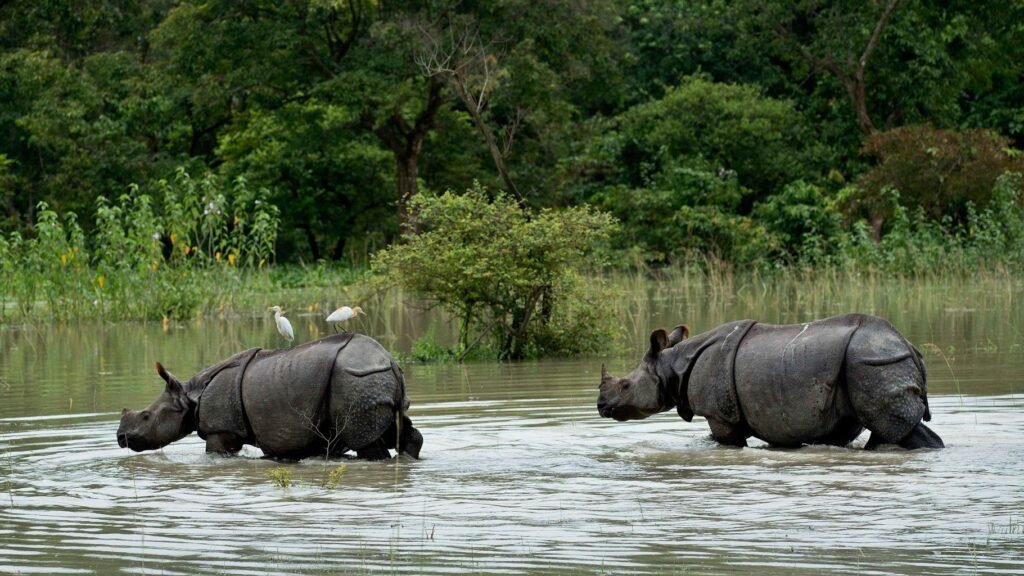
The Kaziranga AI Flood Monitoring initiative has marked a significant step in wildlife conservation as the Assam Forest Department deployed artificial intelligence (AI) technology to monitor flood conditions in Kaziranga National Park. Moreover, the system is designed to provide real-time data, improve flood forecasting, and support faster decision-making during the annual monsoon season. Consequently, the initiative aims to enhance wildlife protection, strengthen disaster preparedness, and improve the management of one of India’s most renowned national parks.
Ankita Konwar Becomes First Woman from Northeast India to Swim Across English Channel
Congress Questions Northeast Flood Promises
Kaziranga AI Flood Monitoring Enhances Wildlife Protection
The Kaziranga AI Flood Monitoring system has been introduced to strengthen flood surveillance across the national park during the monsoon. Furthermore, AI-powered monitoring enables authorities to analyze water levels, identify high-risk zones, and improve emergency response planning.
Kaziranga National Park experiences seasonal flooding that plays an important role in maintaining its ecosystem. Consequently, continuous monitoring helps authorities manage both ecological processes and wildlife safety.
Moreover, AI technology allows officials to process environmental data more efficiently. Therefore, the Forest Department can make informed operational decisions during periods of heavy rainfall.
Additionally, real-time monitoring improves situational awareness across vulnerable areas. Thus, conservation teams remain better prepared throughout the flood season.
Artificial Intelligence Supports Disaster Preparedness
The Kaziranga AI Flood Monitoring initiative demonstrates how emerging technologies can strengthen disaster management and conservation efforts. Furthermore, AI-based tools can rapidly analyze environmental conditions and assist authorities in identifying areas requiring immediate attention.
Advanced technology improves the efficiency of monitoring systems. Consequently, response teams can receive timely information that supports faster action.
Moreover, integrating AI with existing surveillance networks enhances operational effectiveness. Therefore, authorities can better coordinate field teams during flood events.
Similarly, technology-driven monitoring contributes to more efficient resource allocation. Additionally, data-based planning strengthens long-term disaster preparedness.
Improved Monitoring Benefits Wildlife Conservation
The Kaziranga AI Flood Monitoring programme aims to protect wildlife by providing early information on changing flood conditions within the park. Furthermore, accurate monitoring helps conservation teams plan rescue operations and manage wildlife movement more effectively when necessary.
Kaziranga is home to diverse wildlife, including the greater one-horned rhinoceros, elephants, tigers, and numerous bird species. Consequently, improved flood monitoring supports the protection of both animals and critical habitats.
Moreover, environmental data assists authorities in maintaining ecological balance during the monsoon. Therefore, continuous observation remains an essential component of conservation management.
Similarly, scientific monitoring strengthens evidence-based wildlife management. Additionally, improved preparedness can reduce risks associated with severe flooding.
Technology Drives Sustainable Conservation
The Kaziranga AI Flood Monitoring initiative highlights the growing role of technology in environmental conservation and protected area management. Furthermore, integrating AI with traditional field operations supports more efficient conservation strategies.
Modern conservation increasingly relies on digital tools to monitor ecosystems and respond to environmental challenges. Consequently, AI-based solutions can enhance long-term park management.
Moreover, collaboration between technology experts and conservation authorities encourages innovation. Therefore, continued investment in digital monitoring systems remains valuable.
Similarly, sustainable conservation depends on scientific research and adaptive management. Additionally, technological advancement supports the long-term protection of biodiversity.
Conclusion
The Kaziranga AI Flood Monitoring initiative reflects the Assam Forest Department’s commitment to combining technology with conservation by deploying artificial intelligence for flood monitoring in Kaziranga National Park. Moreover, the system is expected to improve real-time surveillance, strengthen disaster preparedness, and enhance wildlife protection during the monsoon season.
Furthermore, continued investment in AI, environmental monitoring, and scientific conservation will help improve flood management while safeguarding Kaziranga’s unique biodiversity. Consequently, the Kaziranga AI Flood Monitoring programme represents an important advancement in technology-driven wildlife conservation in Assam.
FAQs
1. What is the Kaziranga AI Flood Monitoring initiative?
It is an AI-based system introduced by the Assam Forest Department to monitor flood conditions in Kaziranga National Park.
2. Why is flood monitoring important in Kaziranga?
Seasonal floods affect wildlife habitats and park management, making continuous monitoring essential for conservation and disaster preparedness.
3. How does AI support flood monitoring?
AI analyzes environmental data, tracks flood conditions in real time, and helps authorities make faster and more informed decisions.
4. How will wildlife benefit from the initiative?
Improved monitoring supports timely conservation planning, wildlife protection, and effective emergency response during floods.
5. Why is the Kaziranga AI Flood Monitoring initiative significant?
It demonstrates how artificial intelligence can strengthen environmental conservation, improve disaster preparedness, and support sustainable wildlife management.