


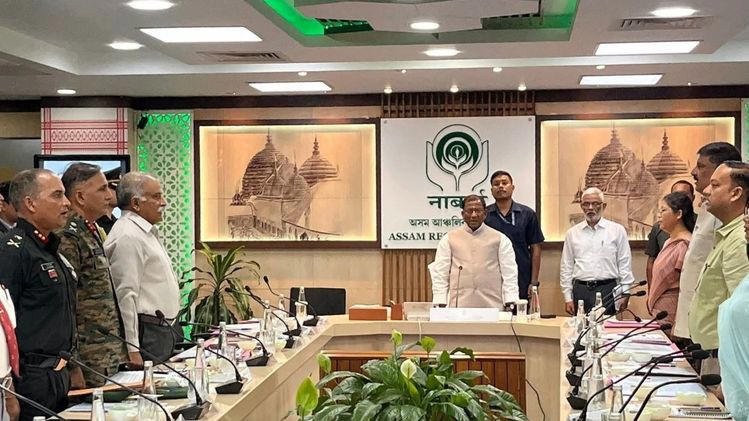
Assam Governor Lakshman Prasad Acharya has emphasised the need for greater accountability in the welfare of ex-servicemen, calling for structured systems that ensure timely delivery of benefits. He stated that ex-servicemen have made immense sacrifices for the country and deserve transparent and efficient support from government agencies. His remarks came during a meeting with officials and veteran representatives in Guwahati, where he highlighted existing challenges and the importance of reforms.
The Governor pointed out that many veterans and their families face bureaucratic hurdles when accessing pensions, healthcare, or housing benefits. According to him, such problems arise not from lack of schemes but from gaps in accountability and coordination between implementing agencies. He urged the state government and military welfare boards to address these issues on priority and introduce mechanisms that would guarantee smooth service delivery.
Acharya explained that accountability in ex-servicemen welfare must go beyond paperwork. It should involve regular monitoring, strict evaluation of outcomes, and responsive systems that allow veterans to register grievances without delay. He said that accountability is not merely about fulfilling obligations but ensuring dignity for those who once defended the nation’s borders. By strengthening responsibility, the state can create a dependable welfare framework for veterans and their families.
The Governor drew attention to the fact that Assam has a large number of ex-servicemen due to its tradition of military service. Many families in the state have contributed generations of soldiers to the armed forces. He remarked that these veterans are not only protectors of the nation but also important social assets in their communities. Therefore, the state has a duty to acknowledge their contribution through stronger welfare measures that meet their evolving needs.
One of the issues raised in the meeting was the healthcare facilities available to retired soldiers and their dependents. Acharya said that while ECHS (Ex-Servicemen Contributory Health Scheme) provides support, infrastructure and outreach in remote areas remain inadequate. He recommended that the state work closely with central defence agencies to expand medical services and establish better clinics in semi-urban and rural belts. Improved healthcare access, he argued, is a fundamental part of ensuring accountability.
The Governor also spoke about employment opportunities for retired soldiers who leave service at relatively young ages. Many of them still have years of productive life ahead but struggle to find suitable jobs due to lack of structured rehabilitation programmes. Acharya urged industries, corporate houses, and state enterprises to create openings for veterans, recognising the discipline, leadership, and skills they bring. Providing gainful employment would reduce hardships and add value to the wider economy.
Pension disbursement was another area of concern. Several representatives of ex-servicemen pointed out delays in receiving pensions and related entitlements. Acharya responded by stressing that accountability mechanisms must be enforced in the financial administration dealing with veterans. He recommended digitisation of records, real-time monitoring of payments, and periodic audits to ensure that funds reach the beneficiaries without discrepancies or undue delay. He insisted that accountability is not optional but a responsibility that must be fulfilled consistently.
Click here: Manipur warns bus operators on fare concessions for disabled
Housing and rehabilitation support for veterans also featured prominently in the Governor’s speech. He underlined the need to provide affordable housing schemes, especially for those coming from economically weaker backgrounds. Rehabilitation colonies, with access to education and healthcare, could help veterans’ families integrate better into civilian life. Acharya suggested that the state government explore partnerships with welfare boards and private organisations to accelerate such projects in Assam.
The Governor reminded officials that welfare cannot be seen as a one-time activity but as an ongoing process that adapts to changing circumstances. For example, the needs of older veterans differ from those of younger ex-servicemen seeking re-employment. A dynamic approach with feedback mechanisms would allow policies to evolve effectively. He stressed that accountability means being answerable to every section of the veteran community, without overlooking marginalised groups within it.
Education support for the children of ex-servicemen was another issue discussed. Many veterans expect their children to receive quality education as part of welfare commitments. Acharya encouraged the government to introduce more scholarships, coaching centres, and admission quotas in educational institutions. He explained that supporting the next generation of veterans’ families ensures continuity of empowerment and motivates serving soldiers by showing that their sacrifices will not be forgotten.
The Governor also acknowledged the role of non-governmental organisations working in the field of veteran welfare. He advised that accountability should extend to collaborations with NGOs, ensuring that funds and programmes implemented through these organisations remain transparent. Joint monitoring frameworks can enhance efficiency and ensure better outcomes. Coordination between civil administration, defence departments, and NGOs could create a unified approach to welfare delivery in Assam.
Acharya praised the resilience and discipline of ex-servicemen, describing them as pillars of strength for society even after retirement. He encouraged local communities to engage veterans in social activities, disaster response, and mentoring roles for youth. Such involvement not only empowers veterans but also builds stronger social bonds. He reiterated that accountability in ex-servicemen welfare also means creating space for their continued contribution to society.
The Governor concluded by urging officials, legislators, and community leaders to treat welfare of ex-servicemen as a priority agenda. He said that accountability should become a culture within governance, not just a procedural requirement. By building reliable systems, transparent mechanisms, and responsive institutions, Assam can set a benchmark in veteran welfare. Acharya emphasised that every initiative must reflect gratitude, responsibility, and respect for those who served the nation with honour.
Read More: Tripura tribals face eviction, says Pradyot