


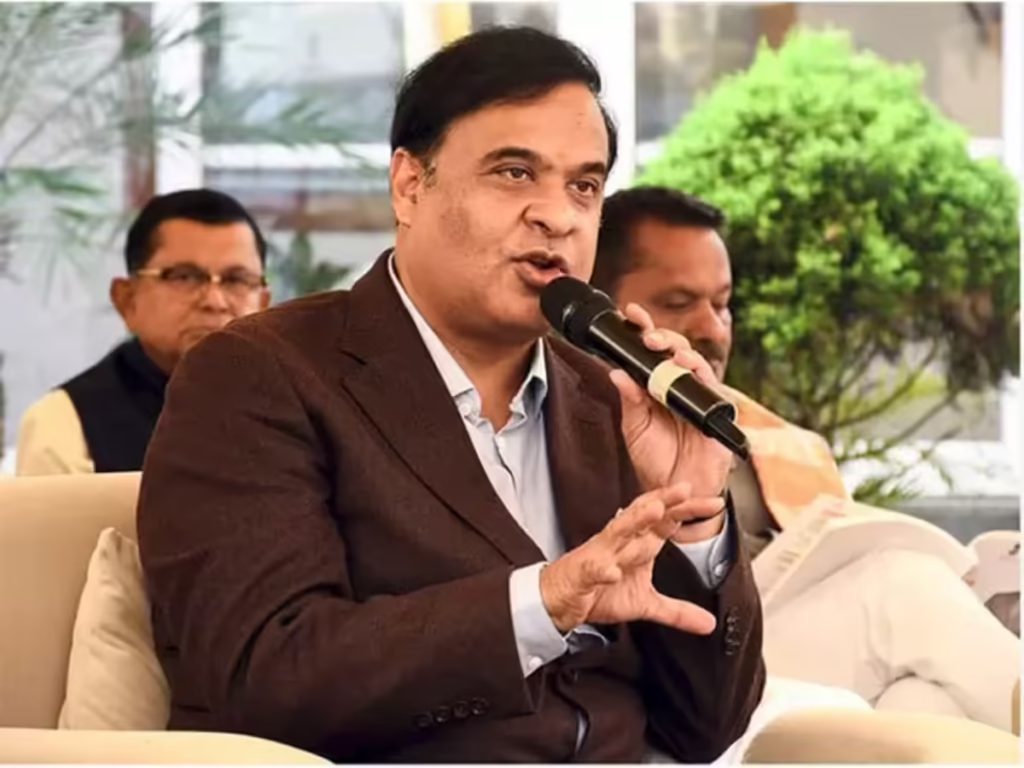
Assam investment proposals advanced significantly after Chief Minister Himanta Biswa Sarma announced that more than 60 per cent of proposed projects have already entered mature stages. Meanwhile, the Chief Minister stated that the upcoming Assam state budget would introduce a detailed five-year development roadmap focused on infrastructure, industrial growth, employment generation, and economic expansion. The announcement came during a government interaction linked to investment planning and long-term development priorities. Additionally, officials indicated that several proposals now await final implementation clearances and financial coordination.
The Chief Minister emphasized that the state government remains focused on transforming Assam into a major economic hub in Northeast India. Furthermore, he said the administration plans to accelerate policy execution through targeted investments in transport, energy, tourism, manufacturing, healthcare, and education sectors.
Assam NEET Paper Leak Allegations Escalate
Assam Meghalaya Border Civic Issues Reviewed
Government Highlights Progress on Investment Commitments
Himanta Biswa Sarma stated that the state administration has closely monitored investment-related projects since investors first submitted proposals through government initiatives and industrial summits. Meanwhile, officials claimed that policy coordination between departments helped several projects move beyond preliminary stages. Consequently, the government now expects visible execution activity across multiple sectors during the coming years.
The Chief Minister explained that mature-stage proposals generally include projects that completed feasibility assessments, land identification, departmental consultations, and financial planning. Additionally, authorities confirmed that many investors have already initiated communication regarding operational timelines and infrastructure support.
Senior officials from the Assam Industries and Commerce Department also participated in discussions surrounding the investment roadmap. Furthermore, they noted that administrative reforms and faster approvals improved investor confidence in the state. At the same time, the government stressed the need for sustainable development alongside industrial expansion.
Political analysts observed that the announcement reflects the ruling administration’s attempt to project Assam as an emerging economic destination in eastern India. However, opposition parties questioned whether all proposed projects would ultimately reach implementation stages. Several critics also demanded greater transparency regarding project-specific progress and employment projections.
Five-Year Development Blueprint to Shape Budget
The upcoming Assam budget will reportedly include a structured five-year development framework covering infrastructure expansion, industrialization, social welfare, and urban modernization. Assam investment proposals advanced discussions therefore gained additional significance because the government linked them directly to future economic planning.
Meanwhile, the Chief Minister indicated that long-term fiscal planning would remain central to the administration’s governance strategy. Additionally, he stated that Assam aims to strengthen connectivity projects, logistics networks, and industrial corridors to attract larger domestic and international investments.
Officials suggested that the roadmap may prioritize highways, bridges, railway connectivity, renewable energy infrastructure, tourism circuits, and digital services. Consequently, economic experts believe the budget could become one of the state’s most ambitious development documents in recent years.
Earlier, the Assam government highlighted several infrastructure initiatives connected to industrial growth and regional connectivity. Furthermore, authorities have repeatedly promoted Assam as a gateway to Southeast Asian trade through the Act East Policy framework. Analysts therefore expect future investment plans to align closely with national economic strategies.
At the same time, financial experts cautioned that long-term development targets require consistent budgetary discipline and efficient implementation mechanisms. They also emphasized the importance of balancing growth ambitions with fiscal sustainability.
Investors Show Increasing Interest in Assam
Government officials claimed that investors from manufacturing, logistics, renewable energy, hospitality, and technology sectors have shown growing interest in Assam over the past few years. Meanwhile, improved transportation networks and policy reforms reportedly encouraged businesses to explore expansion opportunities within the state.
Assam investment proposals advanced partly because authorities simplified approval systems and strengthened industrial promotion policies. Additionally, officials stated that coordinated efforts between state agencies and private stakeholders helped reduce administrative delays linked to project clearances.
Several business organizations welcomed the government’s latest remarks regarding economic planning. Furthermore, industry representatives argued that long-term policy stability remains essential for sustaining investor confidence. Some corporate leaders also urged the government to improve skilled workforce availability and industrial infrastructure.
Meanwhile, economists noted that Assam’s geographic position provides strategic advantages for trade and regional connectivity. Consequently, the state continues attracting attention from sectors seeking access to Northeast India and neighboring international markets.
However, local activists raised concerns regarding environmental sustainability and land management issues associated with rapid industrialization. Several community groups therefore requested stronger safeguards to protect ecological zones and indigenous communities during future project implementation.
Political and Economic Reactions Intensify
The Chief Minister’s statement triggered reactions from political parties, business associations, and policy analysts across Assam. Meanwhile, BJP leaders praised the administration’s economic vision and described the investment progress as evidence of effective governance. Party representatives claimed that development-oriented policies have improved Assam’s national investment profile.
Opposition parties, however, questioned whether the government’s projections accurately reflect ground realities. Additionally, some leaders argued that unemployment and rural economic challenges still require urgent attention despite major investment announcements. Critics also called for regular public disclosure regarding project timelines and financial commitments.
Economic analysts responded cautiously to the government’s claims. Furthermore, several experts noted that investment proposals reaching mature stages represent positive signals but do not automatically guarantee full implementation. They emphasized that execution quality and long-term policy continuity will determine the overall success of development initiatives.
Meanwhile, social media discussions intensified after the Chief Minister linked the upcoming budget to a broader five-year transformation strategy. Supporters described the roadmap as necessary for accelerating Assam’s economic growth. On the other hand, critics warned against excessive dependence on large-scale announcements without measurable delivery outcomes.
Development Strategy and Future Implications
Assam investment proposals advanced developments may significantly influence the state’s economic direction during the coming decade. Meanwhile, government planners appear focused on integrating industrial growth with transportation, tourism, urban development, and employment generation policies.
Officials indicated that future projects may also prioritize green energy and climate-resilient infrastructure. Additionally, the administration reportedly plans to strengthen collaboration with private investors, central ministries, and regional development agencies. Consequently, observers expect Assam to remain a major focus area for Northeast economic planning.
Experts believe successful implementation could improve employment opportunities, urban infrastructure, and industrial productivity across several districts. However, they also warned that project execution delays, land disputes, and environmental concerns could affect long-term progress if authorities fail to address them carefully.
At the same time, regional economists highlighted the importance of inclusive growth policies to ensure that development benefits reach rural populations and smaller communities. They argued that balanced planning will remain critical for maintaining social stability alongside economic expansion.
Conclusion
Assam investment proposals advanced into mature stages according to Chief Minister Himanta Biswa Sarma, who also announced that the upcoming budget would unveil a comprehensive five-year development roadmap. Meanwhile, the government continues promoting Assam as a growing investment destination supported by infrastructure expansion and administrative reforms. However, opposition parties and economic experts remain cautious regarding implementation challenges and long-term sustainability. Ultimately, the success of the proposed development strategy will depend on effective execution, financial discipline, and balanced economic planning.
FAQs
What did Himanta Biswa Sarma announce about investments?
The Assam Chief Minister stated that more than 60 per cent of investment proposals in the state have entered mature stages.
What will the upcoming Assam budget include?
The state budget is expected to present a detailed five-year development blueprint covering infrastructure, industry, and economic growth.
Which sectors are likely to receive investment focus?
Officials indicated that transport, tourism, manufacturing, energy, healthcare, and technology sectors may receive major attention.
Why are Assam investment proposals advanced considered important?
The progress signals increased investor confidence and reflects the government’s long-term economic development strategy.
What concerns did critics raise?
Opposition leaders and activists questioned implementation capacity, environmental impacts, and transparency regarding project execution.
How could these investments affect Assam’s economy?
Experts believe successful implementation may improve employment, industrial productivity, and regional connectivity across the state.