


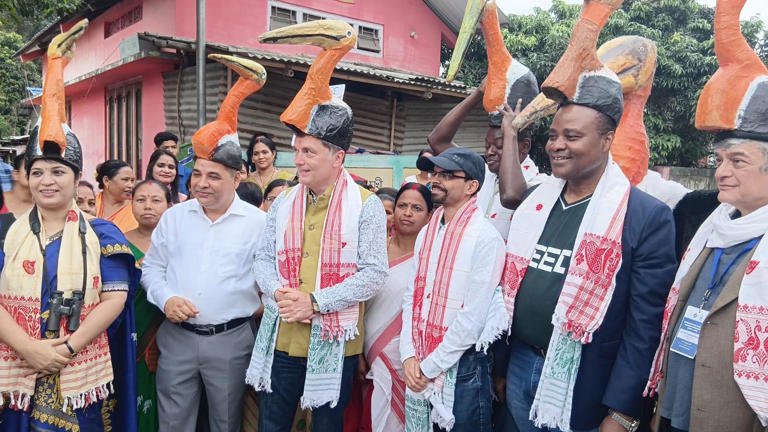
A unique blend of conservation and civic engagement came into focus in Assam as the Hargila initiative in Kamrup district drew attention during the voting day. The initiative, centered around protecting the endangered greater adjutant stork, also played a role in promoting voter awareness and participation.
The effort highlighted how environmental conservation programs can intersect with democratic processes, creating a broader sense of community involvement. Officials and volunteers used the occasion to spread awareness about both wildlife protection and the importance of voting.
Read More: Assam Voting 2026: What to Expect, Stakes and Result Updates
What is the Hargila Initiative?
The Hargila initiative is a conservation program dedicated to protecting the greater adjutant stork, locally known as “Hargila.” This endangered bird, once facing severe threats due to habitat loss and negative perceptions, has seen a revival in parts of Kamrup district.
The initiative has been led by conservationist Purnima Devi Barman, whose efforts have transformed community attitudes toward the bird. Through awareness campaigns, local residents—especially women—have been encouraged to take pride in protecting the species.
Over the years, the program has gained recognition for its innovative approach, combining ecological conservation with community empowerment. The involvement of local groups has been key to its success.
Spotlight on Voting Day
On the day of polling, the Hargila initiative took on an additional role by promoting voter participation. Volunteers integrated election awareness messages into their activities, encouraging people to cast their votes.
Decorations, awareness drives, and community gatherings featured themes related to both conservation and democracy. The presence of Hargila motifs at polling-related events created a unique atmosphere that resonated with local residents.
Officials noted that such initiatives help make the voting process more engaging and relatable, particularly in rural areas where community participation plays a crucial role.
Linking Conservation with Civic Responsibility
The Hargila initiative’s involvement in voting day activities underscores the potential of linking environmental efforts with civic responsibilities. By combining these themes, organizers were able to reach a wider audience and reinforce the importance of both causes.
The approach also reflects a broader understanding of development, where environmental sustainability and democratic participation are seen as interconnected. Encouraging people to care for their natural surroundings can also inspire them to take an active role in governance.
This dual focus has helped create a sense of ownership among residents, who view both conservation and voting as responsibilities that contribute to the well-being of their community.
Community Participation at the Core
One of the defining features of the Hargila initiative is its strong emphasis on community involvement. Local women’s groups, often referred to as “Hargila Army,” have played a central role in spreading awareness and protecting nesting sites.
Their participation on voting day added a unique dimension to the electoral process. By engaging with voters and sharing messages about both conservation and democracy, they helped create a positive and inclusive environment.
Residents expressed pride in the initiative, noting that it has brought recognition to their community while also addressing important environmental issues.
Support from Authorities and Election Officials
Election authorities and local प्रशासन supported the integration of the Hargila initiative into voting day activities. They recognized the value of using established community networks to promote voter awareness.
Officials stated that such collaborations can enhance outreach efforts, particularly in areas where traditional campaigning methods may have limited impact. By leveraging the popularity of the Hargila initiative, they were able to encourage greater participation.
The success of this approach may inspire similar initiatives in other regions, where local cultural or environmental programs can be used to strengthen democratic engagement.
Broader Impact on Awareness
The spotlight on the Hargila initiative during voting day has amplified its impact beyond conservation. It has demonstrated how grassroots movements can contribute to multiple aspects of community development.
In addition to raising awareness about the greater adjutant stork, the initiative has also highlighted the importance of active citizenship. This combination has resonated with people across different age groups and backgrounds.
Observers believe that such innovative approaches can play a significant role in addressing both environmental and social challenges. By connecting these issues, initiatives like Hargila can create lasting change.
What Lies Ahead
The recognition of the Hargila initiative during voting day marks an important milestone in its journey. Moving forward, there is potential to expand its scope and integrate additional community-focused activities.
Authorities and conservationists may explore ways to replicate this model in other districts, adapting it to local contexts. The success of the initiative in Kamrup provides a valuable example of how community engagement can drive positive outcomes.
For now, the Hargila initiative stands as a symbol of how conservation and democracy can come together to create a meaningful impact. Its presence on voting day in Assam has not only promoted environmental awareness but also reinforced the importance of participating in the democratic process.
Read More: Tipra Motha Exit Certain, BJP Eyes District Council Power in Tripura