


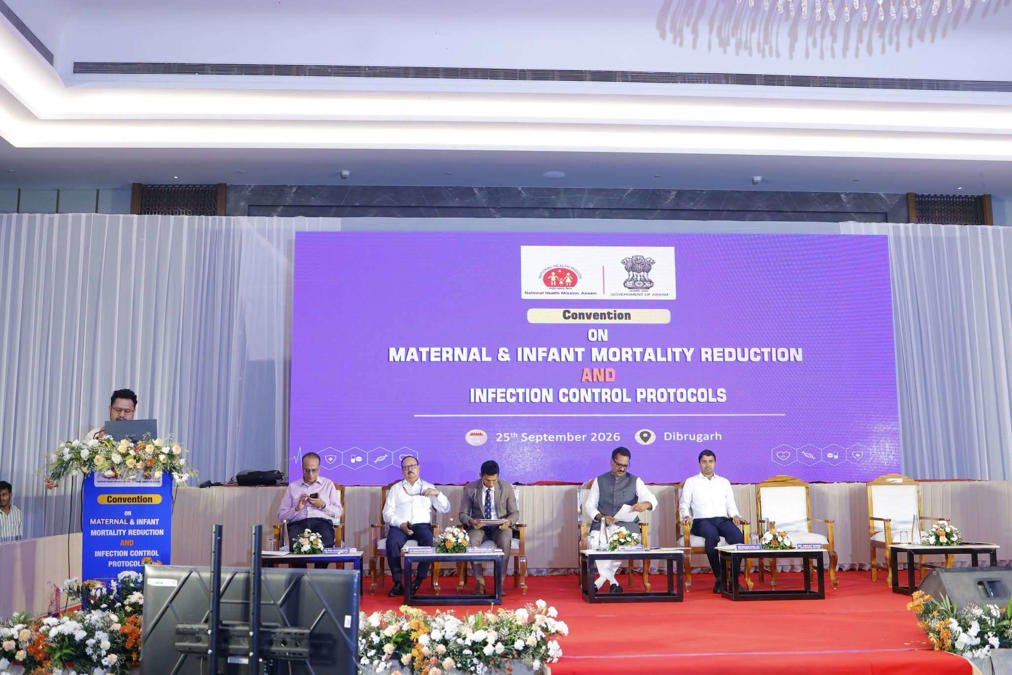
Assam is stepping up efforts to reduce maternal and infant mortality across the state. The government is focusing on better healthcare services, infection control and improved care for pregnant women and newborns.
The state has made progress in reducing deaths among mothers and infants. However, health officials say more work is needed. Better medical facilities, timely treatment and stronger healthcare systems remain important to prevent avoidable deaths.
The latest measures are aimed at improving the quality of care in hospitals and health centres. They also seek to strengthen the systems that support mothers before, during and after childbirth.
Assam Records Progress in Maternal Health
Assam has recorded a major decline in its maternal mortality ratio over the years. The maternal mortality ratio measures the number of maternal deaths for every one lakh live births.
According to figures cited by Assam Health Minister Ashok Singhal, the state’s MMR has fallen from 480 to 84 deaths per one lakh live births. The minister highlighted the progress while speaking at a convention focused on reducing maternal and infant mortality.
However, national data presents a slightly different figure. According to Sample Registration System data, Assam’s MMR stood at 110 during the 2021-23 period. It was 167 during 2019-21 and 125 during 2020-22.
The figures show a downward trend. They also highlight the need for continued efforts to improve maternal healthcare.
Infant Mortality Also Declines
Assam has also made progress in reducing infant mortality. The infant mortality rate refers to the number of infant deaths for every 1,000 live births.
According to figures shared by the state health department, Assam’s infant mortality rate has declined to 29 deaths per 1,000 live births.
The decline is linked to improvements in maternal and child healthcare services. Better access to medical care can help identify risks during pregnancy. It can also ensure faster treatment for mothers and newborns.
Newborn care remains especially important during the first few days after birth. Premature babies and newborns with health complications often need specialised medical attention.
New Focus on Infection Control
Infection prevention has emerged as another major area of focus for Assam’s health department.
During the recent convention in Dibrugarh, the state launched a new standard operating procedure for infection control. A dedicated infection-control portal was also introduced.
The new system is expected to improve infection-control practices in healthcare institutions. It will provide a structured approach to preventing and managing infections.
Proper infection control is particularly important in maternity wards and newborn-care units. Mothers and newborns can be vulnerable to infections during and after childbirth.
Regular monitoring, proper sanitation and safe medical procedures can help reduce these risks. Hospitals also need trained staff who can follow infection-control protocols consistently.
Encouraging Institutional Deliveries
Institutional deliveries remain an important part of Assam’s strategy to reduce maternal and infant deaths.
Giving birth at a healthcare facility allows women to access trained medical professionals. It also provides access to emergency services when complications arise.
The state implements the Janani Suraksha Yojana under the National Health Mission. The scheme encourages eligible women to choose institutional delivery.
Under the scheme, eligible women in rural areas receive financial assistance after delivering at a public health facility or an accredited private hospital. Eligible urban beneficiaries also receive financial support.
The assistance is transferred directly to beneficiaries through the Direct Benefit Transfer system. Such programmes are intended to encourage women to seek professional medical care during childbirth.
Strengthening Antenatal and Postnatal Care
Regular antenatal care is another key part of maternal health. Pregnant women need regular health check-ups throughout pregnancy.
These visits can help doctors identify problems at an early stage. Conditions such as high blood pressure, anaemia and other pregnancy-related complications require timely attention.
Postnatal care is equally important. Mothers need medical support after childbirth to identify possible complications.
Newborns also require regular monitoring after birth. Early health checks can help identify infections, breathing difficulties and other problems.
Strengthening these services can improve outcomes for both mothers and babies.
Improving Rural Healthcare Services
Access to healthcare remains a major challenge in some parts of Assam. The state’s geographical conditions can make it difficult for people in remote areas to reach specialised medical facilities.
Pregnant women in rural and difficult-to-reach areas may face additional challenges during emergencies. Delays in reaching hospitals can increase risks for both mothers and newborns.
Improving healthcare infrastructure in these areas is therefore important. Health centres need adequate staff, medicines and essential equipment.
Referral systems also need to work effectively. A pregnant woman with complications should be able to reach a facility with specialised services without unnecessary delays.
Role of the National Health Mission
The National Health Mission has several programmes focused on reproductive, maternal, newborn and child health in Assam.
The state’s RMNCH+A programme covers a wide range of healthcare needs. These include reproductive health, maternal health, newborn care, child health and adolescent health.
The programme also focuses on areas such as nutrition, immunisation, sanitation and access to primary healthcare.
These services are important because maternal and infant mortality can be influenced by several factors. Medical care is only one part of the larger picture.
Nutrition, sanitation, awareness and timely access to healthcare can also affect health outcomes.
Need for Continued Efforts
Despite the progress, Assam still needs sustained efforts to reduce maternal and infant deaths further.
Healthcare facilities must continue to improve the quality of maternal and newborn care. Medical staff also need regular training and access to updated protocols.
Early identification of high-risk pregnancies should remain a priority. Women with complications should receive timely referrals and specialised treatment.
The state also needs to ensure that healthcare services reach vulnerable communities. Remote locations should receive adequate attention when new health programmes are planned.
Assam Aims to Build on Recent Gains
Assam’s declining maternal and infant mortality figures indicate progress in the state’s healthcare system. However, reducing mortality further will require continuous action.
The latest focus on infection control, institutional deliveries and maternal healthcare is part of that wider effort. Stronger monitoring can also help identify gaps in healthcare delivery.
Better infrastructure, trained healthcare workers and timely medical intervention can play an important role. Community awareness will also remain essential.
As Assam continues to strengthen its healthcare system, the broader goal is to ensure safer pregnancies, safer deliveries and better survival rates for newborns. Continued investment and effective implementation will be important to sustain the progress already achieved.