


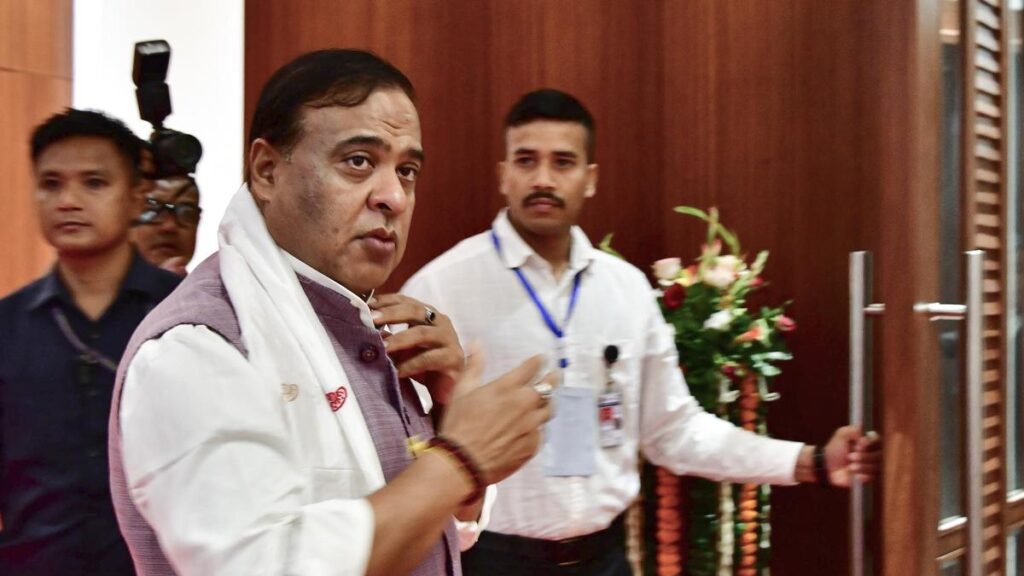
The Assam Ministerial Portfolio Allocation announced by Chief Minister Dr. Himanta Biswa Sarma on June 8 has reshaped the responsibilities of the state’s newly expanded cabinet. Twelve newly inducted ministers have received departmental assignments, while the Chief Minister has retained several key portfolios, including Home, Political, Power, and Public Works Department (PWD). The development reflects the government’s efforts to strengthen administrative efficiency and governance across Assam.
Powerful Total Territorial Defense Model Unveiled By Amit Shah
Historic Dibrugarh State Capital Region Plan Gets Major Boost
Assam Ministerial Portfolio Allocation Officially Announced
The Assam Ministerial Portfolio Allocation was formally announced on June 8 following the induction of 12 new cabinet ministers into the state government. Chief Minister Dr. Himanta Biswa Sarma allocated departmental responsibilities to the newly appointed ministers while retaining some of the most influential portfolios under his direct supervision.
Moreover, the allocation marks a significant administrative exercise aimed at distributing governance responsibilities across various sectors. The reshuffle comes as the government seeks to maintain momentum in implementing development initiatives and public welfare programs throughout the state.
Chief Minister Retains Key Strategic Departments
Dr. Himanta Biswa Sarma has continued to hold several crucial departments within the government. These include the Home Department, Political Department, Power Department, and Public Works Department (PWD).
Additionally, the decision highlights the Chief Minister’s continued involvement in areas considered central to governance and infrastructure development. These departments play a critical role in policy implementation, law and order management, energy distribution, and major public infrastructure projects.
Newly Inducted Ministers Receive Departmental Responsibilities
The allocation of portfolios has given the newly inducted ministers direct responsibility for various administrative sectors. Consequently, each minister will oversee departmental operations, policy implementation, and service delivery within their assigned areas.
Furthermore, assigning portfolios immediately after cabinet expansion helps ensure administrative continuity. Government departments can continue functioning without disruption while newly appointed ministers begin coordinating with officials and stakeholders.
Cabinet Expansion Reflects Governance Priorities
The recent cabinet expansion reflects the government’s broader governance priorities. Notably, the inclusion of new ministers provides additional administrative capacity to manage the growing demands of a rapidly developing state.
At the same time, the distribution of portfolios allows the government to focus on sector-specific challenges. Ministries responsible for education, health, agriculture, social welfare, industry, and rural development often require dedicated leadership to achieve policy goals effectively.
Importance of Portfolio Allocation in State Administration
Ministerial portfolio allocation serves as a crucial component of state governance. Each department functions under the leadership of a minister who is responsible for policy decisions, departmental oversight, and coordination with government agencies.
Moreover, clear allocation of responsibilities improves accountability and administrative efficiency. Citizens, government officials, and stakeholders benefit from having designated leadership for specific sectors and public services.
Administrative Continuity Remains a Key Objective
One of the primary objectives of the Assam Ministerial Portfolio Allocation is ensuring smooth administrative continuity. Therefore, the government moved quickly to assign responsibilities after the cabinet induction process.
Additionally, continuity is essential for maintaining progress on ongoing development projects and welfare schemes. Ministers can immediately begin reviewing departmental priorities and implementing planned initiatives without unnecessary delays.
Public Services and Development Projects Expected to Benefit
The portfolio allocation could have a positive impact on public service delivery across Assam. Furthermore, departments led by newly assigned ministers may receive fresh administrative attention and policy direction.
Infrastructure projects, social welfare initiatives, educational programs, healthcare services, and agricultural development efforts all depend on effective departmental leadership. Consequently, the allocation of portfolios plays a direct role in determining how efficiently these services reach citizens.
Political Significance of the Cabinet Reshuffle
Beyond administrative considerations, the cabinet reshuffle also carries political significance. Cabinet expansions and portfolio allocations often reflect efforts to strengthen governance structures while ensuring broader representation within government.
Moreover, assigning responsibilities to newly inducted ministers allows emerging leaders to take on greater roles within the administration. Such decisions can contribute to leadership development and strengthen the government’s organizational framework.
Government Focuses on Coordination and Delivery
Government officials have emphasized the importance of coordination among departments following the portfolio allocation. Therefore, ministers are expected to work closely with administrative officers to ensure timely implementation of policies and programs.
Furthermore, effective coordination becomes increasingly important as Assam continues pursuing infrastructure development, economic growth, and social welfare objectives. Strong collaboration across departments can improve overall governance outcomes.
Future Governance Agenda Takes Shape
The allocation of portfolios provides a clearer picture of the government’s governance agenda for the coming months. Notably, departmental leadership is now positioned to focus on policy execution and project implementation.
Meanwhile, the Chief Minister’s decision to retain key portfolios suggests continued direct oversight of strategic sectors. This approach may help ensure alignment between departmental initiatives and broader government priorities.
Conclusion
The Assam Ministerial Portfolio Allocation announced by Chief Minister Dr. Himanta Biswa Sarma represents an important step in shaping the state’s administrative structure following the induction of 12 new cabinet ministers. By assigning departmental responsibilities promptly, the government has sought to maintain continuity while strengthening its capacity to manage a wide range of governance responsibilities.
Moreover, the Chief Minister’s decision to retain significant portfolios such as Home, Political, Power, and PWD underscores the strategic importance of these departments within the state’s governance framework. At the same time, newly appointed ministers now have the opportunity to lead key sectors and contribute directly to policy implementation and public service delivery.
Furthermore, the portfolio allocation is expected to support ongoing development initiatives, improve departmental coordination, and enhance accountability across government institutions. As Assam continues pursuing economic growth, infrastructure expansion, and social development goals, effective leadership within each department will remain essential.
Overall, the Assam Ministerial Portfolio Allocation establishes the administrative foundation for the government’s next phase of governance and development, setting the stage for continued policy execution and public service improvements across the state.
FAQs
Q1. What is the Assam Ministerial Portfolio Allocation?
The Assam Ministerial Portfolio Allocation refers to the distribution of departmental responsibilities among cabinet ministers in the state government. It determines which minister oversees each government department.
Q2. When was the latest portfolio allocation announced?
Chief Minister Dr. Himanta Biswa Sarma announced the latest allocation on June 8 following the induction of 12 new cabinet ministers into the Assam government.
Q3. Which departments has the Chief Minister retained?
The Chief Minister has retained important departments including Home, Political, Power, and Public Works Department (PWD), among other responsibilities.
Q4. Why is the Assam Ministerial Portfolio Allocation important?
The Assam Ministerial Portfolio Allocation helps establish accountability and administrative leadership across government departments. It ensures that ministers can oversee policy implementation and public service delivery effectively.
Q5. How does portfolio allocation affect citizens?
Portfolio allocation influences how government departments function and deliver services. Effective leadership can improve policy execution, development projects, and public welfare programs.