


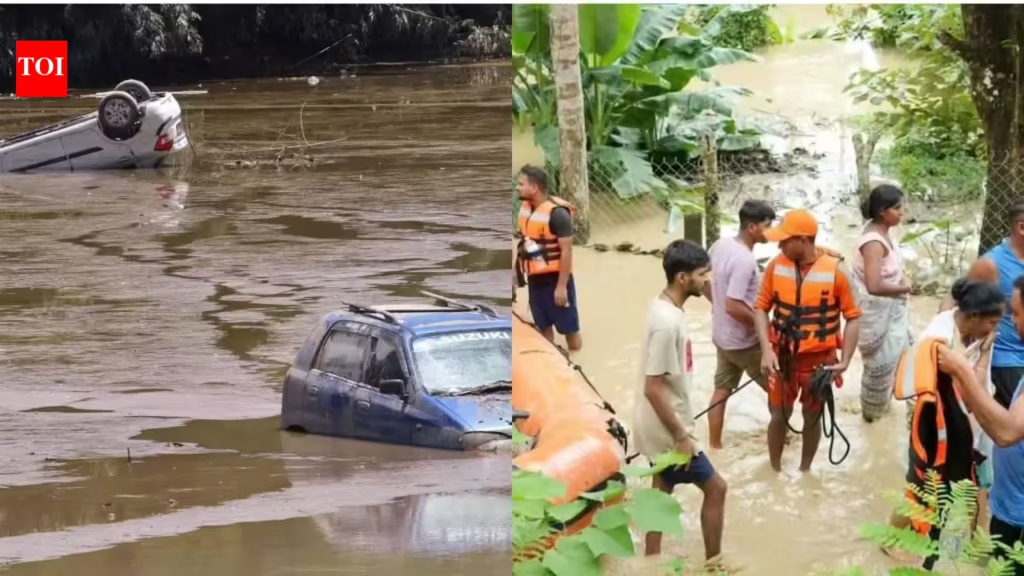
Assam’s opposition parties have intensified their attack on the BJP-led government after the state’s reported flood-related death toll reached 95. Opposition leaders have focused on disaster preparedness, relief distribution, infrastructure, compensation, and accountability as floodwaters continue to disrupt communities.
The political confrontation has grown alongside the humanitarian crisis. Moreover, opposition parties have highlighted the difficulties faced by displaced families, farmers, and residents whose homes and livelihoods have suffered damage.
However, political allegations should remain clearly distinguished from established facts. The immediate priority remains the delivery of relief and protection of affected communities while authorities assess losses and prepare for recovery.
Tanishka Chugera: Beyond Goodbye, A Daughter’s Journey Through Love, Loss and Healing
Opposition Intensifies Criticism of BJP
The reported death toll of 95 has given Assam’s opposition parties a stronger platform to question the BJP-led administration.
Opposition leaders have raised concerns about emergency preparedness, evacuation arrangements, and relief distribution. Furthermore, they have questioned whether existing flood-management measures adequately protect vulnerable communities.
The criticism has consequently increased political pressure on the government.
However, opposition statements represent political positions and do not independently establish administrative failure.
95 Deaths Put Government Under Pressure
The reported casualty figure has become central to the political debate.
Flood-related deaths can raise questions about early-warning systems, rescue operations, evacuation planning, and emergency infrastructure. Additionally, affected families may require financial assistance, healthcare, and long-term rehabilitation.
The human cost has therefore intensified demands for accountability.
However, officials can revise casualty figures as they continue verifying individual cases.
Relief Camps Face Greater Scrutiny
Opposition leaders have also focused on the condition of relief camps.
Displaced residents require food, clean drinking water, medicines, sanitation, and safe temporary accommodation. Moreover, authorities must track camp populations and ensure that vulnerable residents receive appropriate assistance.
Any shortages can quickly become a political issue.
However, conditions may differ between individual camps and districts.
Sivasagar Remains Under Attention
Sivasagar has received particular attention as flood-affected residents seek shelter and emergency assistance.
Local authorities must coordinate rescue teams, relief camps, healthcare services, and essential supplies. Furthermore, changing water levels can force officials to adjust evacuation and shelter arrangements.
The district’s experience has therefore become part of the broader political discussion.
However, local circumstances require independent assessment.
Agriculture Adds to Political Pressure
Flooding has created serious concerns for Assam’s agricultural communities.
Farmers can lose crops, livestock, equipment, and access to farmland. Additionally, prolonged waterlogging can delay cultivation and increase financial pressure on rural households.
Opposition parties may therefore demand faster compensation and agricultural support.
However, authorities generally require verified damage assessments before determining eligible assistance.
Infrastructure Comes Under Scrutiny
The floods have renewed questions about Assam’s infrastructure and flood-control systems.
Roads, bridges, embankments, and drainage networks can influence how quickly communities become isolated. Moreover, infrastructure damage can delay rescue operations and the delivery of relief supplies.
Opposition leaders can consequently demand greater transparency around infrastructure spending and maintenance.
However, severe flooding can damage infrastructure even when authorities maintain existing structures.
Government Highlights Relief Measures
The BJP-led administration can point to rescue operations, relief camps, emergency supplies, and coordination with disaster-response agencies.
Officials may also highlight evacuation efforts and assistance provided to affected families. Furthermore, government agencies can use flood and casualty data to identify areas requiring additional support.
These measures will influence public perceptions of the government’s response.
However, residents’ experiences will remain an important measure of relief effectiveness.
Opposition Demands Accountability
Opposition leaders have sought greater accountability over the handling of the flood emergency.
Their demands can include details about relief expenditure, flood-control projects, evacuation planning, and compensation. Additionally, political representatives can visit affected areas and raise complaints received from residents.
Such scrutiny can encourage greater transparency.
However, criticism does not automatically establish negligence or wrongdoing.
Political Coordination Gains Momentum
The scale of the disaster could encourage opposition parties to coordinate their criticism.
Different parties can focus on common demands involving relief, compensation, infrastructure, and disaster preparedness. Moreover, coordinated political messaging can increase pressure on the government during the recovery period.
Such cooperation could strengthen the opposition’s campaign.
However, differences among opposition parties may remain over strategy and political priorities.
Families Need Immediate Support
For affected residents, political disputes remain secondary to immediate humanitarian needs.
Families require safe shelter, food, drinking water, healthcare, and sanitation. Furthermore, those who lose homes, crops, livestock, or income may need longer-term financial assistance.
Authorities therefore face pressure to maintain relief operations regardless of political confrontation.
However, the specific needs of affected families vary by location and the extent of damage.
Healthcare and Sanitation Remain Priorities
Flood emergencies can increase public-health risks.
Authorities need to maintain medical services, safe drinking water, sanitation facilities, and hygiene measures in relief camps and affected communities. Additionally, children, older residents, and other vulnerable groups may require additional support.
These services can reduce preventable health problems.
However, health requirements may increase if displacement continues.
Compensation Becomes Major Issue
Flood victims are likely to seek assistance for damaged homes, crops, livestock, and other property.
Opposition parties can demand transparent and timely compensation procedures. Moreover, authorities must conduct damage assessments before determining eligible assistance.
The compensation process could therefore become a key test of the government’s recovery response.
However, eligibility depends on applicable relief rules and verified losses.
Central Assistance Could Support Response
The scale of Assam’s floods may require continued coordination with central authorities.
National disaster-response agencies can provide specialised teams, equipment, logistics, and other resources when necessary. Furthermore, established disaster-relief mechanisms can support eligible emergency expenditure.
Such assistance can strengthen the overall response.
However, central involvement does not automatically indicate a failure by the state administration.
Flood Management Returns to Political Agenda
The latest crisis has again highlighted Assam’s long-term flood-management challenges.
Political discussions may focus on embankment maintenance, drainage, river management, flood forecasting, wetland protection, and resilient infrastructure. Moreover, opposition parties can demand stronger long-term strategies to reduce recurring flood risks.
These issues could remain politically important after the current emergency ends.
However, effective flood mitigation requires sustained planning and investment.
Recovery Could Shape Public Opinion
The government’s handling of recovery may influence political sentiment.
Timely relief, transparent compensation, and effective infrastructure restoration could strengthen public confidence. Conversely, delays or unresolved grievances could give opposition parties additional opportunities to criticise the administration.
Public opinion may therefore develop as recovery progresses.
However, the eventual electoral impact remains uncertain.
Conclusion
The reported 95 flood-related deaths in Assam have intensified opposition criticism of the BJP-led government, with political parties focusing on disaster preparedness, relief operations, infrastructure, compensation, and accountability. The crisis has therefore created a major political challenge alongside the urgent humanitarian response.
Moreover, opposition coordination could increase pressure on the government as affected communities seek relief and begin rebuilding. At the same time, allegations of negligence or wrongdoing require evidence and appropriate verification before authorities can establish responsibility.
Overall, the recovery phase will likely determine the lasting political impact of the floods. Effective relief, transparent compensation, infrastructure restoration, and stronger disaster preparedness could improve public confidence, while unresolved concerns could sustain opposition pressure on the BJP-led administration.
FAQs
1. Why are Assam’s opposition parties targeting the BJP?
Opposition leaders have criticised the BJP-led government over disaster preparedness, relief distribution, infrastructure, compensation, and accountability following the reported flood death toll of 95.
2. What is the reported Assam flood death toll?
The figure referenced in this report has reached 95, although authorities may revise the number following further verification.
3. Are opposition allegations proven?
No. Political allegations require credible evidence and appropriate investigation before authorities can establish negligence or wrongdoing.
4. What assistance do flood victims need?
Key needs include safe shelter, food, drinking water, healthcare, sanitation, evacuation assistance, compensation, and livelihood support.
5. Could the floods affect Assam politics?
The floods could influence public opinion depending on the government’s relief and recovery performance. However, the eventual electoral impact remains uncertain.