


The Assam government has set an ambitious target to create 30 lakh Lakhpati Didis in Assam by the year 2028. Simultaneously, it plans to extend the coverage of the flagship Orunodoi scheme to 40 lakh women beneficiaries.
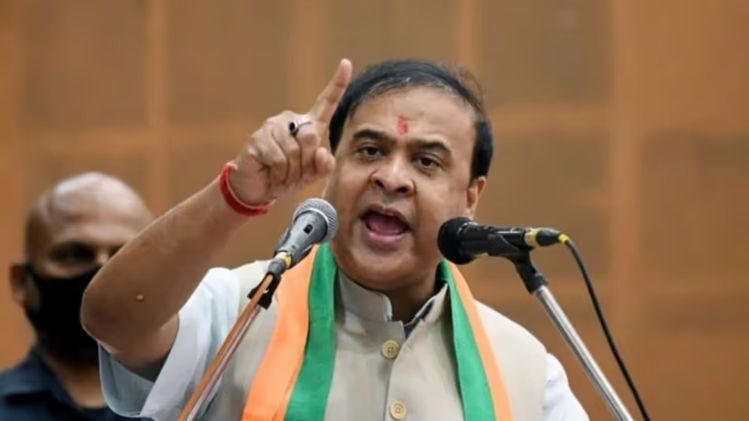
These twin goals were recently announced by Chief Minister Himanta Biswa Sarma during a public meeting aimed at highlighting the government’s roadmap for women-led development in the state.
The strategy aims to strengthen self-help groups (SHGs), promote micro-enterprise, and enhance direct benefit transfers to women, especially those from low-income households.
Read More: New Guwahati Foot Overbridges, Airport Terminal Near Completion
Lakhpati Didis in Assam to Boost Rural Women Entrepreneurs
The term “Lakhpati Didi” refers to a woman who earns at least ₹1 lakh per year through income-generating activities. Under this initiative, Assam seeks to turn lakhs of SHG members into self-sustaining entrepreneurs.
CM Sarma stated that over 4 lakh women have already reached the ₹1 lakh income milestone and the government now aims to expand that number to 30 lakh by 2028.
To achieve this, the Assam State Rural Livelihoods Mission (ASRLM) will facilitate skill training, financial assistance, market linkage, and bank credit access.
Women involved in sectors like dairy farming, weaving, poultry, tailoring, food processing, and handicrafts will receive customized support. The CM emphasized that these initiatives will not only make women financially independent but also contribute to Assam’s rural economy.
Orunodoi Scheme to Cover 40 Lakh Beneficiaries
The Orunodoi scheme, a major financial assistance programme, currently provides monthly cash transfers of ₹1,250 to eligible women. As of now, the scheme supports 27 lakh beneficiaries.
In a significant expansion, the government plans to raise the number to 40 lakh women by 2028. CM Sarma mentioned that the extended coverage will particularly focus on women from tea garden areas, minority groups, and backward communities.
He also reaffirmed the government’s commitment to continue this direct benefit transfer scheme, calling it the “largest women-focused financial inclusion scheme in the country.”
This move is expected to infuse ₹600 crore monthly into the rural economy, improving nutrition, healthcare, education, and household purchasing power.
Government’s Vision for Women-Led Development
The twin targets—30 lakh Lakhpati Didis in Assam and 40 lakh Orunodoi beneficiaries—reflect a larger vision to empower women through financial freedom and institutional support.
CM Sarma pointed out that when women become earners, their families become stronger, and society progresses. By linking SHGs with structured training and digital tools, the government aims to bring transformational change in rural Assam.
He also acknowledged the support of central government schemes like Deendayal Antyodaya Yojana and National Rural Livelihood Mission, which are crucial in achieving these goals.
Additionally, the state plans to set up 500 rural product marketing hubs where SHG women can sell their goods directly to consumers and traders.
Positive Outcomes Already Visible
Several women from districts like Barpeta, Jorhat, and Dhemaji have already become role models under the program. Many have turned their SHG ventures into thriving businesses and employed other women in their villages.
One such example is Renu Das from Morigaon, who now runs a weaving unit and earns over ₹1.5 lakh a year. “Earlier I was dependent on my husband’s income. Now I’m running a business and training other women too,” she shared.
Stories like hers highlight the ground-level impact of the Lakhpati Didis in Assam programme and how it’s changing lives beyond statistics.
Funding and Institutional Support
To support the Lakhpati Didi mission, the government has earmarked a budget of ₹2,500 crore over the next three years. SHGs will also receive revolving funds, interest subvention, and subsidized loans.
The role of banks and micro-finance institutions will be pivotal in providing easy access to capital. The government is also working on easing the documentation process and encouraging digital payments in SHG operations.
In terms of Orunodoi, the CM announced an additional ₹3,000 crore allocation for the upcoming financial year to support the increased beneficiary count.
The Assam government’s plan to create 30 lakh Lakhpati Didis in Assam and extend Orunodoi to 40 lakh women signals a strong commitment to women-led progress. These initiatives are not merely welfare measures but serve as investment in human capital.
As the state moves forward with skill-building, financial literacy, and enterprise promotion for women, the positive ripple effects will be felt across families, communities, and the economy. If the roadmap stays on track, Assam could emerge as a national model for grassroots women empowerment by 2028.
Read More: Assam hill districts protests over Article 244(A): Powerful backlash erupted