


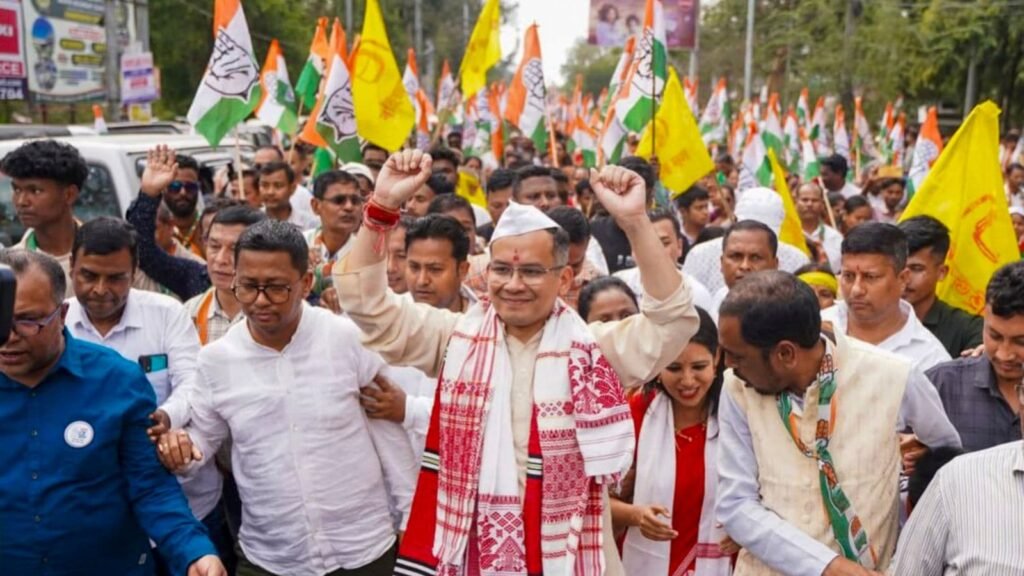
Assam politics without muscle power is emerging as a powerful vision that seeks to redefine governance and electoral practices in the state. For decades, elections in many parts of India, including Assam, have faced criticism over the use of money, coercion, and intimidation. However, a renewed political narrative now promises a shift towards transparency, accountability, and people-centric governance.
Read More: Tripura Food Minister Assures Adequate Fuel Supply Across State
The Need for Clean Politics in Assam
Assam has witnessed significant political transformations over the years. Yet, concerns about the influence of muscle power and financial clout during elections continue to surface. These practices often undermine democratic values and prevent fair representation.
Moreover, when elections become influenced by intimidation or money, genuine candidates struggle to compete. As a result, public trust in the system weakens. Therefore, the call for Assam politics without muscle power reflects a broader demand for ethical governance.
In recent years, citizens, especially young voters, have become more vocal about their expectations. They seek leaders who prioritize development, transparency, and inclusivity rather than relying on outdated political tactics. Consequently, political parties now face increasing pressure to reform their approach.
Moving Beyond Money and Intimidation
The promise to build Assam without the dominance of money and intimidation marks a significant turning point. This vision emphasizes fair campaigning, where ideas and policies take precedence over financial influence.
Firstly, reducing the role of money in elections can create a level playing field. When candidates do not depend heavily on financial resources, grassroots leaders gain better opportunities to contest. This, in turn, strengthens democratic participation.
Secondly, eliminating intimidation ensures that voters can exercise their rights freely. Fear-free elections are essential for a healthy democracy. When people feel safe to vote according to their conscience, election outcomes truly reflect public will.
Furthermore, strict enforcement of election laws plays a crucial role. Authorities must ensure that violations are addressed promptly. By doing so, they can discourage malpractice and build confidence among voters.
Strengthening Institutions and Electoral Processes
To achieve Assam politics without muscle power, institutional reforms are necessary. Strong and independent electoral bodies can monitor campaigns effectively and prevent misuse of resources.
Additionally, the use of technology can enhance transparency. Digital monitoring systems, online expenditure tracking, and real-time reporting can reduce opportunities for corruption. These tools also help in maintaining accurate records, making the process more accountable.
Another key aspect involves empowering law enforcement agencies. They must act swiftly against any form of electoral malpractice. At the same time, impartiality is essential to ensure that actions are not politically motivated.
Civic awareness campaigns also play a vital role. Educating voters about their rights and the importance of ethical voting can create long-term change. When citizens reject candidates who rely on money or intimidation, political culture naturally evolves.
Role of Political Leadership
Political leadership holds the key to implementing this vision. Leaders must set an example by conducting campaigns based on integrity and policy-driven discussions. Their commitment can influence party workers and supporters.
Moreover, internal party reforms are equally important. Transparent candidate selection processes can reduce the influence of money and favoritism. By promoting deserving candidates, parties can rebuild public trust.
Leadership must also focus on addressing core issues such as unemployment, infrastructure, and education. When governance delivers tangible results, reliance on unfair practices diminishes. People tend to support leaders who demonstrate genuine commitment to development.
Public Participation and Accountability
The success of Assam politics without muscle power depends largely on public participation. Voters must actively engage in the democratic process and hold leaders accountable.
For instance, citizens can report electoral violations and demand transparency. Civil society organizations and media also play a crucial role in highlighting issues and ensuring accountability.
Furthermore, social media has become a powerful tool for awareness. It allows citizens to share information, discuss policies, and question leaders. This increased engagement contributes to a more informed electorate.
At the same time, accountability mechanisms must remain strong. Regular audits, public disclosures, and independent oversight can ensure that promises translate into action. Without accountability, reforms risk becoming mere slogans.
Challenges on the Path Ahead
Despite the promising vision, several challenges remain. Deep-rooted practices and vested interests may resist change. Political competition can sometimes lead to the continuation of old methods.
Additionally, monitoring vast and diverse regions like Assam requires significant resources. Ensuring uniform implementation of rules across all constituencies can be complex.
However, gradual progress is possible. With consistent efforts, even deeply entrenched systems can change. The key lies in sustained commitment from both leaders and citizens.
A New Political Future for Assam
The vision of Assam politics without muscle power represents a step towards a more inclusive and democratic future. By prioritizing fairness, transparency, and accountability, the state can set an example for others.
Importantly, this approach aligns with the aspirations of a new generation of voters. They value integrity and expect leaders to uphold democratic principles. As a result, political parties must adapt to these changing expectations.
In conclusion, building Assam without the dominance of muscle power, money, and intimidation is not just a political promise but a necessary transformation. While challenges persist, collective efforts can bring meaningful change. With strong leadership, institutional reforms, and active public participation, Assam can move towards a cleaner and more credible political system.
Read More: Shocking Sonamura Fake Currency Case: Man Arrested with ₹500 Notes