


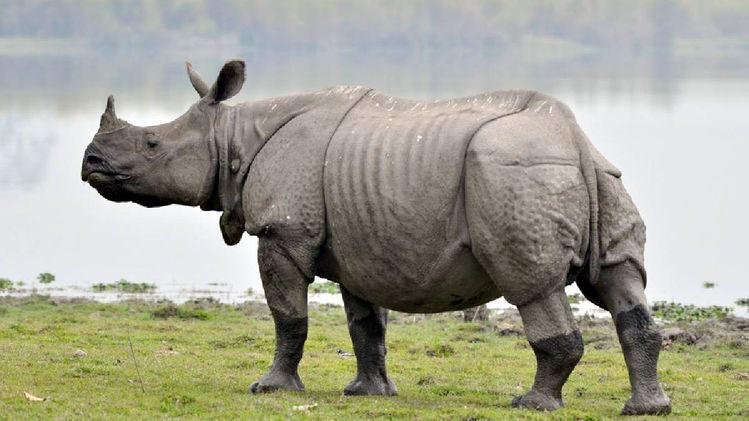
Assam has reached a major milestone in wildlife conservation after recording zero reported rhino poaching incidents in 2025. The achievement has drawn attention in the International Rhino Foundation’s (IRF) latest State of the Rhinos 2026 report.
The report highlights the progress made in protecting the greater one-horned rhinoceros. Assam remains one of the most important habitats for the species. The state is home to large rhino populations, with Kaziranga National Park serving as the main stronghold.
The zero-poaching record marks a significant change from the situation Assam faced during the previous decade. Conservation authorities have strengthened surveillance, increased coordination and focused more on preventing poaching attempts before they happen.
International Rhino Foundation Highlights Progress
The IRF’s State of the Rhinos 2026 report says India, Nepal and Indonesia recorded zero reported rhino poaching in 2025. The report estimated the global population of greater one-horned rhinos at 4,075 in 2025.
However, the report also noted that fresh population counts were not available from some habitats. These include Kaziranga, which remains the largest stronghold of the greater one-horned rhinoceros.
The report therefore presents zero poaching as an important conservation achievement. At the same time, it points to continuing threats such as habitat degradation, invasive plants and shrinking grasslands.
Kaziranga Remains Central to Rhino Conservation
Kaziranga National Park plays a major role in Assam’s rhino conservation efforts. The park supports one of the world’s largest populations of the greater one-horned rhinoceros.
The park recorded around 2,600 rhinos in its 2022 census. Assam had also recorded zero known rhino poaching in 2022. The state has now repeated that achievement in 2025.
Assam’s forest department continues to manage several protected areas that support rhinos. These include Kaziranga, Orang, Pobitora and Manas. Government data shows the long-term growth of the state’s rhino population across these landscapes.
The International Rhino Foundation has previously noted that Assam supports around 70% of the world’s greater one-horned rhinos. The species has made a strong recovery after facing severe population declines in the past.
Stronger Anti-Poaching Measures
Assam’s progress has followed several years of stronger protection measures. The state has increased surveillance and strengthened coordination between forest officials and law enforcement agencies.
Authorities have also introduced technology into wildlife protection. Camera traps, drones and improved communication systems can help officials monitor sensitive areas.
Assam has also focused on intelligence-led operations. These efforts aim to identify poaching networks and stop planned attacks before they result in the killing of a rhino.
A report published by ThePrint in March 2026 highlighted the role of anti-poaching camps, drones and specialised protection teams in Kaziranga. The park has developed a multi-layered security system to protect its rhino population.
Operation Falcon Targets Poaching Networks
Assam’s anti-poaching strategy has also included Operation Falcon, a joint initiative involving the Assam Police and Forest Department.
The operation focuses on identifying and disrupting organised rhino poaching networks. Intelligence gathering forms an important part of the operation. Officials also coordinate their efforts to track suspects and prevent planned attacks.
Earlier reports on Operation Falcon said authorities had arrested poachers and disrupted several planned poaching attempts. The strategy has shifted attention towards organised networks rather than focusing only on individual incidents.
Such coordination can help authorities respond more quickly when they receive information about possible threats. It also allows forest and police teams to combine their resources.
Government Strengthens Wildlife Protection
The Assam government has also increased resources for wildlife protection. The Centre has highlighted measures such as improved security arrangements, modern equipment for forest officials and stronger surveillance.
Women have also taken part in frontline protection through the Van Durga initiative. The programme has increased the participation of women in wildlife protection duties.
Prime Minister Narendra Modi recently highlighted Assam’s zero-poaching record in 2025. He credited strengthened security arrangements, modern resources, improved monitoring and community efforts for the achievement.
The government has also described the achievement as part of a broader effort to protect Assam’s wildlife heritage.
Rhino Population Has Recovered Over Time
The zero-poaching record becomes more significant when viewed against the history of rhino conservation in Assam.
Greater one-horned rhinos once faced severe threats from hunting and habitat loss. Strong conservation programmes have helped the species recover over several decades.
Government data shows a clear increase in Assam’s rhino population over time. The state recorded 1,672 rhinos in 1999, while later counts showed substantial growth. The government has also expanded protected habitats and introduced new conservation measures.
The recovery demonstrates the importance of sustained conservation efforts. Protecting animals requires more than stopping poaching. Authorities must also protect habitats and maintain healthy ecosystems.
Habitat Protection Remains a Challenge
Despite the zero-poaching achievement, conservationists continue to identify other threats to rhinos.
The IRF report points to habitat degradation, invasive plants and shrinking grasslands as important concerns. These challenges can affect food availability and the quality of habitats that rhinos depend on.
Floods also influence wildlife movement in Assam. Rhinos often move towards higher ground during severe flooding. Such movements can create additional challenges for forest officials and nearby communities.
For this reason, conservation authorities need to maintain protection measures even when poaching numbers remain at zero.
A Major Milestone for Assam
The absence of reported rhino poaching in 2025 represents an important milestone for Assam rhino conservation. It shows how stronger surveillance, intelligence-based enforcement and cooperation between agencies can contribute to wildlife protection.
The achievement also highlights the importance of protecting habitats alongside preventing poaching. Assam’s rhinos depend on healthy grasslands, wetlands and protected forests.
The state will now face the challenge of maintaining this progress. Continued investment in forest protection, technology, trained personnel and community participation can help preserve the gains made so far.
For Assam, the 2025 record represents more than a year without a reported rhino poaching incident. It reflects years of conservation work and a continuing effort to protect the greater one-horned rhinoceros, one of the state’s most important symbols of natural heritage.