


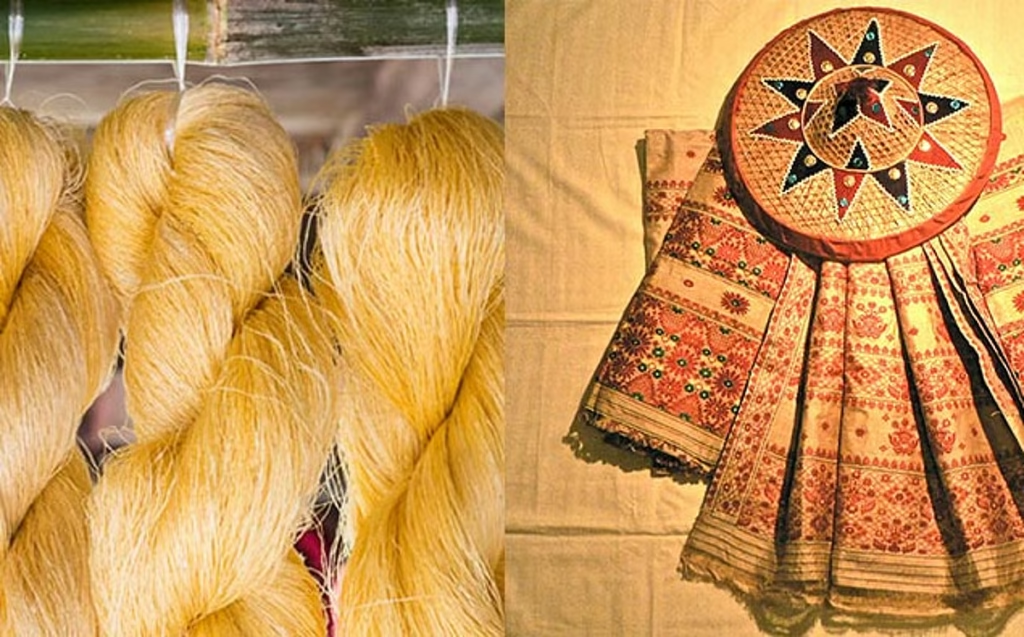
The Assam silk cooperative has recorded a historic high in the production of genuine muga silk yarn filaments, marking a major achievement for the state’s traditional sericulture sector. The increase in output highlights the growing strength of Assam’s renowned muga silk industry and reflects sustained efforts to enhance productivity and quality. Moreover, officials stated that the record production will help strengthen market competitiveness and improve income opportunities for silk growers and weavers. The development underscores the importance of muga silk as a key component of Assam’s cultural and economic heritage.
Mizoram Science Department Establishes Regional Weather Observation Stations in High Hills
Record Production Marks Milestone for Sericulture Sector
Assam silk cooperative registers record high production of genuine muga silk yarn filaments, signaling robust growth in the state’s silk industry. Consequently, producers and cooperative members are expected to benefit from increased availability of premium-quality yarn.
Muga silk, known for its natural golden sheen and durability, is unique to the region and enjoys high demand in domestic and international markets. Moreover, improved cultivation practices and better management have contributed to higher output. Therefore, the sericulture sector is witnessing renewed momentum.
Officials emphasized that maintaining quality standards remains essential for sustaining market demand. Furthermore, technological interventions and farmer support initiatives have strengthened production systems. As a result, overall efficiency within the sector has improved.
Meanwhile, cooperative societies are expanding their procurement and processing capabilities. Consequently, more producers are being integrated into the value chain.
Benefits for Farmers and Rural Livelihoods
Assam silk cooperative registers record high production of genuine muga silk yarn filaments with significant implications for rural livelihoods. Moreover, thousands of families are directly dependent on sericulture activities. Therefore, increased production is expected to boost household incomes.
The cooperative framework has helped provide farmers with technical support and better access to markets. Consequently, producers can secure improved returns for their products. Such support contributes to the sustainable growth of the industry.
Furthermore, employment opportunities in rearing, spinning, and weaving activities are likely to expand. As a result, rural economies may experience greater economic stability.
Meanwhile, training programs for sericulture workers continue to be strengthened. Similarly, awareness regarding scientific cultivation methods is increasing.
Rising Demand and Market Expansion
The Assam silk cooperative registers record high production of genuine muga silk yarn filaments amid growing demand for traditional textiles. Moreover, muga silk products are valued for their exclusivity and craftsmanship. Therefore, market opportunities are expanding.
Authorities are promoting branding and quality certification to enhance competitiveness. Consequently, producers may gain access to broader markets. Such initiatives support the growth of value-added silk products.
Furthermore, participation in exhibitions and trade fairs is helping increase visibility. As a result, Assam’s silk industry is gaining greater recognition.
Meanwhile, efforts are being made to strengthen supply chains and distribution networks. Similarly, digital platforms are being explored to improve marketing.
Preserving Cultural Heritage Through Innovation
The production milestone also highlights the role of sericulture in preserving Assam’s cultural identity. Moreover, muga silk has deep historical and cultural significance in the state. Therefore, protecting traditional practices remains a priority.
Officials stated that innovation and heritage conservation must progress together. Consequently, scientific approaches are being integrated with traditional knowledge. Such efforts help ensure the long-term sustainability of the industry.
Furthermore, younger generations are being encouraged to participate in sericulture activities. As a result, the legacy of muga silk production is being preserved.
Meanwhile, research institutions are exploring ways to improve productivity and disease resistance. Similarly, collaborations with industry stakeholders are being strengthened.
Conclusion
Assam silk cooperative registers record high production of genuine muga silk yarn filaments, marking a significant achievement for the state’s sericulture sector. Moreover, the milestone is expected to enhance livelihoods and strengthen market opportunities.
The development reflects the successful combination of traditional expertise and modern practices. Therefore, it contributes to the long-term sustainability of Assam’s iconic muga silk industry.
As Assam silk cooperative registers record high production of genuine muga silk yarn filaments, it reinforces the state’s reputation as the home of the world-famous golden silk.
FAQs
1. What achievement has the Assam silk cooperative recorded?
A record high production of genuine muga silk yarn filaments.
2. Why is muga silk special?
It is known for its natural golden sheen and durability.
3. Who benefits from increased production?
Silk growers, weavers, and rural communities.
4. How is the industry being strengthened?
Through improved cultivation, technology, and market support.
5. Why is muga silk important to Assam?
It represents a significant part of the state’s cultural and economic heritage.