


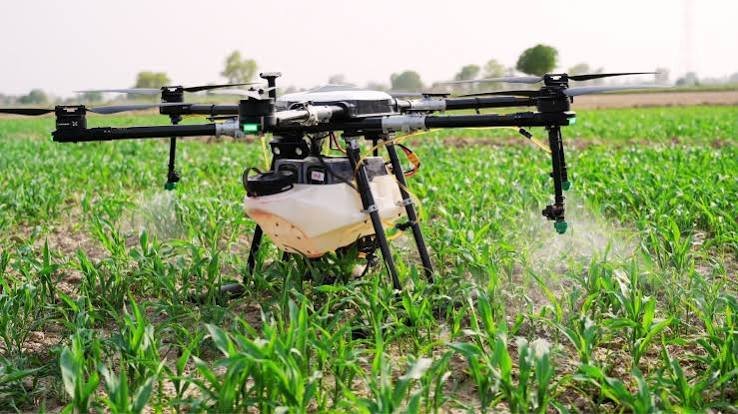
Assam tea drone spraying technology is gaining attention as plantations explore ways to improve crop management, reduce labour pressure and strengthen productivity. Drone-based systems can apply approved agricultural inputs across tea bushes with greater operational consistency when conditions and equipment allow. Meanwhile, research institutions are developing new applications for aerial imaging, crop-health assessment and precision farming. These developments could help tea estates make more informed decisions about pest management and plantation maintenance. However, wider adoption and measurable yield improvements will depend on field trials, safety standards and the needs of individual estates.
Respiratory diseases in Mizoram: 721 deaths reported now
Assam Tea Drone Spraying Technology Gains Momentum
Assam’s tea industry has begun exploring drone technology to address practical challenges in plantation management. In August 2026, the Tocklai Tea Research Institute in Jorhat, operated by the Tea Research Association, signed a memorandum of understanding with RC Hobbytech Solutions Pvt Ltd. The partnership aims to promote drone research, precision agriculture, skill development and technology transfer.
A major component of the agreement involves establishing a Drone Centre of Excellence at Tocklai. The proposed centre will support research into plantation management, geographic information systems, remote sensing and artificial intelligence-based crop analytics. It will also facilitate scientific trials and technology demonstrations for the tea industry.
The collaboration includes training opportunities related to drone operations, precision agriculture and drone-based spraying. Such programmes could help estate managers, researchers and technical personnel understand how aerial technology fits into existing plantation practices. In addition, training may create opportunities for young people interested in agricultural technology.
Drone spraying is not entirely new to Assam. In 2017, Amalgamated Plantations Private Limited conducted drone-spraying trials at its Teok tea estate in Upper Assam. The company worked with the Tea Research Association and Assam Agricultural University during those trials. At the time, the initiative focused on improving spraying efficiency and reducing the labour required for field operations.
Those early trials demonstrate that Assam’s tea sector has been examining aerial spraying for several years. However, an earlier trial or a recent research partnership does not establish that every estate now uses automated drones. Adoption can differ according to plantation size, operating costs, terrain and the availability of trained personnel.
The latest research partnership offers a framework for evaluating these technologies more systematically. Instead of relying only on demonstrations, researchers can assess operational performance and identify applications that suit the conditions found in Assam’s tea gardens.
How Automated Drones Could Improve Tea Plantation Management
Tea estates must manage large growing areas while monitoring pests, diseases and changing weather conditions. Conventional spraying can require substantial labour, especially when workers need to cover extensive plantations within a limited period. Drone technology offers another option for carrying out selected field operations.
Automated systems can follow planned flight paths and apply inputs across designated sections of a plantation. Depending on the equipment and application, this approach may improve consistency and help managers organise fieldwork. Drones can also reach some areas that pose practical difficulties for ground teams, although terrain and flight conditions affect their suitability.
Another potential advantage involves precision. Estate managers may use aerial images and field observations to identify areas that require closer inspection. They can then direct trained workers to investigate suspected pest outbreaks or crop-health problems. This approach may help teams avoid treating every section of a plantation in the same way.
Nevertheless, spraying and crop monitoring are different functions. A drone carrying a spraying system applies agricultural inputs, while an imaging drone collects information about the plantation. Some platforms can support both functions, but the equipment and analysis required will depend on the task.
Moreover, drone spraying alone cannot guarantee higher tea yields. Productivity depends on several factors, including plant health, soil conditions, rainfall, nutrient availability, pruning, harvesting practices and pest management. Drones can support these activities, but they cannot replace sound agronomic decisions.
Research remains essential because tea bushes have a dense canopy. Operators must assess whether droplets reach the intended parts of the plant and whether the application delivers effective coverage. Poorly selected operating conditions can reduce effectiveness or increase spray drift.
Therefore, tea estates need to evaluate drone systems under local conditions before expanding their use. Field trials can help establish whether the technology offers meaningful improvements over existing methods in terms of coverage, labour requirements, costs and crop protection.
Tea Research and AI Monitoring Could Support Yield Optimisation
Drone spraying forms only one part of the wider technology shift in India’s tea industry. In September 2026, Tea Board India announced the CHAAYANKAN project with the National Remote Sensing Centre of the Indian Space Research Organisation and the National Institute of Technology, Rourkela.
The project aims to develop artificial intelligence and machine-learning systems for tea plantation monitoring. It will combine satellite imagery, data from unmanned aerial vehicles, weather information, field observations and information about insects affecting tea crops.
One objective involves mapping tea-growing areas automatically. Another focuses on identifying crop stress linked to biological factors, such as pests and diseases, as well as non-biological factors, including environmental conditions. The project will also investigate ways to forecast major pests and diseases and estimate green-leaf yields using aerial and satellite data.
These capabilities could help plantation managers identify emerging problems earlier. For example, changes in aerial imagery may indicate that a section of a tea garden needs closer examination. Field teams could then inspect the affected area and determine whether treatment or another intervention is necessary.
Yield estimation could also help estates plan labour requirements and harvesting operations. Better forecasts may support decisions about field schedules and resource allocation. However, the accuracy of these forecasts will depend on the quality of the data and the ability of analytical models to reflect local growing conditions.
The CHAAYANKAN project is scheduled to run from April 2026 to March 2029. Its findings may support the gradual integration of digital monitoring tools into tea plantation management. However, the initiative focuses on research and monitoring rather than proving that automated spraying has already increased yields across Assam.
Furthermore, technology becomes useful only when estate teams can interpret and apply its findings. Researchers must validate analytical models against field observations, while managers need clear information that supports practical decisions. Training and reliable data collection will therefore remain important parts of the modernisation process.
Challenges and Future Prospects for Assam’s Tea Estates
Despite its potential, drone technology presents practical challenges for tea estates. The initial cost of equipment, maintenance, software and training may discourage smaller operators. Some estates may find it more practical to use specialised service providers instead of purchasing and maintaining their own systems.
Operational reliability also matters. Rain, wind and other weather conditions can affect flight schedules and spraying performance. Dense vegetation, uneven terrain and the shape of tea bushes may create additional challenges. Consequently, estates must evaluate equipment under the conditions in which they intend to use it.
Safety and regulatory compliance require equal attention. Operators must follow applicable drone rules and use agricultural inputs only in accordance with approved labels and relevant requirements. They also need procedures that protect workers and nearby communities from unintended exposure. Managers should assess spray drift, environmental risks and the protection of surrounding areas before authorising operations.
The economics of adoption will also determine its long-term prospects. Estates need to compare the full cost of drone operations with existing methods. That assessment should consider labour, time, input use, maintenance, training and the effectiveness of treatment. Any claimed savings should come from measured results rather than assumptions.
Research institutions can help by conducting controlled trials and sharing findings with plantation managers. The proposed Drone Centre of Excellence at Tocklai could provide a platform for testing applications, training personnel and evaluating emerging technologies. Collaboration among researchers, technology providers and tea producers may also help adapt equipment to Assam’s plantation conditions.
Importantly, the goal should extend beyond mechanisation. A useful technology must support productive, safe and sustainable cultivation. When combined with reliable field data and appropriate crop-management practices, drones could help tea estates make better-informed decisions.
For now, Assam’s expanding research partnerships indicate growing interest in precision agriculture. The next step is to demonstrate where drone spraying delivers clear operational benefits and whether those benefits translate into better crop management and stable yields.
Conclusion
Assam tea drone spraying technology represents a developing opportunity for an industry that must manage large plantations, changing weather and persistent crop-protection challenges. Earlier trials established a foundation for experimentation, while the 2026 Tocklai partnership aims to expand research, training and technology transfer. However, these developments should not be mistaken for confirmed, industry-wide adoption.
The wider use of aerial imaging and artificial intelligence could complement drone spraying by helping managers monitor crop health and estimate green-leaf yields. Such tools may support earlier intervention and more efficient planning. Nevertheless, researchers must validate their performance under Assam’s local conditions before estates can rely on them for major operational decisions.
Ultimately, the success of drone technology will depend on affordability, worker training, regulatory compliance and measurable results. If field trials demonstrate reliable benefits, more tea estates may consider integrating drones into their management systems. For now, continued research will help determine where the technology can make the greatest contribution to productivity and sustainable tea cultivation.
FAQs
1. What is Assam tea drone spraying technology?
It involves using unmanned aerial vehicles to apply suitable agricultural inputs across designated areas of tea plantations. Depending on the equipment and operating conditions, drones may help improve operational efficiency and spraying consistency.
2. Are Assam tea estates already using drones?
Assam has a history of drone-spraying trials, including work at Teok tea estate in 2017. In August 2026, Tocklai Tea Research Institute also entered a partnership to advance drone research and training. However, these developments do not confirm widespread adoption across all estates.
3. How could drone spraying help tea production?
Drone spraying may help estates organise fieldwork, reduce some labour demands and apply inputs more consistently. Actual benefits depend on equipment, plantation conditions, correct application and effective pest management.
4. What is the role of Tocklai Tea Research Institute in drone technology?
Tocklai is working with a technology company to promote drone research, precision agriculture, plantation management and skill development. The partnership also plans a Drone Centre of Excellence to support research and technology demonstrations.
5. Will automated drones immediately increase tea yields in Assam?
Not necessarily. Drones may improve selected plantation operations, but yield also depends on weather, soil, plant health, nutrients, harvesting and pest management. Field trials must establish whether drone adoption produces measurable improvements.