


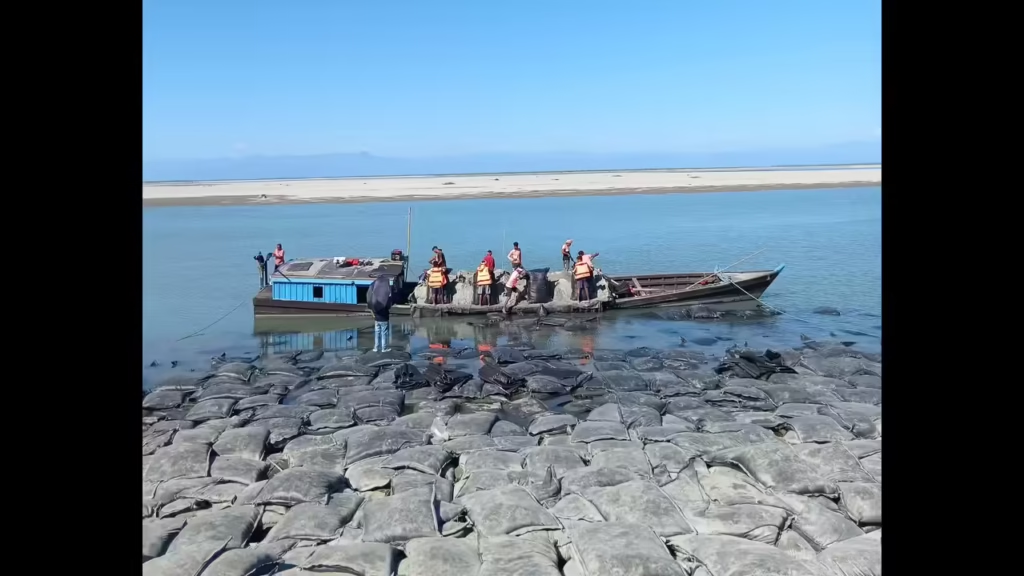
The Assam Water Resources Department has deployed advanced geo-bag technology to plug erosion-prone gaps along the Brahmaputra River, aiming to strengthen embankments and protect vulnerable areas from further land loss. The initiative comes amid ongoing efforts to mitigate riverbank erosion, a recurring challenge affecting communities and infrastructure in several districts. Moreover, officials stated that the use of modern geo-bags is expected to improve the durability and effectiveness of erosion control measures. The move highlights Assam’s increasing reliance on innovative solutions for water resource management.
North Eastern Council Schedules Mega Regional Planning Meet to Finalize Vision 2030 Projects
Northeast Animated Short Film Chyimi Wins Honourable Mention at Athens Marathon Film Awards
Modern Geo-Bag Technology Introduced for Erosion Control
Assam water resources department employs advanced geo-bags to plug erosion gaps along Brahmaputra, reinforcing embankments in vulnerable stretches of the river. Consequently, authorities are seeking to reduce the impact of seasonal flooding and riverbank degradation.
The geo-bags are designed to provide enhanced stability and resist strong water currents. Moreover, their flexibility allows them to adapt to changing river conditions more effectively than conventional methods. Therefore, the technology is expected to strengthen protective structures along erosion-prone zones.
Officials emphasized that controlling erosion is essential for safeguarding agricultural land, homes, and public infrastructure. Furthermore, advanced engineering techniques can significantly improve resilience against natural forces. As a result, the department is prioritizing modern interventions.
Meanwhile, technical teams are continuously monitoring the effectiveness of the geo-bag installations. Consequently, maintenance and reinforcement activities are being carried out where necessary.
Protecting Communities and Infrastructure Along the River
Assam water resources department employs advanced geo-bags to plug erosion gaps along Brahmaputra with the objective of minimizing risks faced by riverine communities. Moreover, recurring erosion has caused displacement and damage in many areas. Therefore, preventive measures remain a top priority.
The project aims to secure embankments and reduce the threat posed by shifting river channels. Consequently, residents living near vulnerable stretches are expected to benefit from improved protection. Such efforts contribute to long-term community resilience.
Furthermore, the initiative supports the preservation of agricultural land and transport infrastructure. As a result, economic activities in affected regions may experience greater stability.
Meanwhile, local authorities are coordinating with engineering teams and disaster management agencies. Similarly, awareness regarding flood preparedness is being promoted.
Strengthening Water Resource Management Through Innovation
The Assam water resources department employs advanced geo-bags to plug erosion gaps along Brahmaputra as part of broader efforts to modernize water resource management. Moreover, innovative technologies are becoming increasingly important in addressing environmental challenges. Therefore, scientific approaches are receiving greater emphasis.
Officials highlighted that geo-bag systems provide cost-effective and efficient protection against erosion. Consequently, authorities are exploring additional technological solutions to strengthen river management strategies. Such initiatives support sustainable infrastructure development.
Furthermore, long-term monitoring and research are being integrated into planning processes. As a result, future interventions are expected to become more effective.
Meanwhile, collaborations with technical experts and research institutions are being strengthened. Similarly, data-driven approaches are being utilized to enhance decision-making.
Building Resilience Against Natural Challenges
The initiative reflects Assam’s commitment to protecting communities and preserving natural resources. Moreover, the Brahmaputra’s dynamic nature requires continuous adaptation and investment in resilient infrastructure. Therefore, erosion control remains a critical aspect of development planning.
Officials stated that strengthening embankments and adopting modern technologies are essential for reducing future risks. Consequently, similar measures may be expanded to additional vulnerable locations. Such efforts contribute to disaster preparedness and sustainable growth.
Furthermore, integrated river management strategies are being developed to address long-term challenges. As a result, environmental and socio-economic benefits are expected to increase.
Meanwhile, periodic assessments are being conducted to evaluate the performance of protective measures. Similarly, community participation in conservation efforts is being encouraged.
Conclusion
Assam water resources department employs advanced geo-bags to plug erosion gaps along Brahmaputra, marking an important step toward improving flood resilience and riverbank protection. Moreover, the initiative demonstrates the growing role of technology in addressing environmental challenges.
The use of advanced geo-bags is expected to strengthen embankments, protect vulnerable communities, and reduce land loss. Therefore, it represents a significant contribution to sustainable water resource management.
As the Assam water resources department employs advanced geo-bags to plug erosion gaps along Brahmaputra, the effort underscores the importance of innovation and proactive planning in safeguarding lives and livelihoods.
FAQs
1. What technology is being used by the Assam Water Resources Department?
Advanced geo-bags are being used to control erosion along the Brahmaputra.
2. Why are geo-bags important?
They help strengthen embankments and protect against riverbank erosion.
3. Which river is the focus of the initiative?
The Brahmaputra River.
4. Who will benefit from the project?
Communities and infrastructure located near erosion-prone areas.
5. What is the objective of the initiative?
To reduce land loss and improve flood resilience.