


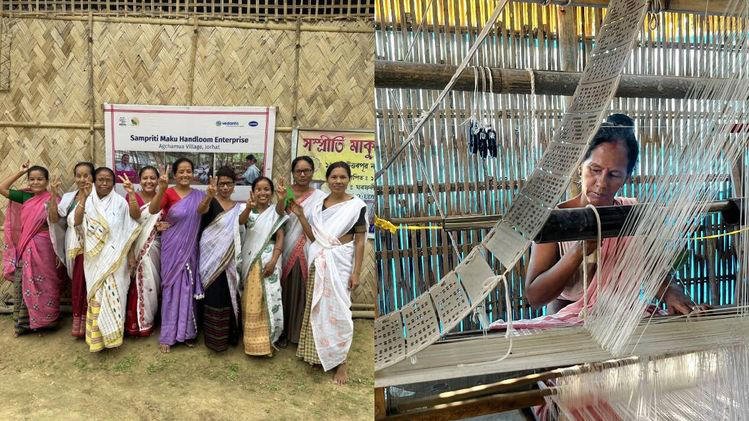
Assam weavers with Cairn support are achieving new milestones as rural craftsmanship transforms into sustainable livelihoods. This positive shift reflects a growing demand for handmade products and a stronger ecosystem for women-led entrepreneurship. Moreover, the development marks a major leap in community empowerment across the northeastern region.
Read More: Tripura CM Opens New Expansion at Techno India University
How Assam Weavers With Cairn Support Began Their Transformation
The journey of Assam weavers with Cairn support started with a clear goal: to improve incomes while preserving traditional weaving. Cairn Oil & Gas, Vedanta Ltd., has been investing in community-driven handloom centres across Golaghat and Jorhat. This effort has helped more than 3,200 women transition from skilled craftspersons to confident entrepreneurs. Additionally, the programme has created a structured approach that connects rural weavers to buyers, markets, and training opportunities.
The initiative also focuses on improving production techniques. Women receive guidance in yarn management, loom handling, and quality enhancement. As a result, their products now match wider market expectations. Many weavers shared how they once struggled to sell their work beyond their villages. However, the new system links them to organised markets, bringing better visibility and income stability.
Celebrated on Women’s Entrepreneurship Day, this progress highlights how training, technology, and market access can change lives. The project not only supports traditional craft but also inspires more women to explore entrepreneurship. Consequently, the handloom clusters have become symbols of financial independence and cultural pride.
Milestones Achieved Under Assam Weavers With Cairn Support
The most meaningful achievement is the scale of participation. Over 3,200 women have joined the programme in the last few years. This rise demonstrates increased trust in the handloom centres and the benefits they offer. Furthermore, many weavers who once earned minimal income now run profitable businesses from their homes or local facilities.
The centres provide more than training. They ensure regular orders, introduce product diversification, and encourage innovation. Women learn to create stoles, shawls, home décor items, and eco-friendly fabrics. These products attract interest from craft exhibitions and online platforms, which widens their reach. Because of this, the weaving hubs are evolving into strong rural enterprises.
Another major milestone is enhanced financial literacy. Through workshops, women learn budgeting, savings, stock management, and customer handling. These skills help them behave as entrepreneurs rather than only craftspersons. As they manage their products from creation to sale, their confidence grows. Soon, many become role models for others in their villages.
The weaving clusters also create group leadership. Some women now supervise production units, guide trainees, and handle orders. This leadership culture ensures that the model remains sustainable. Even after the training phase, the centres continue to function effectively due to collective participation.
Cairn’s ongoing support includes better infrastructure. Many centres now have improved looms, yarn storage units, and shared workspaces. These upgrades reduce physical strain, speed up production, and improve product consistency. Therefore, the entire process becomes more efficient and profitable.
The programme further strengthens cultural heritage. Assam’s weaving tradition is centuries old, and Cairn’s support ensures the craft stays relevant in modern markets. Because young women see financial potential in weaving, they choose to learn from their elders, thus keeping the art alive. This strong intergenerational connection reinforces identity and community pride.
Market linkages are another vital achievement. Many weavers now sell their products through exhibitions, corporate events, and curated online platforms. Smooth logistics allow them to reach customers outside Assam. This expansion not only brings higher profit margins but also positions Assam handloom on a larger stage.
Most importantly, the initiative contributes to social upliftment. With increased income, women invest in their children’s education, better healthcare, and improved living standards. Several families shared how their financial situation changed significantly after joining the programme. Furthermore, the ability to earn independently gives women a stronger voice in household decisions.
The transformation also supports the state’s rural economy. As more women participate in weaving, demand for raw materials increases. Local suppliers, transporters, and small traders benefit from this growing ecosystem. Thus, the initiative creates a chain of opportunities that affects many beyond the weaving clusters.
Looking ahead, the success of Assam weavers with Cairn support sets an example for similar initiatives. It shows how targeted investment, skill development, and market exposure can turn a traditional craft into a strong livelihood source. With consistent backing and community involvement, the handloom sector in Assam has the potential to grow even further.
Read More: PM to Unfurl Saffron Flag at Ram Temple