


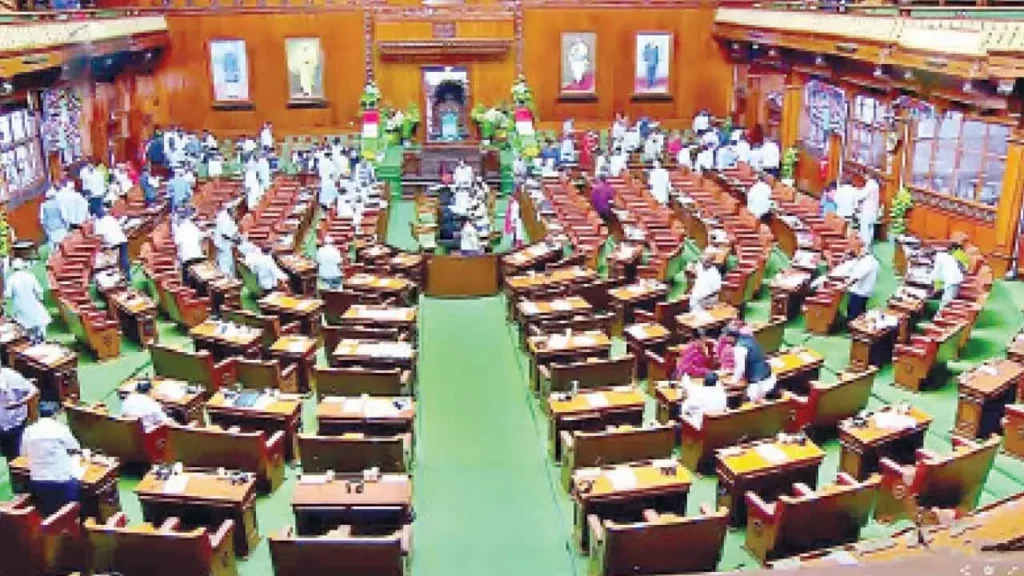
The Assembly representation political debate has intensified in the state Assembly as the ruling BJP and opposition parties continue to exchange sharp arguments over issues related to representation and governance. The latest discussions witnessed strong reactions from both sides, with opposition leaders criticizing certain government statements as divisive and potentially polarising. Meanwhile, ruling party members defended their position and maintained that their policies aim to serve all sections of society. As a result, the Assembly proceedings have become a focal point of political discussion, reflecting broader disagreements over governance priorities and public representation.
Manipur VIP Convoy Downsizing Measures Implemented
Assam Development Priorities Discussed With PM
BJP And Opposition Exchange Sharp Remarks
The Assembly session witnessed heated exchanges between members of the ruling BJP and opposition parties. During the debate, legislators from both sides presented contrasting views on representation, governance, and public policy. Consequently, the discussion quickly evolved into one of the most closely watched segments of the session.
Opposition leaders argued that certain remarks made during the proceedings could deepen social divisions. In contrast, BJP members rejected those allegations and asserted that their policies remain inclusive and development-oriented. Therefore, the Assembly representation political debate emerged as a major issue during the legislative discussions.
Opposition Raises Concerns Over Representation
A key aspect of the debate centered on concerns raised by opposition lawmakers regarding representation and community interests. According to opposition members, political discourse should focus on inclusive governance and avoid statements that may be interpreted as divisive. Furthermore, they urged the government to adopt a more balanced approach while addressing sensitive public issues.
Opposition leaders also emphasized the importance of maintaining social harmony through responsible political communication. Moreover, they argued that elected representatives should prioritize consensus-building and constructive engagement. As a result, the Assembly representation political debate continued to generate extensive discussion within the House.
Government Defends Its Position
In response, BJP legislators defended the government’s approach and rejected accusations of polarisation. They argued that the administration remains committed to equitable development and public welfare across all communities. Additionally, ruling party members stated that opposition criticism often overlooks ongoing development initiatives and governance achievements.
Government representatives maintained that their statements and policies should be viewed within the broader context of governance and public service delivery. Furthermore, they emphasized that development programs are designed to benefit citizens irrespective of social or community backgrounds. Consequently, the Assembly representation political debate reflected deeper political differences over policy interpretation and public messaging.
Legislative Discussions Highlight Political Divides
Assembly debates frequently provide a platform for parties to present differing perspectives on governance issues. In this instance, discussions highlighted the contrasting approaches adopted by the ruling party and opposition groups. While the opposition focused on concerns about representation and rhetoric, the government concentrated on defending its policy record.
Meanwhile, political observers noted that such exchanges are a common feature of democratic institutions. However, they also pointed out that prolonged confrontations can sometimes overshadow substantive policy discussions. Therefore, the Assembly representation political debate has attracted attention beyond the Assembly chamber and into the wider political arena.
Calls For Constructive Engagement
Despite the sharp exchanges, several legislators emphasized the importance of maintaining respectful dialogue within the Assembly. They argued that healthy debate remains essential to democratic governance and effective policymaking. Moreover, lawmakers from different sides acknowledged the need to address public concerns through meaningful discussion rather than prolonged confrontation.
Observers believe that constructive engagement can help bridge differences and improve legislative outcomes. In addition, collaborative discussions may contribute to more effective policymaking and stronger public confidence in democratic institutions. As the session progresses, many stakeholders hope that debates will remain focused on governance and public welfare issues.
Conclusion
The Assembly representation political debate has become a significant feature of the ongoing Assembly session, reflecting broader political disagreements between the ruling BJP and opposition parties. While opposition leaders criticized certain statements as polarising, government representatives defended their position and reiterated their commitment to inclusive development. Furthermore, the exchanges highlighted differing views on representation, governance, and political communication. As legislative proceedings continue, the debate is likely to remain an important topic in state politics, shaping discussions on policy, accountability, and democratic engagement.
FAQs
Q1. What triggered the latest Assembly debate?
The discussion centered on representation issues and statements exchanged between ruling and opposition members.
Q2. What concerns did the opposition raise?
Opposition leaders argued that certain remarks could be viewed as divisive and potentially polarising.
Q3. What is the Assembly representation political debate?
It refers to the ongoing legislative exchanges concerning representation, governance, and political messaging.
Q4. How did the ruling party respond?
BJP legislators defended their position and emphasized inclusive development and governance initiatives.
Q5. Why are Assembly debates important?
They provide a platform for elected representatives to discuss policies, governance, and public concerns.
Q6. What outcome do observers hope to see?
Many expect constructive dialogue that focuses on governance, accountability, and public welfare.