


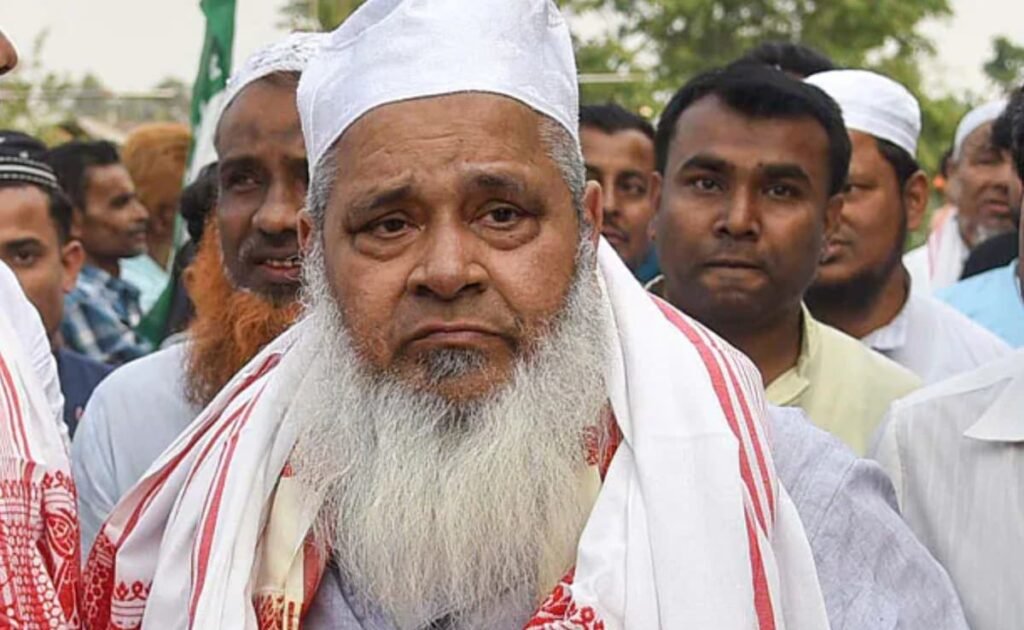
Badruddin Ajmal Hajj oath discussions generated political and procedural attention in Assam after Badruddin Ajmal formally requested flexibility regarding his MLA swearing-in schedule because of a scheduling conflict with his pre-planned Hajj pilgrimage departure. The senior leader of the All India United Democratic Front reportedly petitioned the Assam Assembly Speaker seeking accommodation after the revised Assembly session opening date coincided with his international travel arrangements. Meanwhile, legal and parliamentary observers began discussing procedural options available under legislative rules.
Tiljala Eviction Violence Erupts Near Park Circus
New Jalpaiguri Overhaul Boosts Northeast Connectivity
Ajmal Submits Request To Assembly Speaker
Authorities confirmed that Badruddin Ajmal submitted an official request seeking adjustment of his oath-taking schedule before the commencement of the Assembly session. Additionally, party representatives explained that the revised session opening date reportedly overlaps with the veteran leader’s scheduled departure for the annual Hajj pilgrimage.
The procedural request quickly attracted political attention because legislative oath-taking remains a mandatory constitutional process for elected members. Consequently, parliamentary experts began examining possible procedural flexibility available within Assembly rules and legislative conventions. Earlier, Indian legislatures occasionally addressed scheduling complications involving health emergencies, official travel, or exceptional personal circumstances.
Officials from the Assam Legislative Assembly have not publicly announced a final decision regarding the request. Furthermore, Assembly authorities indicated that all procedural matters would be handled according to constitutional guidelines and legislative rules.
Hajj Schedule Creates Timing Conflict
Senior AIUDF leaders stated that Ajmal’s Hajj travel plans had been finalized before the revised Assembly session schedule became public. Meanwhile, party representatives argued that the request reflects a genuine logistical and religious scheduling conflict rather than a political controversy.
Authorities explained that Hajj travel arrangements typically involve fixed international schedules coordinated months in advance. Specifically, pilgrimage departures often depend on visa processing, flight coordination, and officially designated travel windows connected to Saudi Arabian pilgrimage regulations. In addition, parliamentary experts noted that legislators occasionally seek procedural accommodation during exceptional circumstances.
Several political observers described the request as primarily administrative and procedural in nature. However, opposition voices questioned whether special scheduling adjustments should be granted individually for elected representatives. Despite this, legal analysts emphasized that legislative institutions generally retain authority to manage oath procedures within constitutional frameworks.
Assembly Procedures Come Under Discussion
The Badruddin Ajmal Hajj oath issue also sparked broader discussion regarding procedural flexibility within legislative institutions. Additionally, constitutional scholars highlighted the importance of balancing institutional discipline with practical administrative considerations.
Parliamentary experts explained that elected legislators must formally take the oath before participating fully in Assembly proceedings. As a result, any modification or rescheduling process requires careful compliance with constitutional and procedural standards. Furthermore, legal specialists stated that legislative Speakers frequently exercise administrative discretion in handling procedural matters.
Several governance researchers noted that legislative systems occasionally adapt procedural schedules in response to extraordinary personal, medical, or official situations. Therefore, the Assam Assembly’s response may attract attention regarding institutional flexibility and procedural precedent.
Meanwhile, political circles across Assam reportedly monitored developments closely because the issue involves both constitutional procedure and religious travel obligations. Authorities also confirmed that no disruption to the broader Assembly schedule had been officially discussed.
Political Reactions Remain Mixed
Officials confirmed that reactions from political parties and legislators remained divided following the request submitted by Badruddin Ajmal. Additionally, some leaders supported procedural accommodation, while others argued that legislative schedules should remain uniformly applicable to all elected representatives.
The Badruddin Ajmal Hajj oath matter reportedly triggered discussion regarding the balance between personal obligations and constitutional responsibilities within democratic institutions. Consequently, political debate expanded across media discussions and party forums in Assam. Furthermore, analysts observed that procedural controversies involving high-profile leaders often receive amplified public attention.
Several commentators argued that religious obligations and constitutional duties should be handled with mutual respect and administrative sensitivity. In addition, parliamentary affairs experts stressed the importance of maintaining institutional neutrality while considering exceptional requests.
Earlier, Indian legislative institutions addressed procedural issues involving delayed oath-taking, absence during sessions, and extraordinary scheduling conflicts. At the same time, constitutional experts repeatedly emphasized adherence to legislative rules and procedural transparency.
Religious Travel And Public Duties Intersect
Authorities stated that the situation highlighted the complex interaction between religious commitments and public office responsibilities within democratic systems. Specifically, analysts observed that elected representatives occasionally face scheduling challenges involving official duties and major religious observances.
The Badruddin Ajmal Hajj oath request reportedly renewed discussion regarding administrative flexibility for public representatives undertaking internationally regulated pilgrimages. As a result, legal scholars debated possible interpretations of procedural accommodation within Assembly operations. Furthermore, social commentators highlighted the broader significance of religious freedom within constitutional governance.
Several experts noted that Hajj remains one of the most important religious obligations for Muslims capable of undertaking the pilgrimage. Therefore, requests involving pilgrimage schedules often receive considerable public sensitivity and attention.
Meanwhile, AIUDF supporters expressed hope that the Assembly leadership would adopt a practical approach regarding the scheduling conflict. Authorities indicated that procedural review and consultations remain ongoing.
Constitutional And Administrative Questions Continue
Officials explained that constitutional compliance remains central to any decision involving delayed or modified oath-taking procedures. Additionally, legal experts highlighted the importance of ensuring that all Assembly actions remain within the framework of legislative rules.
The Badruddin Ajmal Hajj oath controversy may also encourage future discussion regarding codified procedures for handling exceptional scheduling requests involving legislators. Consequently, parliamentary administration and procedural governance may receive greater institutional focus. Furthermore, constitutional analysts emphasized the importance of balancing administrative consistency with practical flexibility.
Several governance specialists observed that legislative credibility depends on transparent and rule-based procedural management. In addition, political observers stressed that institutional decisions in such cases often shape future parliamentary precedent.
Meanwhile, community organizations requested respectful handling of both constitutional and religious aspects connected to the issue. Authorities confirmed that no official procedural resolution had yet been publicly finalized.
Future Decision Awaited Closely
Government officials confirmed that the Assam Assembly leadership continues reviewing the request submitted by Badruddin Ajmal. Specifically, legal consultation and procedural examination remain part of the decision-making process before the Assembly session begins.
Experts believe procedural disputes involving constitutional obligations and religious commitments will continue attracting public and legal attention in democratic institutions. Moreover, legislative responses in such situations frequently influence broader discussions regarding institutional flexibility and governance norms.
The Badruddin Ajmal Hajj oath issue represents a significant procedural and political development involving legislative administration, religious scheduling, and constitutional practice in Assam. Ultimately, officials expect continued public interest and parliamentary discussion until the Assembly leadership announces its final decision regarding the oath-taking request.
FAQs
What is the Badruddin Ajmal Hajj oath issue?
Badruddin Ajmal requested flexibility regarding his MLA oath-taking schedule because it clashes with his Hajj travel plans.
Which organization does Badruddin Ajmal lead?
He is the chief of the All India United Democratic Front.
Which institution will decide on the request?
The Assam Legislative Assembly leadership and Speaker will review the procedural request.
Why does the scheduling conflict exist?
The revised Assembly opening date reportedly overlaps with Ajmal’s pre-arranged departure for the Hajj pilgrimage.
Is oath-taking mandatory for MLAs?
Yes, elected legislators must formally take the constitutional oath before fully participating in Assembly proceedings.
What does Badruddin Ajmal Hajj oath mean for parliamentary procedure debates?
Badruddin Ajmal Hajj oath developments may influence future discussions regarding legislative flexibility, constitutional procedure, and accommodation of exceptional circumstances.