


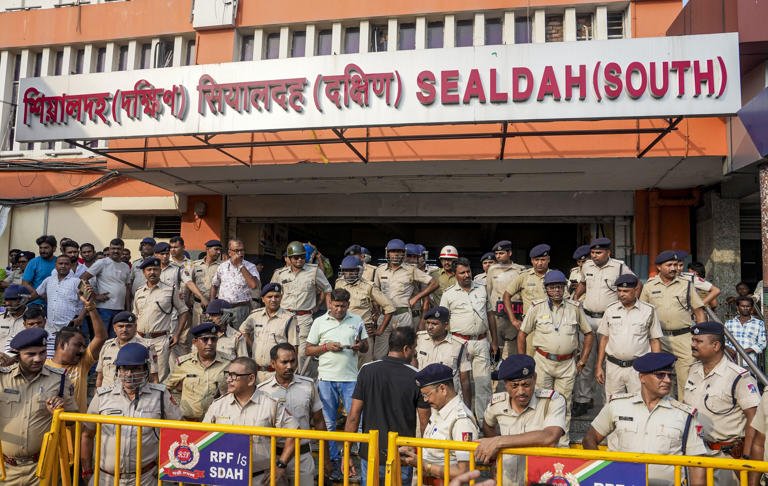
A fresh wave of protests emerged across parts of West Bengal after hawkers raised objections to eviction drives at railway stations and demanded proper rehabilitation measures before authorities remove them from their workspaces. The demonstrations highlighted growing concerns over livelihood security and the future of thousands of informal workers who depend on railway stations for daily income.
Hawkers and small vendors gathered at different locations to voice opposition to eviction efforts and called for structured rehabilitation plans. Protesters argued that authorities should provide alternative arrangements before implementing any removal process.
The issue has once again brought attention to the long-standing debate between infrastructure management and livelihood protection in public spaces.
Read More: Assam Government Pushes Urgent Repair of NH-37 Border Connectivity Route
Hawkers Raise Concerns Over Loss of Livelihood
Railway stations across Bengal support a large informal economy where hawkers sell food, beverages, newspapers, clothing, and daily-use products. For many families, these businesses remain the primary source of income.
Protesting hawkers claimed that sudden eviction could leave thousands without employment opportunities. According to them, many vendors have worked in station areas for years and built their livelihoods around daily passenger movement.
Several participants in the demonstrations stated that authorities should recognise their economic dependence before taking action. They argued that relocation without planning could affect not only vendors but also their family members who rely on the earnings.
Additionally, many hawkers stressed that they do not oppose development or station modernisation. Instead, they want policies that balance infrastructure goals with employment protection.
Demonstrations Demand Rehabilitation Before Eviction
During the protests, hawkers repeatedly demanded rehabilitation measures before authorities proceed with any eviction drive. Protesters called for designated vending zones, legal recognition, and alternative commercial spaces.
Representatives of vendor groups argued that rehabilitation should remain a central part of any station redevelopment process. They said authorities must create a structured framework that allows affected individuals to continue earning.
Many protesters also urged officials to hold consultations with vendor associations before implementing changes. According to them, direct dialogue can reduce conflict and create practical solutions.
Demonstrators carried banners and raised slogans seeking rehabilitation, relocation support, and protection for informal workers.
The protests remained focused on ensuring economic security rather than opposing railway development itself.
Railway Infrastructure and Space Management Remain Key Issues
Railway stations often face increasing pressure to improve passenger facilities, enhance safety, and manage crowd movement. Authorities frequently cite congestion and operational concerns as reasons for regulating unauthorised vending.
Supporters of stricter station management argue that open spaces and organised infrastructure can improve passenger convenience and reduce safety risks. They believe station redevelopment requires better control of commercial activity.
However, hawker groups maintain that authorities should not treat informal workers as obstacles to development. They argue that many vendors provide affordable services to commuters and contribute to the local economy.
The ongoing debate reflects broader questions surrounding urban planning, public infrastructure, and employment generation.
Observers note that long-term solutions may require balancing station modernisation with inclusive livelihood policies.
Informal Sector Workers Seek Policy Support
The railway station protest also highlights the wider challenges faced by informal sector workers in urban and semi-urban areas. A large section of the workforce continues to operate without formal protections or long-term security.
Many hawkers believe rehabilitation policies should include relocation assistance, vendor registration systems, and access to designated business spaces.
Economic experts often point out that informal workers contribute significantly to local economies despite operating with limited institutional support. Therefore, policy decisions can affect not only individual vendors but also broader community networks.
Protesters argued that development initiatives should consider the social and economic realities of workers who have operated in public spaces for years.
At the same time, some groups suggested creating integrated station markets that allow vendors and infrastructure projects to coexist.
Calls for Dialogue and Negotiated Solutions
As demonstrations continued, demands for discussion between authorities and vendor representatives gained momentum. Hawkers insisted that negotiations could prevent conflict and create mutually acceptable outcomes.
Several protesters stated that rehabilitation frameworks already exist in different forms and authorities should explore practical implementation instead of immediate removal.
Community members and local stakeholders also encouraged constructive engagement to address concerns from both sides.
Supporters of negotiated solutions believe authorities can identify designated vending areas while maintaining station operations and passenger convenience.
They argued that collaboration can help reduce uncertainty and create more sustainable outcomes.
Future of Railway Station Vendors Remains Uncertain
The protests have highlighted the uncertainty faced by thousands of station-based vendors across Bengal. While authorities continue to focus on station management and infrastructure improvement, hawkers remain concerned about employment security.
Many affected workers now wait for clear decisions regarding rehabilitation and future vending opportunities.
The situation has also opened discussions about how cities and transport hubs should manage informal economies while pursuing modernisation goals.
For protesting hawkers, the central demand remains unchanged: rehabilitation before eviction.
As authorities and stakeholders move forward, the outcome may shape future approaches to balancing public infrastructure development with the protection of livelihoods across Bengal’s railway network.
Read More: Former JD(U) Leader Nimaichand Luwang Joins BJP in Manipur