


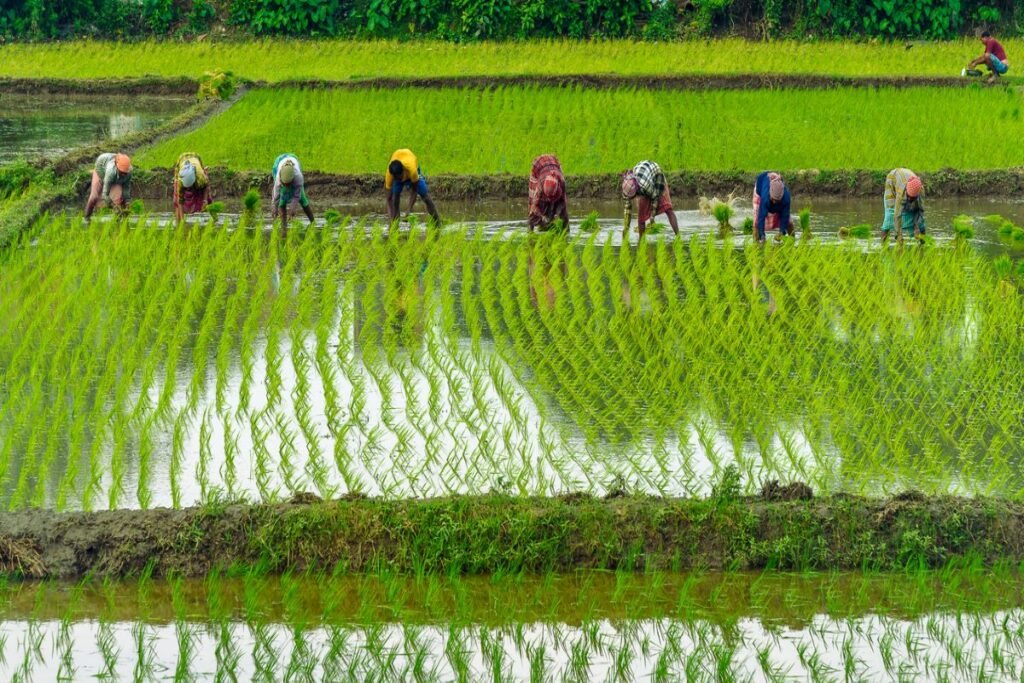
West Bengal paddy farmer scheme initiatives gained major attention after the state government announced a new Direct Benefit Transfer (DBT) program aimed at providing financial assistance directly to paddy cultivators across the state. Meanwhile, agriculture department officials and policymakers stated that the scheme seeks to strengthen farmer welfare, improve agricultural stability, and ensure quicker delivery of financial support without administrative delays. The announcement immediately attracted widespread interest among farming communities because paddy cultivation remains one of the most important agricultural activities in West Bengal. Additionally, authorities reportedly accelerated planning involving beneficiary verification, digital payment systems, and district-level implementation coordination linked to the program.
The development emerged amid increasing focus on agricultural modernization and income support systems for small and marginal farmers. Furthermore, rural economy experts observed that direct financial transfer mechanisms increasingly influence agricultural policy frameworks across India.
Siliguri Commercial Property Market Witnesses Sharp Growth
Bengal Coastal Tourism Expansion Gains Momentum
Government Announces Direct Benefit Transfer Initiative
State authorities formally confirmed the rollout of the financial assistance program targeting paddy cultivators. West Bengal paddy farmer scheme discussions therefore rapidly intensified across agricultural and rural development sectors.
Meanwhile, officials explained that eligible farmers may receive monetary support directly into their bank accounts through the DBT system, reducing dependence on intermediary administrative processes. Additionally, authorities reportedly initiated database verification and digital registration procedures to ensure transparent fund distribution.
Agriculture department representatives emphasized that the initiative aims to strengthen financial security for farmers facing rising cultivation costs and unpredictable agricultural conditions. Furthermore, policymakers highlighted that direct transfers may improve efficiency and reduce delays within welfare delivery systems.
Earlier, farming communities frequently raised concerns regarding payment bottlenecks, delayed subsidies, and procedural complications in accessing agricultural benefits. Consequently, the latest announcement generated optimism among cultivators across multiple districts.
At the same time, officials continued reviewing implementation logistics and district-level beneficiary identification mechanisms.
Paddy Cultivation Remains Vital to Bengal Economy
The scheme carries major importance because paddy farming continues forming the backbone of West Bengal’s agricultural economy. West Bengal paddy farmer scheme implementation therefore holds broader significance beyond direct financial assistance alone.
Meanwhile, agricultural economists observed that millions of rural households depend on rice cultivation for livelihood, employment, and food security. Additionally, paddy production remains closely linked with the state’s rural economy and agricultural supply chains.
Several farming experts noted that rising input costs involving seeds, fertilizers, irrigation, and labor increasingly affect profit margins for small-scale farmers. Furthermore, unpredictable weather patterns and market fluctuations continue creating financial uncertainty within the agricultural sector.
Rural development researchers also emphasized that targeted financial assistance frequently improves farm investment capacity and seasonal agricultural planning. Consequently, direct benefit transfer systems gained stronger relevance within broader agricultural policy discussions.
However, some farmer organizations requested stronger procurement guarantees and long-term price stability measures alongside financial assistance.
Digital Payment Systems Expected to Improve Transparency
Authorities highlighted that digital transfer mechanisms remain central to the new farmer support initiative. West Bengal paddy farmer scheme implementation therefore became closely connected with expanding rural digital governance systems.
Meanwhile, officials reportedly coordinated with banking institutions and district administrations to strengthen digital verification and payment infrastructure supporting the DBT rollout. Additionally, beneficiary data monitoring systems may help reduce duplication and administrative irregularities.
Technology and governance experts observed that digital welfare systems increasingly improve transparency, accountability, and efficiency within large-scale public support programs. Furthermore, direct transfers often minimize procedural delays and reduce dependence on manual distribution mechanisms.
Several policy analysts highlighted that expanding digital financial inclusion remains important for improving rural access to welfare schemes and banking services. Consequently, rural digitization gained renewed attention within agricultural governance discussions.
At the same time, local authorities continued conducting awareness campaigns regarding registration procedures and bank account linkage requirements.
Farmers Hope for Relief Amid Rising Costs
The financial assistance program generated positive reactions among farming communities facing increasing agricultural expenses. West Bengal paddy farmer scheme expectations therefore became strongly linked with economic relief and seasonal stability.
Meanwhile, cultivators stated that direct financial support may help manage expenses involving fertilizers, irrigation equipment, seeds, and labor during upcoming agricultural cycles. Additionally, small and marginal farmers expressed hope that faster payments would improve operational planning and reduce financial stress.
Agricultural market experts observed that rising production costs continue affecting profitability within traditional farming systems across several Indian states. Furthermore, access to timely financial assistance frequently improves resilience during difficult cultivation seasons.
Several rural welfare researchers emphasized that stable income support mechanisms may reduce dependence on informal credit and high-interest borrowing among vulnerable farmers. Consequently, farmer welfare programs gained stronger importance within broader rural economic planning.
However, some agricultural groups requested simplified registration systems ensuring easier access for elderly and remote-area farmers.
Agricultural Policy and Rural Development Prioritized
The new initiative also reflected broader efforts to strengthen rural development and agricultural support policies within West Bengal. West Bengal paddy farmer scheme expansion therefore aligned with wider governance and welfare objectives.
Meanwhile, policymakers stated that agricultural sustainability and farmer income protection remain critical priorities for maintaining rural economic stability. Additionally, direct support initiatives increasingly complement broader agricultural development strategies involving irrigation, procurement, and crop modernization.
Several economic planners observed that rural consumption and agricultural productivity frequently improve when financial support systems operate efficiently. Furthermore, welfare-based agricultural policies often influence long-term food security and social stability.
Development experts also highlighted that farmer support programs increasingly require integration with climate resilience, crop insurance, and digital agriculture initiatives. Consequently, discussions regarding comprehensive agricultural reform gained renewed momentum following the announcement.
At the same time, agricultural departments reportedly evaluated future possibilities involving expanded farmer welfare coverage.
Experts Stress Effective Implementation and Monitoring
Policy analysts and agricultural experts emphasized that successful implementation will remain essential for achieving the scheme’s intended impact. West Bengal paddy farmer scheme outcomes therefore may depend heavily on administrative efficiency and monitoring systems.
Meanwhile, governance specialists observed that accurate beneficiary identification, transparent fund distribution, and effective grievance redressal mechanisms remain critical within large-scale welfare programs. Additionally, coordination between state departments and local administrations may significantly influence operational success.
Several agricultural economists noted that direct transfer programs often produce stronger results when combined with broader market reforms and infrastructure support. Furthermore, continuous monitoring frequently improves policy adaptability and accountability.
Rural governance researchers also stressed the importance of ensuring inclusion of small-scale and vulnerable farming communities within the program structure. Consequently, administrative preparedness and data management became major areas of focus following the announcement.
At the same time, farmer groups continued seeking clarity regarding eligibility criteria and payment schedules.
Conclusion
West Bengal paddy farmer scheme initiatives gained significant momentum after the government announced a Direct Benefit Transfer program aimed at providing financial support directly to paddy cultivators across the state. Meanwhile, officials highlighted that the initiative seeks to improve transparency, reduce administrative delays, and strengthen rural agricultural stability. Farmers welcomed the announcement amid rising cultivation costs, while experts emphasized the importance of efficient implementation and digital accessibility. Ultimately, observers believe sustained agricultural support and transparent welfare delivery may play a crucial role in strengthening West Bengal’s rural economy and farming sector.
FAQs
What did the West Bengal government announce?
The government introduced a Direct Benefit Transfer scheme for paddy farmers.
What is the purpose of the scheme?
The initiative aims to provide direct financial support to eligible paddy cultivators.
How will farmers receive the assistance?
Funds are expected to be transferred directly into farmers’ bank accounts.
Why is the scheme important for farmers?
It may help reduce financial stress caused by rising cultivation expenses.
What role does digital infrastructure play in the scheme?
Digital systems may improve transparency and reduce payment delays.
What concerns did farmer groups raise?
Some groups requested simplified registration and stronger long-term support measures.