


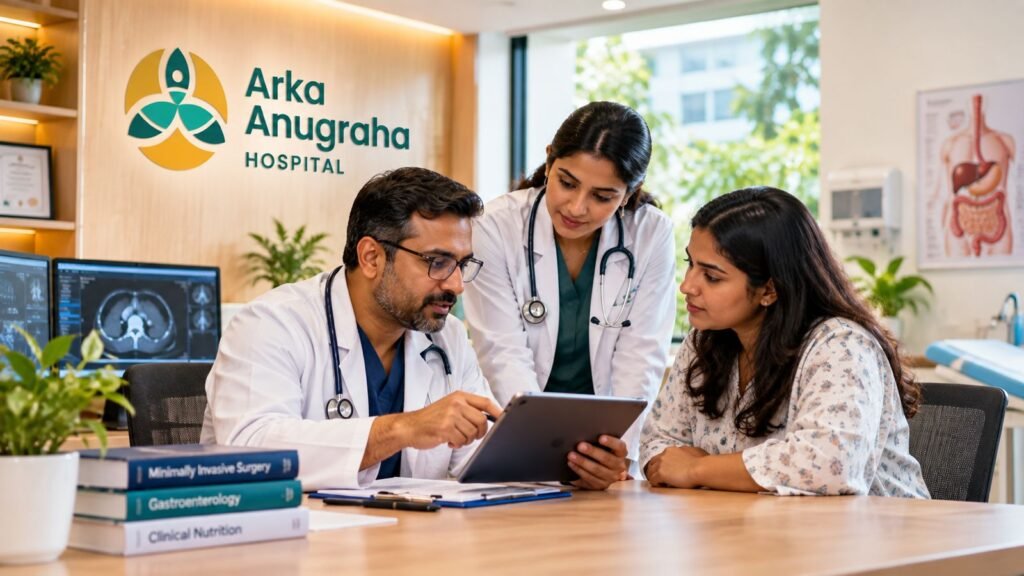
A Bengaluru hospital is rethinking what continuity of care looks like, pairing surgical expertise with a broader, multidisciplinary approach to health.
Most hospitals are built around a single question: what procedure does this patient need? Bengaluru’s Arka Anugraha Hospital is built around a different one: what does this patient need, in total, before and after that procedure is over? That question is becoming the hospital’s clearest point of differentiation, as it works to bring surgical care and integrative, multidisciplinary medicine under one roof rather than treating them as separate tracks.
A Hospital Built Around Continuity of Care
At most multi-department hospitals, a patient who needs surgery is handed off from one specialist to the next, with limited connective tissue between them. Arka Anugraha Hospital has structured itself differently, positioning its surgical center alongside a dedicated integrative medicine practice, so that a patient’s surgical plan and their broader health picture are considered together rather than in sequence.
In practice, that means a patient isn’t simply scheduled, operated on, and discharged with a follow-up date. Nutrition, existing chronic conditions, recovery capacity, and long-term lifestyle factors are treated as part of the same clinical conversation as the procedure itself.
When Surgery Meets a Broader Clinical Picture
This approach is most visible in areas where surgical outcomes are closely tied to a patient’s overall metabolic and digestive health. The hospital’s gastrointestinal, hepatobiliary, and bariatric and metabolic surgery teamswork with patients whose conditions rarely have a single cause or a single fix, where surgery may address the immediate problem, but sustained results depend on what happens around it: dietary support, monitoring, and coordinated follow-up.
Minimally invasive technique is part of this same philosophy. Arka’s minimally invasive surgery program is built on the idea that a shorter, less traumatic recovery gives a patient more room to engage with the rest of their care plan, rather than spending weeks simply recovering from the operation itself.
Expanding Access Beyond Bengaluru
The hospital has also been working to make this model reachable for patients who don’t live near its Bengaluru campus. Its broader philosophy emphasizes evaluation before intervention, which allows much of the initial groundwork, including history review, preliminary assessment, and care planning, to begin before a patient ever needs to travel for surgery itself. Referring physicians and out-of-town patients can begin that process by reaching the hospital’s team directly through Arka’s contact and appointments page.
It’s a small operational detail, but it reflects the larger point: continuity of care doesn’t only mean coordination between departments. It also means coordination across distance, so that patients outside Bengaluru aren’t limited to whatever surgical or integrative care happens to be available locally.
What This Means for Patients
None of this reframes what surgery is or what it can do: a hernia repair, a bariatric procedure, or a GI intervention still depends on surgical skill first. What changes is what surrounds it. For patients, that can mean fewer gaps between specialists, a clearer picture of what recovery actually requires, and a single point of contact managing a plan that would otherwise be split across several unconnected providers.
As more hospitals in India experiment with multidisciplinary models, Arka Anugraha Hospital’s combination of a surgical center and an integrative medicine practice offers an early, concrete example of what that can look like in a mid-sized, patient-facing setting: not a slogan about “holistic care,” but a specific operational choice about how departments are structured and how patients move through them.