


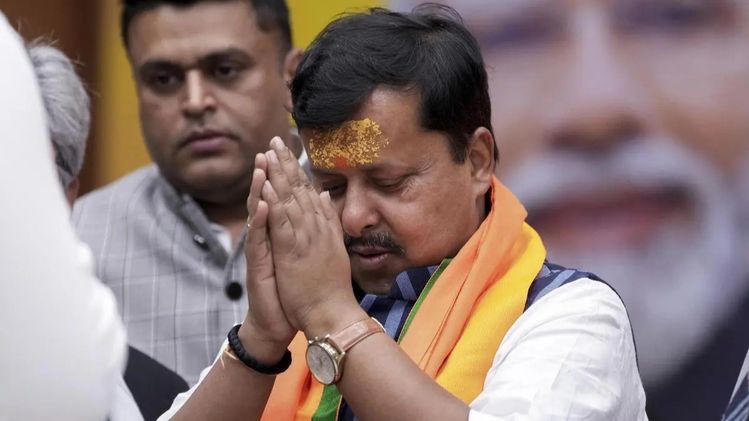
The Bharatiya Janata Party (BJP) has announced plans to replicate Assam’s detect delete deport model in West Bengal, signaling a sharper political pitch ahead of upcoming elections. Senior BJP leader Nitin Nabin said the party would push for strict action against illegal infiltration if voted to power in the state.
Addressing party workers at a public event, Nitin Nabin stated that the detect delete deport model would be implemented to identify illegal immigrants, remove their names from voter lists, and initiate deportation proceedings as per legal provisions. He argued that such a policy is necessary to safeguard national security and preserve demographic balance.
The BJP leader also stirred debate by vowing to rename Islampur if the party forms the government in Bengal. According to him, place names should reflect what he described as “cultural and historical identity.” His remarks triggered immediate political reactions across the state.
Read More: Pangkang Clears Way for Siang Project Study
BJP Plans Detect Delete Deport Model in Bengal
The detect delete deport model, first popularized in Assam’s political discourse, revolves around identifying undocumented migrants, deleting their names from official records, and initiating deportation. In Bengal, the BJP now seeks to frame the issue as one of governance and border security.
Nitin Nabin alleged that infiltration from neighboring countries has affected border districts in West Bengal. Therefore, he said a structured mechanism similar to Assam’s approach would be introduced. He emphasized that any action would follow constitutional procedures and judicial scrutiny.
The BJP claims that unchecked migration impacts welfare distribution and employment opportunities. Consequently, the party intends to make the detect delete deport model a central theme of its Bengal strategy.
Political observers note that migration and identity issues often shape electoral narratives in eastern India. By invoking this model, the BJP aims to consolidate support in border regions.
Renaming Islampur Sparks Political Debate
Alongside the migration issue, Nitin Nabin’s statement about renaming Islampur drew significant attention. He said that if the BJP forms the government, it would consider renaming the town to reflect what he called its “original heritage.”
Opposition parties criticized the proposal, accusing the BJP of diverting attention from development issues. They argued that renaming places does not address pressing concerns such as employment, healthcare, and infrastructure.
However, BJP leaders defended the stance, stating that cultural identity and historical recognition remain important aspects of governance. The debate over renaming Islampur is likely to intensify as political campaigning gathers momentum.
Political Reactions and Broader Implications
The announcement of the detect delete deport model in Bengal has already triggered reactions from rival parties. Leaders from the ruling establishment dismissed the proposal as politically motivated. They maintained that law enforcement agencies already follow due process in handling citizenship-related matters.
Meanwhile, BJP supporters argued that stronger verification mechanisms are essential for border security. They said the detect delete deport model would ensure transparency and accountability in electoral rolls and welfare schemes.
Political analysts believe the issue could polarize voters. While some sections may support stricter policies, others may view the move as divisive. Therefore, the coming months are likely to witness intense debate over identity and governance.
The BJP’s strategy appears aimed at replicating narratives that yielded political dividends in Assam. However, West Bengal’s social and political landscape differs significantly. Thus, implementation of the detect delete deport model would require careful legal and administrative planning.
Electoral Strategy Ahead of Polls
With elections on the horizon, the BJP is sharpening its messaging on national security and cultural identity. Nitin Nabin’s remarks indicate that the party will foreground these issues in its outreach programs.
The proposal to rename Islampur adds another dimension to the campaign narrative. While supporters see it as symbolic assertion, critics consider it unnecessary controversy.
As political exchanges intensify, the focus remains on whether the detect delete deport model will resonate with Bengal’s electorate. The BJP’s stance signals a determined attempt to redefine the political discourse around migration and identity.
Ultimately, the debate highlights deeper questions about citizenship, governance, and regional identity. Whether the detect delete deport model becomes a decisive electoral factor will depend on public response and the evolving political climate in West Bengal.
Read More: Quick breakfast ideas for busy mornings that save time