


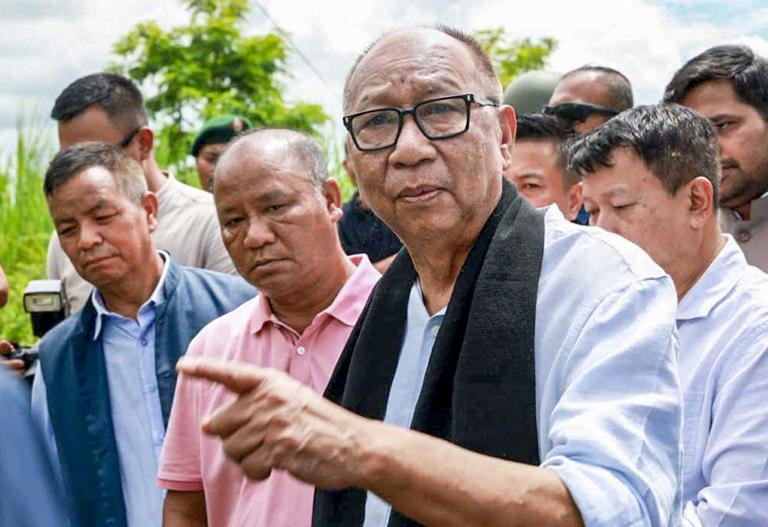
Manipur Chief Minister has said that the Bharatiya Janata Party (BJP) remains the only political party working towards reconciliation and free movement among all communities in the state.
The Chief Minister made the remarks while highlighting efforts to restore peace and normalcy in Manipur. The statement comes amid continued efforts to address tensions between communities and rebuild trust across affected areas.
The Chief Minister stressed the importance of bringing communities closer together. He also underlined the need to restore movement and communication between people living in different parts of the state.
The comments reflect the government’s focus on reconciliation as a key part of Manipur’s recovery.
Free Movement Seen as Key to Normalcy
Free movement remains an important issue in Manipur. Movement between different areas has faced restrictions and challenges during periods of conflict.
Restoring normal movement can help people return to their daily lives. It can also improve access to markets, schools, healthcare facilities and workplaces.
The government has emphasised the importance of allowing people from different communities to travel safely.
Improved connectivity can also help businesses recover. Traders, transport workers and local businesses depend on regular movement between districts and communities.
The restoration of movement can therefore support both social and economic recovery.
Reconciliation Remains a Major Challenge
Reconciliation represents one of the biggest challenges facing Manipur.
The state has experienced serious ethnic tensions that have affected communities and displaced large numbers of people. These developments have damaged trust between different groups.
Rebuilding that trust will require sustained engagement.
Political leaders, community representatives, civil society groups and local organisations all have roles to play in the process.
The government will need to create opportunities for dialogue. Communities must also have space to express their concerns and discuss possible solutions.
Reconciliation cannot happen overnight. It requires patience, communication and a willingness to address difficult issues.
Government Focuses on Restoring Normal Life
The Manipur government has been working to restore normal life across the state.
This process includes efforts to improve security, reopen roads and public institutions, and support displaced people.
Schools and colleges need stable conditions to function effectively. Healthcare facilities also require safe access for patients and staff.
Markets and businesses depend on a secure environment.
The return of normal activities can help communities regain confidence.
The government faces the difficult task of balancing security concerns with the need to restore everyday freedoms.
BJP Positions Itself as a Force for Peace
The Chief Minister’s remarks also reflect the BJP’s political position in Manipur.
The party has sought to present itself as a force working towards peace and reconciliation.
The BJP has argued that dialogue and development can help address the state’s challenges.
The party has also highlighted the importance of bringing communities together.
However, rebuilding trust will require more than political statements. People affected by conflict will look for concrete improvements in security, rehabilitation and access to basic services.
Political parties will therefore face continued pressure to demonstrate their commitment through action.
Importance of Dialogue Between Communities
Dialogue can play an important role in rebuilding relationships.
Community leaders can help identify local concerns and reduce misunderstandings. They can also encourage people to avoid actions that could increase tensions.
The government can support this process by creating platforms for meaningful discussion.
Local-level dialogue may prove particularly important. Communities in different areas often face different challenges.
A single solution may not address every concern.
Officials can therefore work with local representatives to understand specific issues and develop appropriate responses.
Supporting Displaced Families
Thousands of people have faced displacement during the conflict in Manipur.
Many families have had to leave their homes and depend on relief and rehabilitation support.
The government needs to ensure that displaced people receive food, healthcare, education and other essential services.
Long-term rehabilitation will also require safe conditions for families that want to return home.
The government must address security concerns before encouraging large-scale returns.
Rebuilding homes and restoring livelihoods will form another important part of the recovery process.
Development Can Support Peace
Economic development can contribute to long-term stability.
People need jobs, businesses need secure markets and young people need opportunities for education and employment.
Infrastructure development can also reconnect communities.
Better roads and communication networks can improve access to services and create economic opportunities.
The government can therefore combine peacebuilding with development initiatives.
However, development alone cannot resolve deep social divisions. Authorities must address security and trust alongside economic concerns.
Role of Civil Society in Reconciliation
Civil society organisations have an important role in Manipur’s peace process.
Community groups can encourage dialogue and help communicate concerns to government authorities.
Religious leaders, educators and social workers can also contribute to reconciliation efforts.
Local organisations often have a better understanding of community concerns. Their participation can make peace initiatives more inclusive.
The government can work with such groups to develop programmes that encourage interaction between communities.
Challenges Ahead
The path towards reconciliation remains difficult.
Deep mistrust can make dialogue challenging. Disagreements over security, land, political representation and movement can further complicate the situation.
The government will need to address these concerns carefully.
It must also ensure that security measures protect civilians while supporting a return to normal life.
Political leaders can contribute by avoiding rhetoric that increases divisions.
A consistent focus on peace and communication can help create better conditions for reconciliation.
Looking Ahead
The Manipur Chief Minister’s statement places reconciliation and free movement at the centre of the state’s recovery process.
The BJP has positioned itself as the political force working to bring communities together and restore normal movement.
The success of these efforts will depend on what happens on the ground.
People need safety, access to essential services and opportunities to rebuild their lives. Communities also need confidence that dialogue can produce meaningful results.
Restoring trust will take time. It will require cooperation between the government, political parties, community leaders and civil society.
For Manipur, reconciliation remains essential for lasting peace. Free movement among communities can help restore social and economic connections, while sustained dialogue can help rebuild the trust needed for long-term stability.