


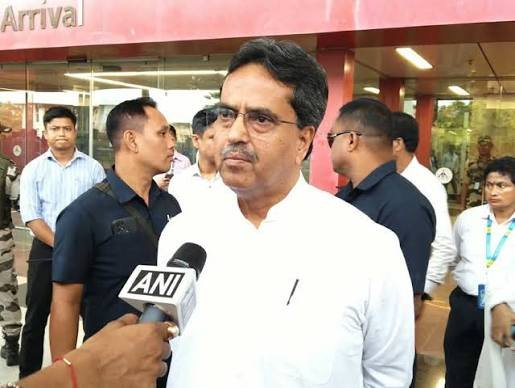
The BJP Tipra Motha Coalition has been finalised for the upcoming Village Committee elections in Tripura. Chief Minister Manik Saha confirmed that the BJP, Tipra Motha Party (TMP) and Indigenous People’s Front of Tripura (IPFT) will jointly contest the local polls. The decision follows high-level discussions between the alliance partners. Moreover, the agreement marks a significant political shift because the three parties contested the previous TTAADC regional elections separately.
Tripura House Voter Verification Set for September 15 to October 14, 2026
BJP Tipra Motha Coalition Takes Shape
Chief Minister Manik Saha confirmed the decision after discussions among the alliance partners. The BJP, TMP and IPFT will now work together for the upcoming Village Committee elections.
Furthermore, the alliance brings together parties that previously maintained separate positions during the TTAADC regional elections. Their decision to contest the Village Committee polls jointly therefore represents a notable change in Tripura’s political landscape.
The coalition also reflects the changing political equations in the state. The parties will need to coordinate their campaign strategies, candidate selection and organisational activities ahead of polling.
Meanwhile, the upcoming elections will involve hundreds of Village Committees across Tripura. The alliance partners can therefore use their combined organisational networks to reach voters across different areas.
BJP Tipra Motha Coalition Changes Political Equation
The BJP and Tipra Motha Party previously contested the TTAADC regional elections separately. Consequently, their decision to join forces for the Village Committee elections has attracted considerable political attention.
Moreover, Tipra Motha’s presence in tribal areas gives the alliance a different political dimension. The BJP brings its own organisational structure and electoral base, while the IPFT also remains part of the coalition arrangement.
However, the parties will have to manage their individual political interests while presenting a common front to voters. Seat-sharing and candidate selection could become important aspects of the alliance’s election strategy.
Additionally, cooperation among the three parties could influence competition with opposition groups. The combined contest may reshape electoral calculations in areas where the parties previously competed against one another.
The alliance therefore represents more than a simple electoral arrangement. It signals a broader effort by the three parties to coordinate their political activities at the grassroots level.
Village Committee Polls Become Alliance Test
The upcoming Village Committee elections will provide the first major opportunity for the BJP, TMP and IPFT to test their new electoral understanding at the local level.
Furthermore, local elections often depend heavily on grassroots organisation and community-level outreach. The alliance partners will consequently need to coordinate their workers and campaign activities across the constituencies.
The parties will also need to communicate a clear message to voters. A coordinated campaign could help them avoid vote division among supporters of the alliance.
Meanwhile, individual party workers may need to adjust to the new arrangement after previously campaigning against one another. Effective coordination will therefore remain essential for maintaining the coalition on the ground.
The election outcome could also influence future political relations between the alliance partners. A successful performance could encourage deeper cooperation, while disagreements could test the durability of the arrangement.
BJP Tipra Motha Coalition Faces Election Challenges
Although the alliance has been finalised, its implementation could present several challenges. Seat-sharing arrangements will require careful negotiations because all three parties have their own political priorities and local support bases.
Moreover, selecting candidates acceptable to all alliance partners can become a crucial task. The parties will need to balance organisational considerations with local electoral factors.
The campaign will also take place under the Model Code of Conduct, which the Tripura State Election Commission has enforced for the Village Committee elections. Therefore, all participating parties and candidates must follow the applicable election rules.
Additionally, voters will ultimately determine whether the new political partnership gains support at the grassroots level. The alliance will need to convince communities that its joint approach can effectively address local concerns.
The upcoming polls could consequently become an important test of the BJP-TMP-IPFT relationship. The results may offer an early indication of how voters respond to the new political alignment.
Conclusion
The BJP Tipra Motha Coalition involving the BJP, Tipra Motha Party and IPFT marks a significant shift in Tripura’s electoral politics. Chief Minister Manik Saha confirmed that the three parties will jointly contest the upcoming Village Committee elections after high-level discussions. Moreover, their decision stands in contrast to the separate contests during the previous TTAADC regional elections. The upcoming local polls will therefore provide an important test of the alliance’s grassroots coordination and electoral strength.
FAQs
1. What is the BJP Tipra Motha Coalition?
The BJP Tipra Motha Coalition refers to the joint electoral arrangement between the BJP, Tipra Motha Party and IPFT for the upcoming Village Committee elections in Tripura.
2. Which parties will contest the Village Committee elections together?
The BJP, Tipra Motha Party (TMP) and Indigenous People’s Front of Tripura (IPFT) will jointly contest the elections.
3. Why is the alliance considered significant?
The alliance is significant because the BJP and Tipra Motha Party previously contested the TTAADC regional elections separately.
4. Who confirmed the coalition arrangement?
Tripura Chief Minister Manik Saha confirmed the joint electoral arrangement following high-level discussions.
5. What could the alliance mean for the Village Committee elections?
The alliance could change electoral calculations by combining the organisational networks and voter bases of the three participating parties.