


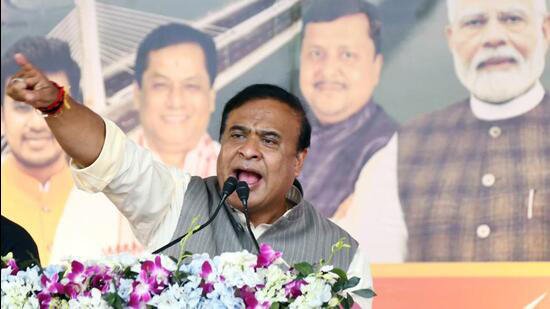
Assam Chief Minister Himanta Biswa Sarma announced that the Bharatiya Janata Party (BJP) will contest 89 seats in the upcoming Assam Assembly elections, while leaving 37 seats for its National Democratic Alliance (NDA) partners. The announcement has provided clarity on the alliance’s seat-sharing formula ahead of a crucial electoral battle.
The decision reflects a strategic approach by the BJP to maintain its dominant position while ensuring adequate representation for its allies. With this move, the NDA aims to present a united front in the elections.
Read More: Rampada Jamatia Elected Unopposed as Tripura Assembly Speaker
Himanta Biswa Sarma Announces Seat-Sharing Formula
Chief Minister Himanta Biswa Sarma confirmed that the BJP will contest 89 out of the total Assembly seats in Assam. The remaining 37 seats will go to alliance partners, including regional parties that hold influence in specific areas.
He stated that the seat-sharing arrangement followed detailed discussions with allies. The aim was to ensure that each party contests in constituencies where it has the best chance of winning.
The announcement has brought much-needed clarity and allows all alliance partners to begin focused campaigning.
NDA Strategy Behind Seat Distribution
The NDA has designed the seat-sharing formula to maximize its electoral prospects. By allocating seats based on regional strengths, the alliance hopes to minimize internal competition and improve coordination.
The BJP will focus on constituencies where it has strong organizational support. Meanwhile, allies will contest in areas where they enjoy local influence and voter support.
This strategy aims to create a balanced approach that benefits all partners and strengthens the alliance as a whole.
Importance of Allies in Assam Politics
Allies play a crucial role in the NDA’s electoral strategy in Assam. Regional parties bring grassroots connections and a deeper understanding of local issues.
Their presence helps the alliance connect with diverse communities across the state. This broad support base becomes essential in a politically complex region like Assam.
By allocating 37 seats to its partners, the BJP has acknowledged their importance in the electoral process.
Political Significance of the Announcement
The announcement marks a key milestone in the run-up to the Assam Assembly elections. It signals that the NDA has finalized its strategy and is ready to move into full campaign mode.
Political observers believe that early clarity on seat-sharing gives the alliance an advantage. It allows parties to focus on candidate selection and voter outreach without internal conflicts.
The move also sends a message of unity, which can positively influence voter perception.
Opposition Response and Electoral Competition
Opposition parties have taken note of the NDA’s seat-sharing announcement and are preparing their own strategies. The Congress and other opposition groups are expected to challenge the ruling alliance aggressively.
They may raise issues such as unemployment, price rise, and governance to counter the NDA’s campaign. At the same time, they will attempt to build alliances to strengthen their position.
The elections are likely to witness intense competition, with multiple parties vying for voter support.
Key Issues in Assam Assembly Elections
Several issues are expected to shape the electoral narrative in Assam. Development, infrastructure, and welfare schemes remain central to the BJP’s campaign.
The government has highlighted its achievements in connectivity, healthcare, and education. These topics are likely to feature prominently in election speeches and outreach programs.
Meanwhile, voters are also concerned about employment opportunities and economic growth. Political parties will need to address these concerns effectively.
Campaign Strategy and Leadership
The BJP is expected to rely heavily on its leadership to drive the campaign. Himanta Biswa Sarma will play a central role, along with other senior leaders.
The party plans to organize rallies, public meetings, and outreach programs across the state. Coordination with allies will be crucial for maintaining a unified campaign.
Regional leaders from alliance partners will also contribute by mobilizing support in their respective areas.
Challenges Ahead for NDA
Despite its strong position, the NDA faces several challenges in the upcoming elections. Anti-incumbency and local issues could influence voter sentiment in certain constituencies.
Ensuring coordination among alliance partners will also remain important. Effective communication and collaboration at the grassroots level will be key.
The alliance must also counter opposition narratives and maintain focus on its development agenda.
What Lies Ahead
With the seat-sharing formula finalized, the NDA will now focus on candidate selection and campaign execution. The coming weeks are expected to see heightened political activity across Assam.
Both the NDA and opposition parties will intensify their efforts to connect with voters. The effectiveness of these campaigns will play a crucial role in determining the election outcome.
The announcement has set the stage for a closely contested electoral battle.
Conclusion
The BJP’s decision to contest 89 seats while leaving 37 for its allies reflects a well-planned strategy ahead of the Assam Assembly elections. Chief Minister Himanta Biswa Sarma’s announcement has brought clarity and momentum to the NDA’s campaign.
As the elections approach, the alliance will aim to leverage its strengths and present a united front. However, strong opposition and evolving voter expectations will make the contest highly competitive.
The final outcome will depend on how effectively each party connects with voters and addresses key issues facing the state.
Read More: NDA Shifts in Assam: BJP Brings Back BPF as UPPL Exits Ahead of Polls