


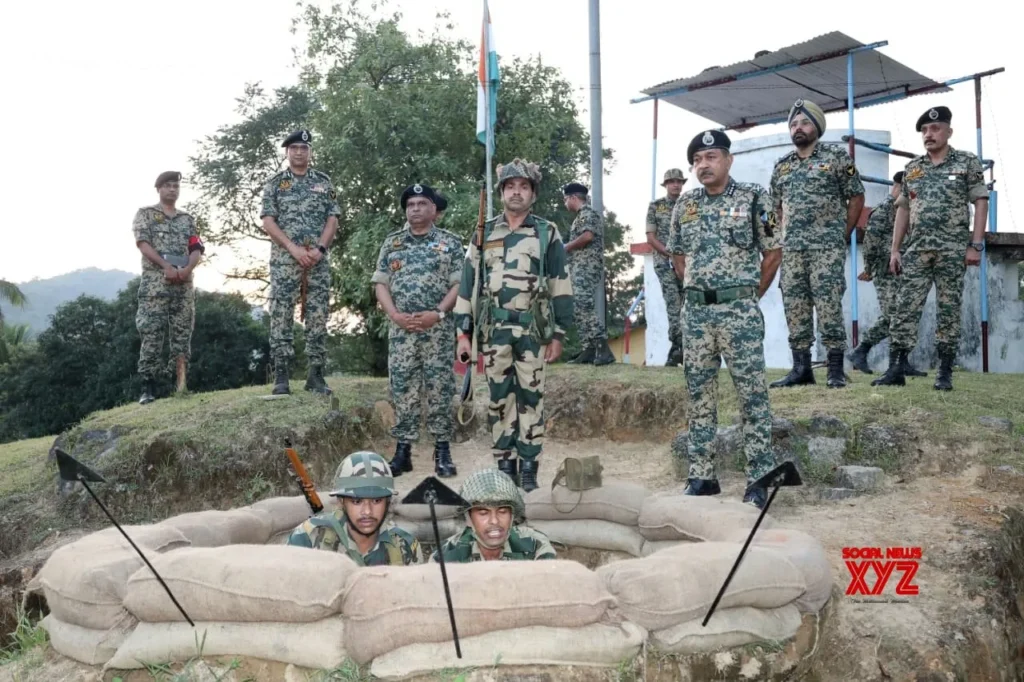
The border outpost relocation operations began after severe riverbank erosion threatened temporary Border Security Force (BSF) positions along the riverine India-Bangladesh border. Continuous monsoon rainfall and rising river levels weakened sections of the riverbank, prompting authorities to move two temporary outposts to safer locations. The relocation aimed to maintain border surveillance while protecting personnel and critical infrastructure. Meanwhile, officials continue monitoring erosion-prone areas as heavy rainfall and strong river currents increase pressure on vulnerable stretches of the international border.
Tawang Isolation Ends After Road Clearance
Sikkim Launches India’s First Himalayan Specialty Coffee Impact District in North Sikkim
Riverbank Erosion Threatens Border Posts
The border outpost relocation operations started after engineers and security personnel identified severe erosion near two temporary BSF positions. Consequently, authorities determined that the affected sites no longer offered safe operating conditions. They immediately planned the relocation to prevent damage to infrastructure and ensure uninterrupted border security.
Meanwhile, field teams inspected nearby riverbanks to evaluate additional erosion risks. They also monitored water levels and river currents because changing conditions could affect other border installations. Furthermore, officials maintained close coordination with local administrations throughout the operation.
Although the erosion caused operational challenges, authorities confirmed that border surveillance continued without interruption during the relocation process.
BSF Moves Temporary Installations
The border outpost relocation operations involved the careful transfer of personnel, communication equipment, and operational resources to secure locations. BSF teams completed the movement in a planned manner to maintain continuous surveillance along the international border.
Meanwhile, engineering personnel prepared the new sites and strengthened essential infrastructure before operations resumed. Officials also reviewed the suitability of nearby locations to ensure greater protection against future erosion. In addition, security teams continued patrolling vulnerable river stretches throughout the relocation.
Authorities emphasized that the move formed part of standard operational planning during periods of severe monsoon-related riverbank erosion.
Authorities Monitor Vulnerable River Sections
The border outpost relocation operations have prompted increased monitoring of erosion-prone areas along the riverine border. Engineers continue inspecting embankments, riverbanks, and nearby infrastructure to identify locations that may require preventive action. At the same time, hydrological experts monitor river flow and rainfall patterns to assess evolving conditions.
Furthermore, security agencies remain in close contact with civil authorities to exchange information and coordinate response measures. Officials have also instructed field units to report fresh signs of erosion without delay.
Regular inspections and timely interventions remain essential because river conditions can change rapidly during the active monsoon season.
Preparedness Supports Border Security
The border outpost relocation operations highlight the importance of proactive planning in protecting security infrastructure during natural hazards. Strong river currents and continuous erosion can threaten temporary installations, especially in low-lying riverine regions.
Moreover, authorities continue strengthening monitoring systems, improving infrastructure resilience, and enhancing emergency preparedness across vulnerable border areas. These measures will help maintain uninterrupted surveillance while reducing operational risks during future monsoon seasons.
Conclusion
The border outpost relocation operations demonstrate the swift response of the Border Security Force to severe riverbank erosion along the India-Bangladesh border. By relocating two temporary outposts before conditions worsened, authorities protected personnel and ensured uninterrupted border surveillance. Meanwhile, continuous monitoring of river conditions, coordinated planning, and timely preventive action will remain essential as the monsoon season continues to reshape vulnerable riverbank areas.
FAQs
1. Why did the BSF relocate the border outposts?
Severe riverbank erosion threatened the safety of temporary border positions.
2. How many outposts were relocated?
The BSF shifted two temporary border outposts to safer locations.
3. What are the border outpost relocation operations?
The border outpost relocation operations refer to the planned movement of temporary BSF outposts to protect personnel and maintain border security during severe erosion.
4. Did the relocation affect border surveillance?
No. The BSF maintained surveillance throughout the relocation process.
5. What caused the riverbank erosion?
Continuous monsoon rainfall and rising river levels accelerated erosion along vulnerable riverbanks.
6. What measures are authorities taking now?
Officials are monitoring erosion, inspecting vulnerable locations, and strengthening preparedness across the riverine border.