


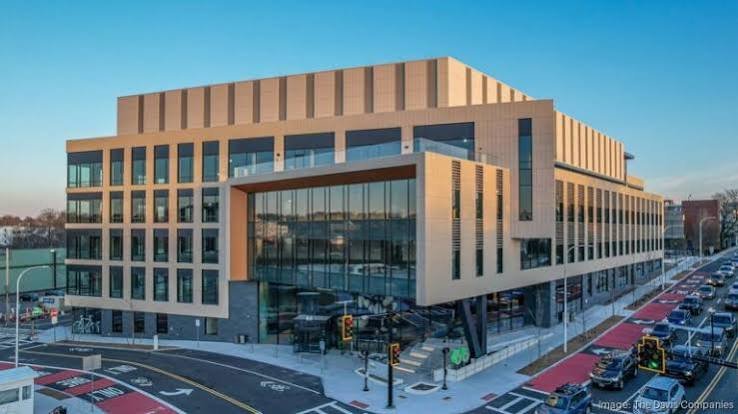
The Boston Biotech Hub Expansion has gained momentum as two major biotechnology firms reportedly signed leases covering 500,000 square feet of laboratory space in Cambridge, Massachusetts. The agreements highlight continued demand for specialised research facilities across the Boston-Cambridge life-sciences market.
Loktak Arms Cache: Security Forces Recover Hidden Insurgent Weapons Near Manipur’s Loktak Lake
The Boston Biotech Hub Expansion reinforces Cambridge’s position as a major centre for biotechnology, pharmaceuticals, and scientific research. Moreover, large laboratory commitments can indicate continued confidence in the region’s research ecosystem and its concentration of specialised talent.
The new leases could also support additional activity across the local commercial real estate market. Therefore, increased demand for laboratory facilities may influence developers, investors, research organisations, and businesses that support the life-sciences sector.
The expansion comes as companies continue to evaluate where to locate research and development operations. Additionally, access to universities, hospitals, research institutions, venture capital, and skilled workers remains important to the region’s biotechnology ecosystem.
Boston Biotech Hub Expansion Strengthens Cambridge Lab Market
The Boston Biotech Hub Expansion highlights the importance of Cambridge as a destination for laboratory-based companies.
Moreover, biotechnology companies require specialised facilities that differ significantly from conventional office buildings. Consequently, demand for laboratory space can remain strong even when other parts of the commercial property market experience weaker conditions.
The reported 500,000-square-foot commitment represents a substantial amount of specialised workspace. Furthermore, large leases can provide developers with greater certainty around the future use of laboratory buildings.
Cambridge’s established research ecosystem also supports the concentration of life-sciences companies. Therefore, companies can benefit from proximity to researchers, universities, medical institutions, investors, and other biotechnology businesses.
Boston Biotech Hub Expansion Supports Life-Sciences Growth
The Boston Biotech Hub Expansion could create broader opportunities across the region’s life-sciences economy.
Additionally, biotechnology companies rely on a wide network of suppliers, laboratories, consultants, equipment providers, and professional services. As a result, expansion by major firms can generate activity beyond the companies occupying the new space.
The demand for laboratory facilities can also encourage investment in specialised commercial properties. Meanwhile, developers may assess whether additional projects can meet the requirements of growing life-sciences companies.
Cambridge’s location within the wider Boston metropolitan area further strengthens these connections. Moreover, companies can access a large network of academic and medical institutions while remaining close to the region’s broader business infrastructure.
Boston Biotech Hub Expansion Reflects Real Estate Demand
The Boston Biotech Hub Expansion also carries significance for the commercial real estate market.
Furthermore, laboratory buildings often require specialised mechanical systems, ventilation, utilities, safety infrastructure, and other features. Consequently, converting conventional office buildings into suitable laboratories can prove difficult and expensive.
Large lease agreements can therefore support demand for purpose-built or highly specialised facilities. Additionally, sustained life-sciences activity can influence investment decisions involving laboratory properties.
However, the future demand for laboratory space will depend on biotechnology funding, research pipelines, company growth, and broader economic conditions. Therefore, individual lease agreements do not guarantee continued expansion across the entire market.
Conclusion
The Boston Biotech Hub Expansion marks a significant development in the Cambridge life-sciences market after two major biotechnology firms reportedly signed leases covering 500,000 square feet of laboratory space.
Furthermore, the agreements highlight continued demand for specialised facilities and reinforce Cambridge’s role within the broader Boston biotechnology ecosystem. The expansion could also support activity among developers, suppliers, researchers, and other businesses connected to life sciences.
Overall, the Boston Biotech Hub Expansion demonstrates the continued importance of Cambridge as a major US centre for biotechnology and scientific research while highlighting the growing value of specialised laboratory real estate.
FAQs
1. What is the Boston Biotech Hub Expansion?
The Boston Biotech Hub Expansion refers to the reported growth in biotechnology activity and laboratory demand across the Boston-Cambridge life-sciences market.
2. How much laboratory space did the firms lease?
The two biotechnology firms reportedly signed leases covering approximately 500,000 square feet of laboratory space in Cambridge.
3. Why is Cambridge important to biotechnology?
Cambridge has a dense network of universities, research institutions, hospitals, investors, biotechnology companies, and specialised scientific talent.
4. How can major biotech leases affect the local economy?
Large leases can support employment, research activity, commercial real estate demand, and businesses that supply goods and services to life-sciences companies.
5. Why is laboratory space different from ordinary offices?
Laboratories require specialised ventilation, utilities, safety systems, equipment infrastructure, and building layouts that conventional office buildings often do not provide.