


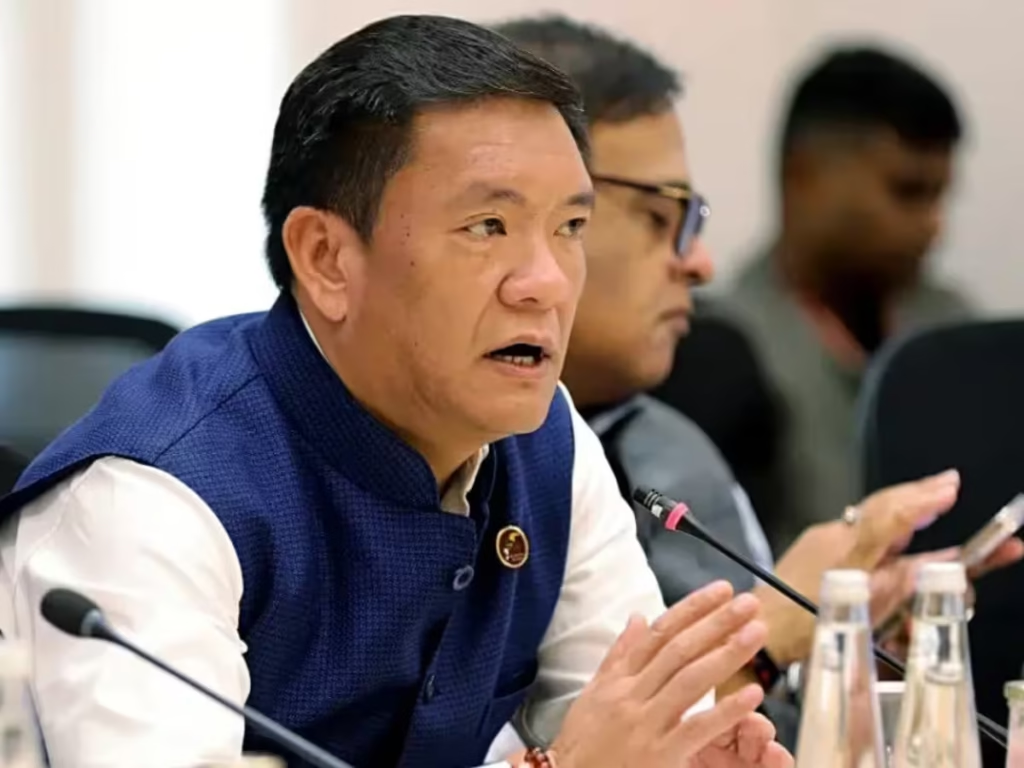
Arunachal Pradesh Chief Minister Pema Khandu has called on higher education institutions across the region to redesign their academic programmes around practical solutions to local tribal, geographic, and development challenges. The appeal places greater emphasis on connecting university education with the needs of communities across the state.
The proposed approach seeks to move beyond conventional academic learning and encourage students and researchers to address problems affecting people in Arunachal Pradesh. Moreover, universities could play a stronger role in developing solutions suited to the state’s difficult terrain, diverse communities, and distinctive cultural conditions.
The call highlights the potential role of higher education in regional development. However, the available information does not specify which universities will revise their curricula or provide a timeline for implementing the proposed changes.
Manipur 48-Hour Strike Paralyzes Life: JFD Shutdown Brings Five Valley Districts to Standstill
Problem-Solving Universities Could Reshape Education
The problem-solving universities approach encourages institutions to connect classroom learning with practical challenges.
Students could study issues that directly affect communities and develop research projects around possible solutions. Furthermore, universities can bring together disciplines such as geography, engineering, social sciences, environmental studies, and technology to address complex regional problems.
Such an approach could make higher education more closely connected to local development.
However, the specific curriculum changes proposed by the chief minister have not been detailed.
Local Tribal Challenges Need Academic Attention
Arunachal Pradesh has diverse tribal communities with distinct languages, traditions, social structures, and economic practices.
Universities can contribute by conducting research that respects local knowledge while examining contemporary challenges. Additionally, academic programmes could encourage students to document indigenous practices and explore ways to preserve cultural heritage while supporting sustainable development.
This could strengthen the relationship between educational institutions and local communities.
However, no specific tribal issues have been identified as immediate curriculum priorities.
Geography Creates Unique Challenges
Arunachal Pradesh’s mountainous terrain creates particular difficulties for infrastructure, transportation, communication, healthcare access, and education.
Universities can use research and technology to study these challenges and develop solutions suited to remote and difficult-to-reach areas. Moreover, locally focused research could help policymakers understand how geography affects development across different communities.
The approach could therefore give geographic realities a greater role in academic research.
However, the available information does not identify specific geographic projects that universities should undertake.
Research Could Support Local Development
Universities can serve as centres for research and innovation.
Academic researchers can work with government departments, local communities, and businesses to test practical solutions. Furthermore, students can gain hands-on experience by participating in field studies and community-based projects.
This model can turn research into a more direct contributor to regional development.
However, no specific funding mechanism or research programme has been announced alongside the call.
Students Could Gain Practical Experience
A curriculum built around local challenges could provide students with opportunities to work on real-world problems.
Field research, internships, community projects, and interdisciplinary assignments can help students apply theoretical knowledge. Additionally, these experiences can develop skills in problem-solving, teamwork, research, communication, and innovation.
Such skills can remain valuable beyond university.
However, the available information does not specify how institutions would integrate practical projects into existing degree programmes.
Indigenous Knowledge Can Complement Modern Research
Local communities possess knowledge developed through generations of experience with their environment.
Universities can incorporate this knowledge into research while applying scientific methods to understand and evaluate specific challenges. Moreover, collaboration with community members can produce solutions that better reflect local conditions.
This approach can make research more culturally relevant.
However, any integration of indigenous knowledge would require appropriate community participation and safeguards.
Technology Could Strengthen Solutions
Modern technology can help universities address challenges associated with Arunachal Pradesh’s terrain and remoteness.
Researchers can use digital mapping, remote sensing, data analysis, communication technologies, and other tools to study infrastructure, environmental conditions, and access to public services. Furthermore, technology can connect researchers with communities in remote areas.
The combination of technology and local knowledge could expand the scope of regional research.
However, the chief minister’s statement does not identify particular technologies or projects.
Universities Could Work More Closely With Government
Stronger collaboration between higher education institutions and government agencies could help translate research into policy.
Government departments can provide universities with information about practical challenges, while researchers can develop evidence-based recommendations. Additionally, pilot projects could allow institutions to test solutions before authorities consider wider implementation.
Such collaboration can strengthen the connection between education and governance.
However, no formal university-government framework has been announced in the information provided.
Employment Opportunities Could Also Benefit
A locally focused education system could help students develop skills relevant to regional employment.
Universities could work with local industries, entrepreneurs, public agencies, and community organisations to identify emerging skill requirements. Moreover, research-driven entrepreneurship could encourage graduates to create solutions and businesses addressing local needs.
This could strengthen the relationship between education and the regional economy.
However, no specific employment targets have been announced.
Environmental Challenges Require Local Research
Arunachal Pradesh’s geography also creates significant environmental research opportunities.
Universities can study ecosystems, biodiversity, climate-related risks, natural-resource management, and sustainable infrastructure. Furthermore, research can help communities and policymakers balance development with environmental protection.
Local academic expertise could therefore contribute to long-term resilience.
However, the available information does not specify environmental priorities under the proposed curriculum approach.
Curriculum Reform Would Require Coordination
Redesigning university curricula involves academic, administrative, and regulatory processes.
Institutions would need to identify relevant subjects, consult faculty members, engage communities, and develop appropriate research and practical-learning components. Additionally, universities would need adequate funding, laboratories, field facilities, and trained faculty.
Successful reform would therefore require sustained institutional support.
However, no implementation roadmap has been provided.
What Happens Next?
Arunachal Pradesh’s higher education institutions may now face growing expectations to connect academic programmes with regional needs.
Universities could explore interdisciplinary courses, community-based research, field studies, and partnerships with government agencies. Moreover, institutions could identify specific challenges that students and researchers can address through long-term projects.
The effectiveness of the approach will depend on how institutions translate the broader vision into measurable academic programmes.
Conclusion
The call for problem-solving universities in Arunachal Pradesh seeks to make higher education more responsive to the state’s tribal, geographic, environmental, and development challenges. Chief Minister Pema Khandu has urged regional institutions to rethink curricula so that students and researchers can contribute directly to solving problems faced by local communities.
Moreover, stronger links between universities, government agencies, and indigenous communities could help turn academic research into practical solutions. At the same time, successful curriculum reform will require funding, institutional coordination, community participation, and clear implementation plans.
Overall, the problem-solving universities vision could give Arunachal Pradesh’s higher education sector a stronger role in addressing the state’s unique local challenges.
FAQs
1. What did Pema Khandu ask universities to do?
He urged higher education institutions to redesign curricula around practical solutions to local tribal, geographic, and development challenges.
2. Why should universities focus on local problems?
Local research can help students and academics develop solutions that reflect the specific needs and conditions of Arunachal Pradesh.
3. How could indigenous knowledge contribute?
Researchers could work with local communities to incorporate traditional knowledge into culturally appropriate academic and development projects.
4. Could students gain practical experience?
Yes. Community research, field studies, internships, and interdisciplinary projects could connect academic learning with real-world challenges.
5. What are problem-solving universities?
Problem-solving universities are institutions that connect education and research more directly with practical social, environmental, geographic, and economic problems.